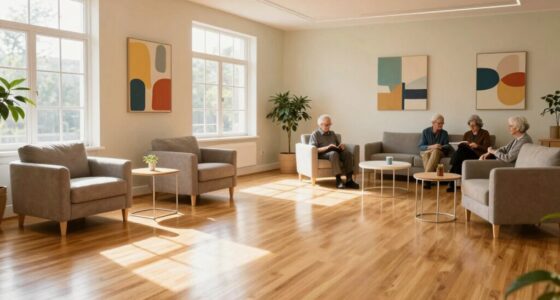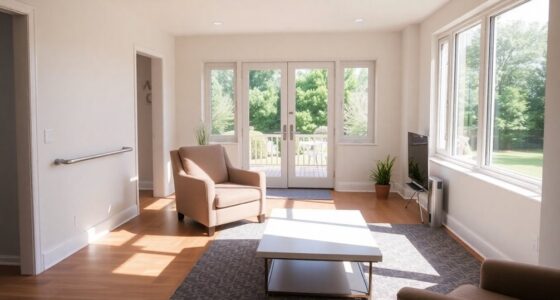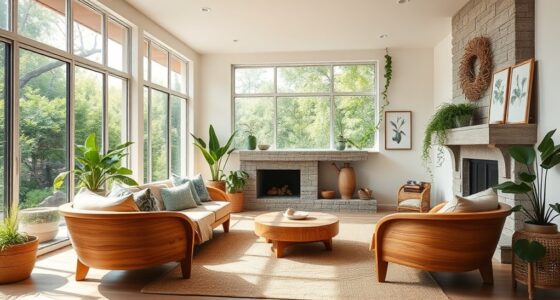
To make senior spaces more inviting, incorporate a variety of textures that promote tactile engagement and comfort. Use soft fabrics like velvet, chenille, or fleece on chairs and cushions to create a cozy feel. Add textured wall coverings, decorative pillows, and tactile wall panels to encourage exploration and sensory stimulation. Layer different textures, such as rugs or natural materials, to make the environment lively without overwhelming. Keep exploring to discover more ways to enhance comfort and connection through texture.
Key Takeaways
- Incorporate soft, plush fabrics like velvet and fleece on furniture to create a cozy, tactile environment.
- Add textured wall coverings and decorative pillows to invite touch and visual interest.
- Use varied textured rugs and carpets to enhance sensory engagement and define spaces.
- Integrate natural materials and raised patterns for visual contrast and tactile stimulation.
- Layer multiple textures thoughtfully to create an inviting, dynamic environment without overwhelming.
Creating a welcoming environment for seniors involves more than just choosing comfortable furniture; it’s about adding layers of texture that invite touch and engagement. When you incorporate varied textures into a space, you create opportunities for sensory engagement that can boost mood, stimulate the senses, and foster a sense of familiarity. Tactile comfort becomes a key element, encouraging seniors to explore their surroundings through touch, which can be especially beneficial for those with visual impairments or cognitive challenges.
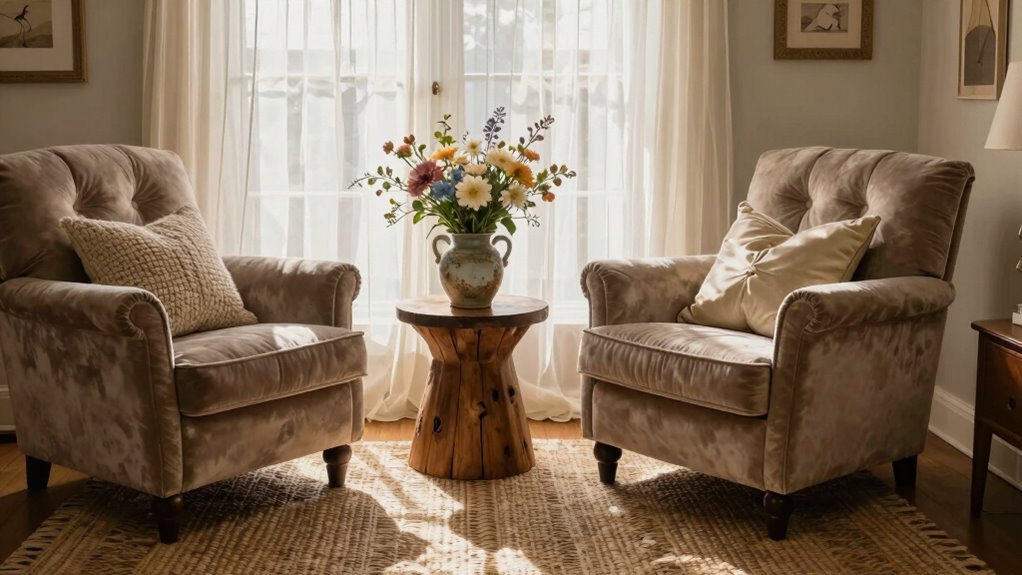
Think about using soft, plush fabrics on chairs and cushions. These textures invite seniors to settle in and feel at ease. Incorporate materials like velvet, chenille, or fleece into upholstery and throw blankets, giving the space a cozy, approachable feel. Textured rugs or carpets with different pile heights add tactile variety and warmth underfoot, making walking or standing more comfortable. When you choose these textures thoughtfully, you create a layered environment that feels alive and inviting, encouraging seniors to interact with their space physically.
Soft, plush fabrics like velvet, chenille, and fleece create cozy, inviting spaces that encourage tactile exploration and comfort for seniors.
Adding tactile elements like textured wall coverings, decorative pillows, or wall art with raised patterns enhances sensory engagement. These details provide visual interest and invite touch, stimulating the brain and offering a gentle form of interaction. For example, tactile wall panels with embossed designs or fabric-covered bulletin boards can serve as both functional and sensory features. This not only enriches the aesthetic but also offers opportunities for seniors to explore different sensations, helping maintain fine motor skills and sensory acuity. Incorporating sensory-rich elements can further deepen this engagement and make the environment more stimulating. Including varied tactile stimuli can help activate different sensory pathways, promoting overall sensory health. Additionally, incorporating different textures into the design helps create a more dynamic and engaging environment that responds to the diverse needs of seniors. Creating a space with an intentional contrast ratio can also subtly influence how textures are perceived, making certain tactile features more engaging for seniors visually and physically.
Ultimately, your goal is to craft a space that engages the senses without overwhelming. By layering textures thoughtfully, you foster tactile comfort and sensory engagement, making seniors feel more at home. The right combination of soft fabrics, textured accents, and natural materials creates an environment that’s both soothing and stimulating—a place where touch becomes a bridge to comfort, connection, and well-being.
velvet accent cushions for seniors
As an affiliate, we earn on qualifying purchases.
As an affiliate, we earn on qualifying purchases.
Frequently Asked Questions
What Are the Safest Textures for Senior Spaces?
You should prioritize safe textures like soft, non-slip fabrics and smooth, cushioned surfaces for senior spaces. Avoid sharp or overly rough texture patterns that could cause discomfort or injury. Incorporate tactile diversity with gentle, varied textures to provide sensory engagement without risking safety. By selecting these safe textures, you create a welcoming environment that balances comfort and security, helping seniors feel at ease and cared for.
How Can Texture Improve Mobility for Seniors?
You can improve mobility for seniors by incorporating textured surfaces that offer tactile feedback, helping them navigate spaces safely. For example, textured flooring or handrails provide grip and sensory cues, enhancing stability. This comfort enhancement makes movement easier and reduces fall risk. By thoughtfully adding varied textures, you create an environment where seniors feel more confident and secure, encouraging independent mobility and overall well-being.
Are There Any Textures to Avoid in Senior Areas?
Did you know that slips and falls account for nearly 60% of injuries among seniors? To minimize risks, avoid overly slick surfaces and textures that can cause slipping. Steer clear of certain decorative wall treatments with glossy finishes and hard, rough textures. Instead, incorporate soft fabric accents and matte finishes, which provide tactile comfort and reduce fall hazards, making the environment safer and more inviting for seniors.
How Does Texture Influence Sensory Processing in Seniors?
Texture greatly influences sensory processing in seniors by enhancing sensory integration and providing tactile stimulation. When you incorporate varied textures, you help seniors engage their senses more effectively, which can improve mood, cognition, and comfort. Soft, textured fabrics or surfaces promote gentle tactile feedback, reducing feelings of isolation or confusion. By thoughtfully selecting textures, you create an environment that supports healthy sensory processing, making spaces more inviting and accessible for seniors.
Can Texture Be Used to Reduce Fall Risks?
Think of textured flooring as a guiding hand, gently steering seniors away from slips. By incorporating tactile stimulation, you create sensory engagement that boosts confidence and reduces fall risks. Textured surfaces offer subtle cues, like a gentle trail, helping seniors navigate spaces safely. Using diverse textures thoughtfully enhances safety, making environments not only inviting but also more secure, ensuring comfort and stability with each step they take.
Conclusion
By blending beautiful blankets, bold borders, and cozy cushions, you create a space that feels welcoming and warm. Texture transforms a sterile setting into a soothing sanctuary, making seniors feel safe and special. Remember, the power of plush, pattern, and placement can truly turn a plain room into a personal paradise. So, don’t hesitate—delight in designing with diverse textures that not only decorate but also deepen comfort and connection. Your thoughtful touches truly transform spaces into sweet, serene sanctuaries.