
To make your winter entryways safer for seniors, promptly clear snow and ice using sturdy shovels or blowers, and spread sand or grit for better traction. Install bright, motion-activated lights and add sturdy handrails along steps and walkways. Place non-slip mats at the door to trap moisture and prevent slipping inside. Regularly maintain these safety features, and you’ll create a more secure, accessible space—keep going to discover more helpful tips to enhance winter safety.

Get the little things that make your day delivered free — and shop member deals
- Fast, free delivery on millions of items
- Access to Prime Big Deal Days deals on October 6–7
- Prime Video, Amazon Music and more included
Key Takeaways
- Regularly shovel snow and ice from pathways, focusing on entrances and walkways to prevent slips.
- Use traction aids like sand, grit, or traction mats on icy surfaces for better grip.
- Install motion-activated lighting and maintain good visibility around entryways.
- Place non-slip, weatherproof mats at doorways and encourage thorough shoe cleaning.
- Add sturdy handrails and ensure all safety features are well-maintained for support.
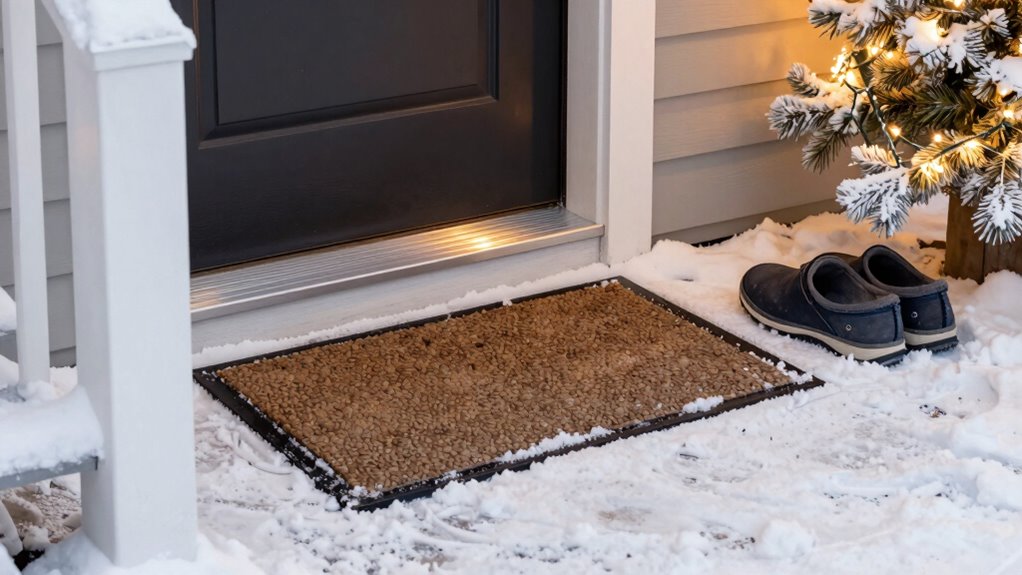
Winter entryways can quickly become dangerous with ice and snow, making slips and falls a real concern—especially for seniors. When snow piles up at your door, it’s essential to clear it promptly. Regular snow removal keeps walkways clear and reduces the risk of slipping. Use a sturdy snow shovel or a snow blower to remove snow efficiently, and make sure to clear the area soon after a storm. Don’t forget to pay special attention to the path leading to your door, as even a thin layer of snow or ice can cause accidents. Clearing snow not only prevents falls but also makes it easier for walkers or wheelchairs to access your home safely. Incorporating golf course safety principles, such as maintaining clear, well-lit pathways, can also enhance winter safety around your home.
Promptly clear snow and ice to prevent slips and ensure safe access for all, especially seniors and those with mobility challenges.
In addition to snow removal, adding traction aids can markedly improve safety. Traction aids, like sand, grit, or specialized traction mats, give your shoes better grip on icy surfaces. Spread sand or grit over the walkway after shoveling to provide extra traction for walking. These small additions can make a big difference in preventing slips, especially for seniors who may have impaired balance or mobility. For added security, consider using removable traction devices on footwear, such as ice grips or spikes, which can be attached quickly and provide reliable grip on icy patches.
Make sure your entryway is well-lit during the winter months. Good lighting helps you and visitors see icy patches clearly, so you can avoid them. Keep exterior lights on during the evening and consider installing motion-activated lights that turn on automatically when someone approaches. Adding a handrail along your steps and walkway can also provide extra support, giving you something to hold onto if you lose your balance on icy surfaces. Regularly inspecting and maintaining your lighting system ensures that your pathways stay visible and safe throughout winter.
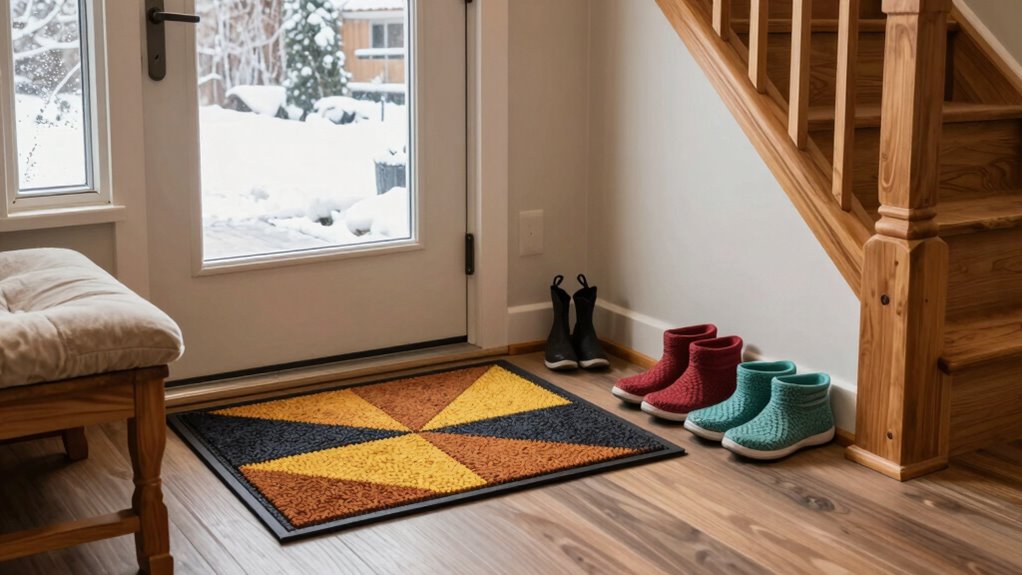
Another smart step is to use weatherproof mats at your door. These mats trap snow, slush, and water from shoes, preventing moisture from spreading onto your flooring inside. Choose a heavy-duty, non-slip mat designed for winter use, and encourage everyone to wipe their shoes thoroughly before entering. This simple step reduces the risk of slipping on wet floors inside and keeps your entryway cleaner. Additionally, considering winter safety tips can help you implement comprehensive measures to protect yourself and visitors during the cold months.
As an affiliate, we earn on qualifying purchases.
Frequently Asked Questions
What Are the Best Materials for Non-Slip Entryway Flooring?
The best materials for non-slip entryway flooring include textured surfaces like rough stone, slate, or stamped concrete, which naturally provide better grip. You can also apply non-slip coatings to materials such as ceramic tiles or concrete, enhancing safety without replacing existing floors. These coatings create a textured surface that reduces slipperiness, making entryways safer for everyone, especially seniors during winter months. Combining durable materials with non-slip treatments offers peak safety.
How Often Should I Clean Ice Melt From My Porch?
You should remove ice melt as soon as possible after it’s no longer needed, ideally every few days or when you notice a buildup. Use effective ice removal techniques, like shoveling snow first and then sweeping away excess ice melt to prevent it from refreezing. Follow snow shoveling tips to avoid injury, and regularly clear your porch to keep it safe and slip-free for everyone, especially seniors.
Are There Eco-Friendly Options for Preventing Slips?
Yes, eco-friendly options like recyclable solutions and natural remedies can effectively prevent slips. Did you know that using sand or cat litter can reduce slips by providing traction without harmful chemicals? Natural remedies like beet juice or vinegar are also safe and biodegradable choices. These options help keep your entryway safe while protecting the environment, making winter safer for everyone without relying on chemical ice melts.
How Can I Improve Lighting for Winter Safety?
To improve lighting for winter safety, you should install bright, weatherproof fixtures around your entryway, ensuring they’re visible even during heavy snow or winter heating fluctuations. Use motion-activated lights for added security and convenience. Keep lights clear of snow and ice through regular snow removal, and consider adding solar-powered path lights to illuminate walkways. Proper lighting helps seniors see hazards clearly and navigate safely despite winter’s challenges.
What Footwear Is Recommended for Icy Entryways?
You should wear winter footwear with good traction, like slip-resistant shoes or boots, to stay safe on icy entryways. Look for shoes with rubber soles and deep treads that grip icy surfaces well. Avoid smooth-soled shoes that can easily slide. Maintaining dry, clean footwear can also prevent slips. Investing in quality winter footwear guarantees better stability, keeping you safe while entering or leaving your home during icy conditions.
Conclusion
Think of your winter entryway as a sturdy bridge over icy waters—each step you take should feel secure and steady. By adding non-slip mats, handrails, and good lighting, you’re guiding your loved ones safely across, just like a gentle hand on their back. When you create a warm, slip-resistant path, you’re not just preventing falls; you’re building a bridge of comfort and confidence, welcoming everyone home with safety and care.
NFL season / tailgating Picks
team gear
As an affiliate, we earn on qualifying purchases.