Your home layout influences your comfort, safety, and independence more than the size of your space as you age. An adaptable, accessible design makes daily tasks easier and reduces risks like trips or falls. Open floors, wider doorways, and thoughtful placement support mobility and safety now and for future needs. Focusing on layout creates a welcoming environment that evolves with you. Keep exploring to discover how smart design can truly enhance your later years.
Key Takeaways
- A thoughtful layout ensures safety and reduces fall risks, regardless of home size.
- Flexible design accommodates mobility and health changes, promoting independence over mere square footage.
- Open, accessible spaces improve daily navigation and ease of use for all abilities.
- Adaptive layouts allow modifications without moving, supporting aging in place effectively.
- Prioritizing layout over size creates a comfortable, functional environment that evolves with changing needs.
Your home’s layout plays a vital role in how comfortably and efficiently you live every day. It’s not just about the size of your space; it’s about how well that space functions for your needs now and in the future. As you age, your priorities may shift—what once felt spacious might become less practical, or you might find yourself needing to adapt your environment. That’s why thoughtful layout design can be more important than square footage alone. An emphasis on adaptive design ensures your home can evolve with you, reducing the need for costly renovations or relocations down the line. It’s about creating a flexible space that accommodates mobility changes, health concerns, or lifestyle adjustments without sacrificing comfort or independence.
A well-designed layout adapts to your changing needs, enhancing comfort, safety, and independence over time.
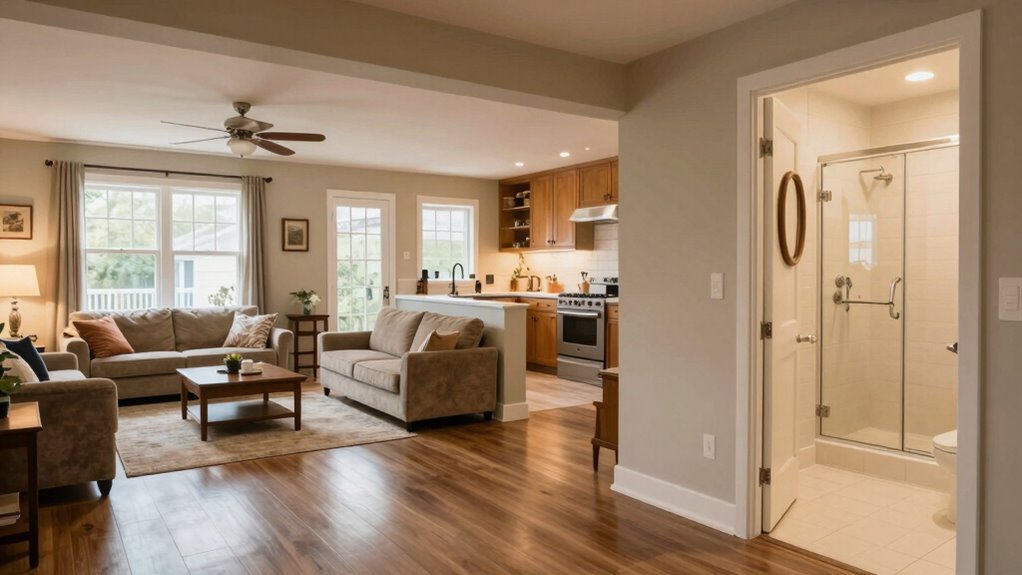
When considering your home layout, think about flow and accessibility. An open floor plan, for example, can make navigation easier, especially if mobility becomes limited. Wide doorways, minimal thresholds, and reachable switches and countertops contribute to a more inclusive environment. These features are central to adaptive design, which aims to make spaces usable and comfortable for everyone, regardless of age or ability. Incorporating universal design principles can further enhance the adaptability of your home, making it easier to modify as needed. Additionally, understanding home safety**** principles can help prevent accidents and ensure your environment remains secure as your needs change.
A well-thought-out layout also promotes safety, reducing hazards such as tripping or falling. Clutter-free pathways, proper lighting, and strategic placement of essential features can make a significant difference. When your home is designed with flexibility in mind, you can easily modify certain areas rather than relocate altogether. For example, if you need a bedroom on the ground floor later on, a versatile layout can make that transition smooth. Home layout can influence your daily comfort and long-term well-being far more than size alone. Incorporating design strategies that prioritize safety and accessibility ensures your home remains a secure environment over time. This approach to future proofing not only preserves your independence but can also save you money in the long run. Creating spaces that are both safe and adaptable is a key component of thoughtful home design for aging in place.
In essence, your home’s layout influences your daily comfort and long-term well-being far more than size alone. Prioritizing adaptive design elements and planning for future needs ensures your space remains functional and welcoming as you age. It’s a proactive way to create a home that adapts with you, rather than forcing you to adapt to it. When you focus on thoughtful layout choices, you’re investing in a space that truly supports your lifestyle now and for years to come.
Frequently Asked Questions
How Can Home Layout Prevent Falls for Seniors?
You can prevent falls by designing your home with stairs safety in mind, like installing handrails and non-slip treads. Prioritize bathroom accessibility by adding grab bars, walk-in showers, and higher toilets to reduce the risk of slips. Keeping walkways clear and well-lit also helps. These layout adjustments make your home safer, minimizing fall hazards and supporting your independence as you age.
What Are Common Layout Modifications for Aging in Place?
You can make your home safer and more functional by adding wide doorways and eliminating steps, which are common layout modifications for aging in place. Don’t worry about sacrificing style—space optimization techniques and thoughtful aesthetic considerations guarantee your home remains inviting. These changes improve mobility and independence without cluttering your space, making it easier to navigate and enjoy your home comfortably as you age.
How Does Home Layout Impact Social Interaction?
Your home layout greatly impacts social interactions by fostering open spaces that encourage conversation and connection. Proper lighting design guarantees these areas are inviting and safe, reducing privacy concerns and promoting comfort. When you strategically arrange rooms, you create welcoming environments for friends and family, making socializing easier and more enjoyable. A thoughtful layout supports your social life while maintaining your privacy and safety as you age.
Are Open Floor Plans Better for Mobility Issues?
Open floor plans can be beneficial for mobility issues because they reduce obstacles and create unobstructed pathways, making movement easier. However, they might compromise privacy zones, which some seniors value. While an open plan fosters social interaction and independence, it’s important to balance it with designated privacy areas. You should consider your personal needs—openness for mobility, privacy zones for comfort—when choosing a layout that supports your lifestyle.
What Features Should I Prioritize in a Senior-Friendly Home?
You should prioritize features like smart technology, which enhances safety and convenience, and energy efficiency, reducing costs and ensuring comfort. Look for homes with wide doorways and minimal thresholds for easy mobility. Incorporate good lighting, accessible switches, and lever-style handles. Smart security systems and voice-activated controls boost independence. Energy-efficient windows and appliances keep the home comfortable and affordable. These features create a safer, more manageable environment suited for later life.
Conclusion
Remember, your home should be a steady ship guiding you smoothly through later years, not a maze of confusing hallways. Prioritizing thoughtful layout over sheer size guarantees safety, comfort, and independence. Think of your home as the foundation of your golden years—well-designed spaces act like a gentle hand guiding you, rather than a tangled web that traps you. When layout takes center stage, your home becomes a sanctuary where aging gracefully feels less like a challenge and more like a natural flow.