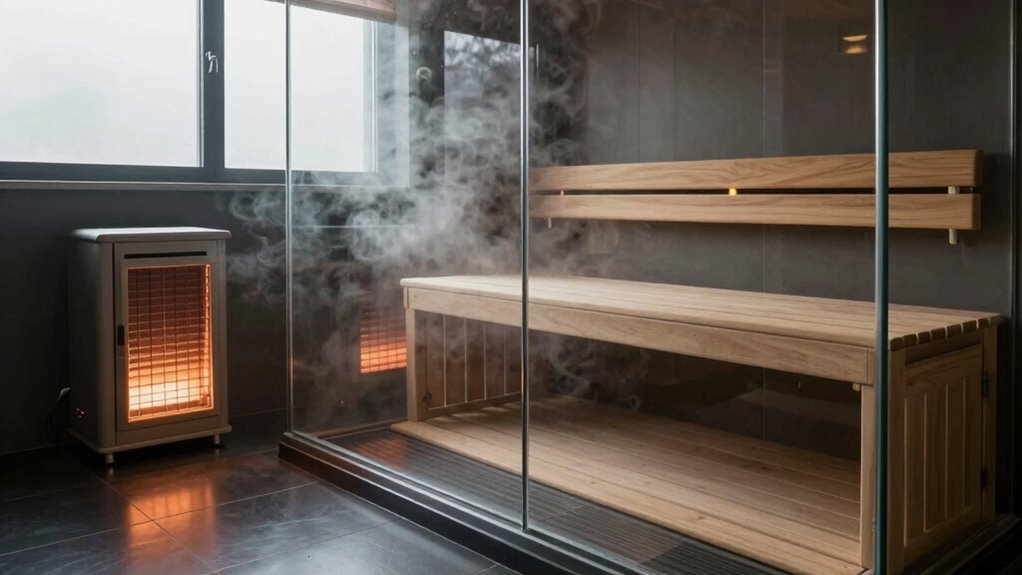

For home use, infrared saunas are usually more convenient and affordable, since they heat the body directly with dry, lower temperatures, and don’t need plumbing or high space requirements. Steam saunas create moist heat that can benefit your respiratory system but often require more space and installation effort. Portable options make both types easier to test, but understanding their differences can help you choose what fits best for your lifestyle and needs. Keep exploring to find out more.
Key Takeaways
- Infrared saunas operate at lower temperatures and provide dry heat, while steam saunas produce high-humidity moist heat.
- Infrared saunas are easier and cheaper to install, requiring no plumbing or water, unlike steam saunas.
- Portable infrared units offer flexible placement and are suitable for limited spaces; portable steam units are also budget-friendly and space-efficient.
- Infrared saunas penetrate deeper into muscles for targeted relief, whereas steam saunas benefit respiratory health with moist heat.
- Infrared saunas typically have lower ongoing costs due to less water and electricity use compared to steam saunas.
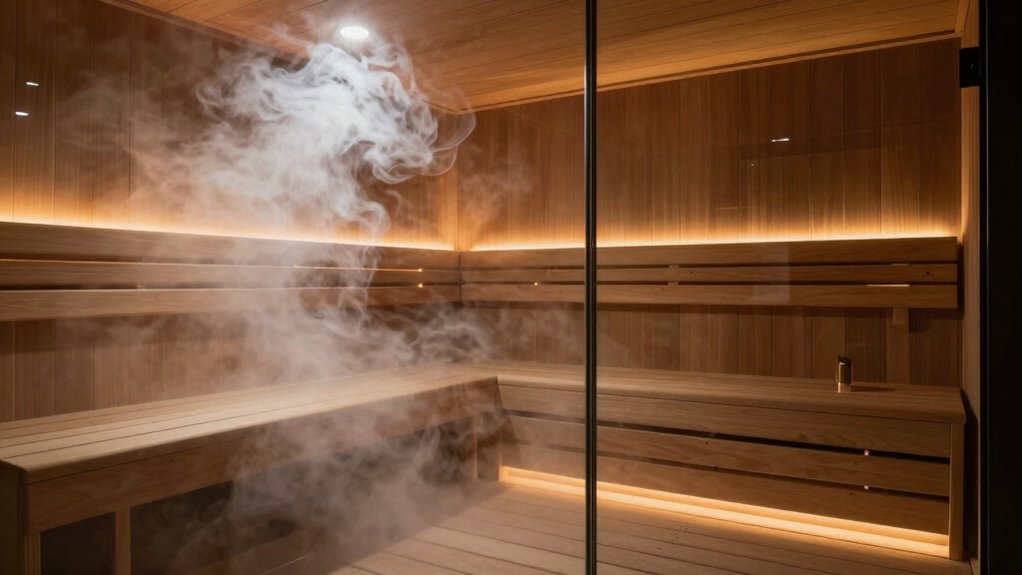
Choosing the right sauna for your home can enhance relaxation and improve your overall well-being, but with so many options available, it’s important to compare features carefully. When considering steam versus infrared saunas, you’ll want to think about how each type fits your lifestyle, space, and budget. Portable options are gaining popularity because they’re easy to set up and move around, giving you flexibility without a permanent installation. These portable units often come with cost considerations, as they tend to be more affordable upfront and don’t require extensive construction or electrical work. If you’re limited on space or want a temporary solution, portable steam or infrared saunas might be perfect for you. They’re often lightweight and simple to assemble, making them a convenient choice for renters or anyone looking to test out sauna therapy without committing to a full-scale installation.
Infrared saunas are known for their ability to heat the body directly using infrared panels, which emit long-wave heat that penetrates deeper into your muscles and tissues. This method generally results in a more comfortable experience at lower temperatures, often between 120°F and 140°F, making it easier to stay in longer. Because infrared saunas don’t require steaming water or complex plumbing, they often have lower installation costs and can be placed in a variety of spaces. On the other hand, steam saunas generate moist heat by producing steam, which creates a high-humidity environment. These units can be either built-in or portable, but traditional steam saunas are usually more permanent fixtures, requiring dedicated space and plumbing. The cost considerations for steam options can be higher, especially for larger, built-in models, but some portable steam units provide a more budget-friendly entry point. These portable steam saunas often come as compact enclosures with a steam generator, making them accessible without major renovations. Additionally, the installation process can significantly influence your overall costs and setup time, especially when plumbing or electrical work is involved. Selecting the appropriate sauna type can also impact your energy consumption, which is an important factor for ongoing costs.
When comparing the two, think about how each sauna type aligns with your comfort preferences and your budget. Infrared saunas are typically less expensive to operate and maintain over time because they use less electricity and don’t rely on water or steam. Steam saunas, while offering a traditional experience, may have higher ongoing costs due to water usage and potential maintenance of the steam generator. Additionally, consider the space constraints that might limit your options, as some models require more room for proper ventilation and ventilation. It’s also helpful to evaluate the health benefits associated with each sauna type, as some users prefer the moist heat of steam for respiratory relief, and others favor the deeper muscle penetration of infrared heat. Furthermore, understanding the energy efficiency of each system can help you make a cost-effective decision in the long run. Ultimately, your choice will depend on your personal health goals, space constraints, and how much you’re willing to invest initially and in the long run. Both options can deliver health benefits, but your specific needs will guide you toward the best fit.

KASUE Infrared Sauna Tent for Home, Portable Steam Sauna with 3L Steamer, 9 Temp Levels, 99 Min Timer, Remote Control, 5-Layer Waterproof Insulated Fabric, Folding Chair, Indoor Personal Spa
- Personal Indoor Infrared Sauna: Create private home sauna space
- 3L Steam Generator: Steady steam with adjustable heat levels
- 9 Temperature Settings: Customize heat for comfort and seasons
As an affiliate, we earn on qualifying purchases.
As an affiliate, we earn on qualifying purchases.
Frequently Asked Questions
Which Sauna Type Offers Faster Heat-Up Times?
Infrared saunas heat up faster than steam saunas because they use direct heat waves that penetrate your skin quickly, providing even heat distribution. This makes infrared models more energy-efficient since they reach your desired temperature faster and use less power. You’ll enjoy quicker warm-up times, making infrared saunas a convenient choice if you want rapid relaxation. Overall, they’re ideal for those seeking efficiency and speedy heat-up during busy schedules.
Are There Specific Health Conditions Better Suited for One Sauna Type?
If you have respiratory issues or skin conditions, infrared saunas might suit you better because they offer gentler heat, aiding detoxification benefits and skin health improvements without overwhelming your system. Conversely, steam saunas can be more effective if you need deeper detox and humidity benefits. Always consult with a healthcare professional to choose the best sauna type for your specific health conditions and maximize your wellness benefits.
How Do Maintenance and Cleaning Differ Between the Two Saunas?
Steam saunas require more frequent cleaning due to moisture buildup, typically weekly, to prevent mold and bacteria. You’ll need to wipe down surfaces and clean the water reservoir regularly. Infrared saunas have lower maintenance complexity; they mainly need occasional dusting and cleaning of panels. Unlike steam saunas, they don’t need water or special moisture controls, making upkeep simpler and less time-consuming overall.
What Are the Initial Costs Versus Long-Term Expenses?
Coincidentally, your initial costs for steam saunas tend to be higher, mainly due to installation complexity and equipment prices, while infrared saunas often cost less upfront. Over time, energy efficiency plays a key role; infrared saunas typically use less power, saving you money long-term. Still, maintenance expenses differ, with steam saunas requiring more frequent upkeep. Consider these factors to balance your budget and energy savings effectively.
Can Both Sauna Types Be Used Simultaneously for Different Users?
Yes, you can use both sauna types simultaneously for different users, creating a shared experience tailored to individual temperature preferences. You might set the steam sauna at a higher humidity level, while keeping the infrared sauna’s temperature lower for comfort. This setup allows each person to enjoy their preferred environment, making your home sauna experience more versatile and accommodating. Just make certain proper space and ventilation for safe use.
Conclusion
So, whether you prefer the traditional steam or the sleek infrared, it’s funny how both promise relaxation and health benefits—yet both can still leave you debating which is “better.” You might spend hours researching, only to realize that the real answer is simply the one you’ll actually use. After all, in the end, isn’t the best sauna the one that finally gets you to unwind, no matter how it heats up?