Home ECG monitors fit smoothly into your personal health tracking by offering real-time, accurate data about your heart rhythm. They are user-friendly and can be used during daily activities, helping you catch irregularities early. With features like smartphone app compatibility, you can monitor trends over time and stay proactive about your health. The more you explore these devices, the better you’ll understand how they can support your wellbeing and ongoing medical care.
Key Takeaways
- Home ECG monitors provide real-time, accurate heart data that enhances personal health records and early detection of irregularities.
- They seamlessly integrate with smartphone apps for trend analysis and long-term health monitoring.
- Continuous tracking during daily activities empowers proactive management of heart health.
- Reliable device performance ensures trustworthy data for sharing with healthcare providers.
- Incorporating ECG monitors into routines offers comprehensive insights, supporting informed health decisions.
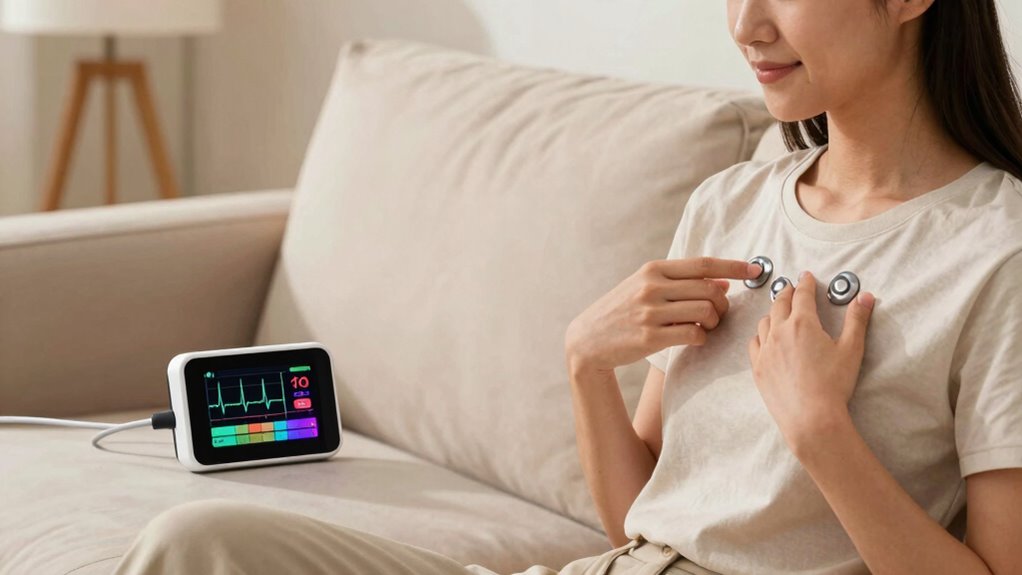
Advancements in technology have made it easier than ever to monitor your heart health from home. With the rise of home ECG monitors, you can now keep a close eye on your heart rhythm without needing frequent visits to your doctor. These devices are designed to be user-friendly and provide real-time data, making them an essential part of your personal health tracking routine. When choosing a home ECG monitor, one of the first things to consider is battery life. A device with long-lasting battery life ensures you can take recordings consistently without the hassle of frequent recharging. This reliability means you don’t have to worry about your monitor dying mid-use, which helps you stay consistent with your health monitoring schedule. Additionally, a good battery life allows you to track your heart health over extended periods, giving your healthcare provider more thorough data during checkups.
Data accuracy is equally important in integrating a home ECG monitor into your health routine. Precise readings enable you to detect irregularities like atrial fibrillation or other abnormalities early, potentially preventing serious complications. Most modern devices use advanced sensors and algorithms to improve data accuracy, but it’s still essential to select a monitor known for reliable results. Accurate data also means you can confidently share your readings with your healthcare provider, ensuring they have a clear picture of your heart health. This can lead to better-informed decisions about your treatment or lifestyle changes. Ensuring color accuracy in the monitor’s display helps you interpret the data more effectively. Maintaining device reliability is also crucial for consistent and trustworthy monitoring. The integration of technology advancements continues to improve the overall effectiveness of these health devices. Moreover, understanding the importance of astrological signs and personal traits can sometimes influence how individuals approach their health and wellness routines.
Accurate readings help detect irregularities early and ensure reliable data for better health decisions.
Using a home ECG monitor fits seamlessly into your daily routine, giving you immediate feedback on your heart’s activity. You can record your heart’s rhythm while at rest, exercising, or during specific symptoms. Many devices connect to smartphone apps, allowing you to track trends over time and notice patterns that might otherwise go unnoticed. Such continuous monitoring helps you stay proactive about your health, making it easier to catch issues early or confirm that your current management plan is effective. Incorporating reliable technology ensures the device functions as intended and offers trustworthy data.
Incorporating a home ECG monitor into your personal health tracking isn’t just about individual readings; it’s about creating a complete picture of your heart health. Reliable battery life ensures your device is always ready when you need it, while data accuracy guarantees the information you receive is trustworthy. Together, these features empower you to take control of your health, providing peace of mind and valuable insights that complement your regular medical care.

EMAY 6L Portable ECG Monitor | Record ECG and Heart Rate in 6 Channels | Compatible with Smartphone and PC | No Subscription Required
- ECG and Heart Rate Recording: Records and stores ECG signals and heart rate
- No Subscription Needed: Free to use without hidden costs
- Device Connectivity: Connects to PC via USB and mobile via Bluetooth
As an affiliate, we earn on qualifying purchases.
As an affiliate, we earn on qualifying purchases.
Frequently Asked Questions
Are Home ECG Monitors Fda-Approved for Medical Diagnosis?
Home ECG monitors are generally not FDA-approved for medical diagnosis, as they often don’t meet strict regulatory standards required for clinical use. While some devices have FDA clearance for certain functions, many are intended for personal monitoring only. You should be cautious about data security and verify the device complies with privacy regulations. Always consult a healthcare professional for diagnosis and treatment rather than relying solely on home ECG data.
How Accurate Are Consumer-Grade ECG Devices Compared to Clinical Equipment?
Consumer-grade ECG devices can be surprisingly accurate for tracking heart rate variability, but their precision depends on proper electrode placement and user effort. While they may not match clinical equipment’s detailed readings, they often provide reliable data for general monitoring. Keep in mind, slight inaccuracies might occur due to electrode positioning or movement, but overall, these devices offer a practical way to stay engaged with your heart health.
Can Home ECG Monitors Detect All Types of Heart Arrhythmias?
Home ECG monitors can’t detect all types of heart arrhythmias because of device limitations. They are good at identifying common heart rhythm variations like atrial fibrillation, but less effective for complex or rare arrhythmias. While they provide valuable insights, you should consult a healthcare professional for thorough diagnosis. Relying solely on these devices might miss some irregularities, so use them as part of a broader health monitoring plan.
What Are the Privacy Concerns With Storing ECG Data Digitally?
You should be aware that storing ECG data digitally raises privacy concerns. Data encryption helps protect your sensitive information from unauthorized access, but you still need to think about data ownership. Some companies may claim rights over your data, so it’s essential to read privacy policies carefully. Always choose devices and platforms that prioritize your privacy, ensuring your health data remains secure and under your control.
How Often Should I Use a Home ECG Monitor for Effective Tracking?
You should aim for ideal usage by monitoring your ECG regularly, like clockwork, to catch issues early. Generally, monitoring a few times a week is sufficient for most people, but consult your healthcare provider for personalized advice. Frequency depends on your health history and risk factors. Consistent tracking helps build a clearer picture of your heart health, ensuring you stay in the driver’s seat of your well-being.
Conclusion
So, as you start to rely on home ECG monitors, you’re not just tracking numbers — you’re gaining a deeper understanding of your heart’s story. But what if the data reveals something unexpected? Will you recognize the signs? With each use, you’re stepping closer to a future where early detection could save your life. The question is: are you ready to take control and see what your heart has to say? The answers might surprise you.