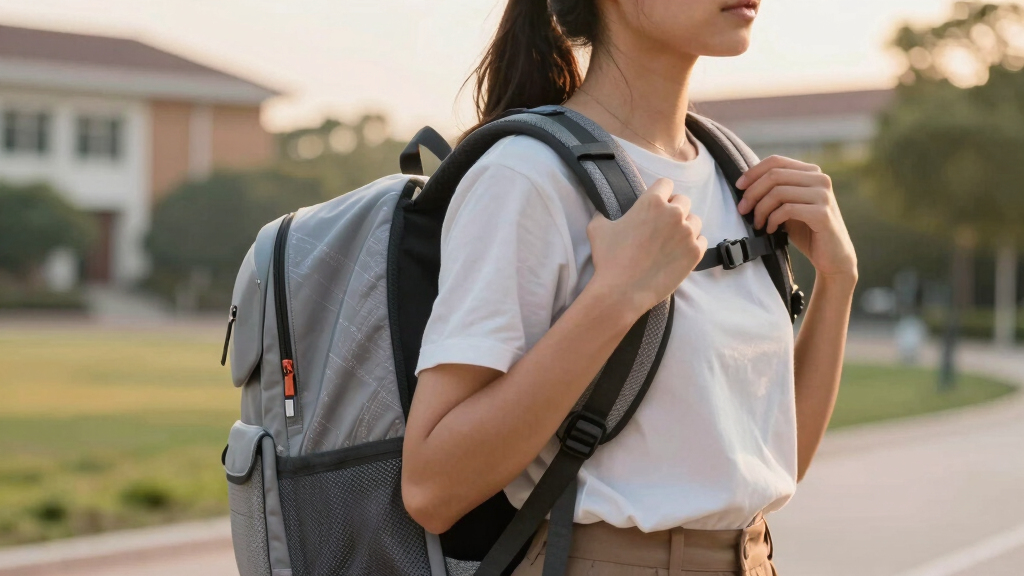

This guide helps students and parents choose an ergonomic backpack that promotes good posture and reduces discomfort. It covers key features to look for, how to assess fit, and tips for proper use. Designed for beginners, it provides clear actions to make an informed decision quickly, ensuring the backpack supports healthy back and shoulder alignment.

Get the little things that make your day delivered free — and shop member deals
- Fast, free delivery on millions of items
- Access to Prime Big Deal Days deals on October 6–7
- Prime Video, Amazon Music and more included

JanSport 34L Cool Backpack – 15-inch Laptop Sleeve, Faded Sage
- ✔ Capacity: 34 L
- ✔ Laptop Sleeve Size: 15 inches
- ✔ Material: 100% recycled 600D polyester

JanSport Laptop Backpack – 2 Compartments, 15” Laptop Sleeve, Ergonomic Shoulder Straps, Black
- ✔ Compartments: 2
- ✔ Laptop Sleeve Size: 15 inches
- ✔ Strap Type: Adjustable

JanSport 32L Agave Hiking Backpack – 15 Inch Laptop, Black
- ✔ Capacity: 2000 cu in / 32 L
- ✔ Dimensions: 19" x 13.5" x 10"
- ✔ Laptop Dimensions: 15" x 11" x 1.9"
Difficulty: Beginner | Time: 15-30 minutes
What You’ll Need
Tools & Materials:
- measuring tape
- a mirror
- pen and paper for notes
Knowledge:
- basic understanding of ergonomic principles
- awareness of the student’s body measurements
JanSport 34L Cool Backpack – 15-inch Laptop Sleeve, Faded Sage
<p>This JanSport backpack stands out for its <strong>large capacity and eco-conscious materials</strong>. It features a 34L volume with multiple compartments, including a dedicated sleeve for a 15-inch laptop, making it ideal for students hauling books, tech, and essentials. The ergonomic straps and padded back panel enhance comfort, though the lightweight design might not support very heavy loads over long periods. Compared to other picks, it’s best suited for students prioritizing sustainability and space, but it may fall short for those needing maximum load support.</p>
Pros:
- Eco-friendly recycled polyester material
- Ample storage with multiple compartments
- Comfortable ergonomic straps
Cons:
- Lightweight design limits heavy load support
- Limited color options
Best for: Students looking for an eco-friendly, spacious backpack with good organization.
Not ideal for: Students requiring maximum load support or minimalistic packs.
Bottom line: A spacious, eco-conscious backpack perfect for students who value sustainability and organization over heavy load support.
“A spacious, eco-conscious backpack perfect for students who value sustainability and organization over heavy load support.”
JanSport Laptop Backpack – 2 Compartments, 15” Laptop Sleeve, Ergonomic Shoulder Straps, Black
<p>This JanSport model is a reliable choice for daily commuting, with <strong>two spacious compartments and ergonomic shoulder straps</strong> that prioritize comfort. Its durable fabric and high-quality zippers ensure longevity, making it a dependable workhorse for students juggling multiple books and gadgets. It’s especially suited for students who want a straightforward, stylish pack with ergonomic features but might be too large or bulky for minimalist users. Compared to the 34L model, it supports heavy loads better but sacrifices some capacity for compactness.</p>
Pros:
- Durable construction with high-quality fabric
- Ergonomic S-curve shoulder straps
- Multiple compartments for organization
- Trusted brand with lifetime warranty
Cons:
- Limited color options in this model
- May be too large for minimalists
Best for: Students needing a durable, organized backpack for everyday school and travel.
Not ideal for: Students seeking a minimalist or ultra-light pack.
Bottom line: A dependable, ergonomic backpack designed for students who prioritize durability and organization for daily use.
“A dependable, ergonomic backpack designed for students who prioritize durability and organization for daily use.”
JanSport 32L Agave Hiking Backpack – 15 Inch Laptop, Black
<p>The JanSport Agave backpack combines outdoor ruggedness with ergonomic features, featuring a padded sleeve that fits a 15-inch laptop and multiple compartments for gear. Its adjustable straps and water bottle pockets make it suitable for outdoor adventures, travel, and school. However, its lightweight fabric may reduce long-term durability, and it offers fewer padding options for extra protection. Compared to urban-focused backpacks, it’s better suited for active students who want a versatile pack that can transition from campus to trail.</p>
Pros:
- Durable fabric and zippers
- Multiple compartments and water bottle pockets
- Padded sleeve fits 15-inch laptops and hydration systems
- Adjustable straps for comfort
Cons:
- Limited color options
- Lightweight fabric may reduce durability over time
- No dedicated extra padding for fragile electronics
Best for: Students who need a versatile pack for outdoor activities and school.
Not ideal for: Students seeking maximum padded protection for delicate electronics.
Bottom line: An outdoor-ready, ergonomic backpack that excels in versatility but trades some protection for rugged durability.
“An outdoor-ready, ergonomic backpack that excels in versatility but trades some protection for rugged durability.”
As an Amazon Associate we earn from qualifying purchases.
Before You Start
Measure the student’s torso length (from C7 vertebra to iliac crest) and shoulder width. Review any existing back or shoulder discomfort. Be aware that a poorly fitted backpack can cause strain, so take your time to verify measurements and fit during testing.
Step-by-Step Instructions
Step 1: Assess the student’s body measurements
Use a measuring tape to measure the torso length (from the base of the neck to the top of the hips) and shoulder width (across the back at the widest point). Record these measurements for reference.
Tip: Proper measurements ensure the backpack size and strap length are appropriate, reducing strain.
Check: Measurements are accurate and match the student’s body proportions within a few centimeters.
Step 2: Select a backpack with adjustable straps and padded shoulder straps
Choose a backpack that has adjustable shoulder straps, padded straps, and a padded back panel. Check that the straps can be lengthened or shortened to fit snugly without causing discomfort.
Tip: Avoid backpacks with non-adjustable straps or minimal padding, as they can cause uneven weight distribution.
Check: Straps can be adjusted to fit the student’s body comfortably, with the backpack sitting evenly on both shoulders.
Step 3: Test the backpack’s fit on the student
Have the student wear the backpack with both straps adjusted to a snug fit. Ensure the bottom of the backpack sits around the top of the hips, not below the waist. Adjust straps as needed for a secure fit that feels comfortable.
Tip: Check that the backpack’s weight is evenly distributed and that the shoulders are not strained or pulled forward.
Check: Backpack sits evenly, no excessive pulling on straps, and the student can move comfortably without feeling the pack sway.
Step 4: Verify proper weight distribution and load
Load the backpack with typical school supplies. Distribute the weight evenly inside, placing heavier items close to the back and centered.
Tip: Avoid overloading; a backpack should not weigh more than 10-15% of the student’s body weight.
Check: The student can walk and move naturally, with minimal strain or discomfort.
Step 5: Check for correct posture while wearing the backpack
Observe the student from the side while they stand naturally. Ensure their shoulders are level, back is straight, and the head is aligned over the shoulders. Adjust straps if necessary to promote good posture.
Tip: Encourage the student to maintain good posture and adjust straps as needed for comfort.
Check: Posture remains upright and balanced, with no leaning or asymmetry caused by the backpack.
Common Mistakes to Avoid
- Choosing backpacks that are too small or too large — Use body measurements to select a backpack that fits the student’s torso length and shoulder width, avoiding oversized or undersized options.
- Overloading the backpack beyond recommended weight — Limit the load to 10-15% of the student’s body weight and distribute weight evenly inside the pack.
- Not adjusting straps properly — Ensure straps are tightened so the pack sits high on the back, not hanging low or causing pulling on the shoulders.
- Ignoring the importance of padding — Select backpacks with padded straps and back panels to cushion shoulders and reduce pressure points.
Troubleshooting
Problem: Backpack causes shoulder pain despite adjustments
Solution: Check if the straps are too tight or too loose; adjust for a snug fit without squeezing. Consider a backpack with more padding or a different shape.
Problem: Backpack slides downward or feels unstable
Solution: Ensure straps are tightened properly and load is centered. Use a hip belt if available for better weight distribution.
Problem: Student reports discomfort after wearing the backpack
Solution: Reduce load weight, verify proper fit, and encourage good posture habits. Switch to a different model if discomfort persists.
What Success Looks Like
The backpack sits evenly on both shoulders, rests at the top of the hips, with straps snug but comfortable. The student moves freely with no pain or discomfort, and the load feels balanced and secure.
Next Steps
Regularly check the fit as the student grows or carries different loads. Clean and maintain the backpack, and replace it if padding or straps wear out. Educate the student on proper lifting and carrying techniques to prevent strain. Reassess the fit periodically, especially at the start of each school year.
Frequently Asked Questions
How do I know if the backpack is too heavy?
The backpack should not weigh more than 10-15% of the student’s body weight. If the student experiences back, shoulder, or neck pain, reduce the load.
What features make a backpack more ergonomic?
Look for adjustable padded shoulder straps, a padded back panel, a waist or hip belt, and compartments that help distribute weight evenly.
Can a backpack cause long-term back problems?
Yes, if it is poorly fitted, overloaded, or used improperly. Choosing an ergonomic backpack and maintaining proper load and fit reduces this risk.
How often should I check the fit of the backpack?
At least once at the start of each school year and any time the student reports discomfort or growth changes.
Evergreen bestsellers Picks
bestsellers
As an affiliate, we earn on qualifying purchases.