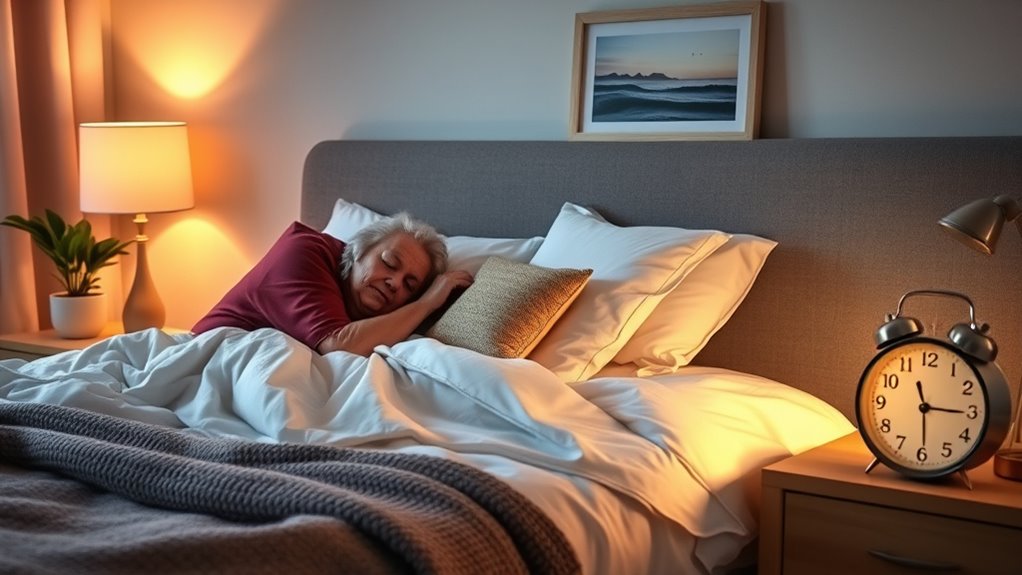

To sleep well as you age, establish a consistent schedule and create a calming bedtime routine. Keep your bedroom dark, cool, and quiet, and avoid caffeine, large meals, or alcohol before sleep. Incorporate relaxing activities like gentle stretching or deep breathing to wind down. Limit daytime naps and stay physically active during the day. Focusing on these habits can greatly improve your sleep quality—stay tuned for more tips to help you age well with restful nights.

Get the little things that make your day delivered free with Prime
- Fast, free delivery on millions of items
- Prime Video, Amazon Music and more included
- Member-only deals all year
Key Takeaways
- Maintain a consistent sleep schedule, including weekends, to regulate your internal clock as you age.
- Create a calming bedtime routine with relaxing activities and avoid screens at least one hour before sleep.
- Optimize your sleep environment by keeping the room dark, cool, and quiet, and using blackout curtains.
- Engage in regular, moderate physical activity and limit daytime naps to 20-30 minutes to promote restful sleep.
- Manage stress with mindfulness or gentle stretching and seek professional advice if sleep issues persist.

Getting enough quality sleep can become more challenging as you age, but improving your sleep habits can make a significant difference. One of the most effective ways to do this is by focusing on your sleep hygiene. Sleep hygiene involves creating an environment and daily routine that promote restful sleep. Start by establishing consistent sleep and wake times, even on weekends. This consistency helps regulate your body’s internal clock and makes falling asleep easier. Avoid large meals, caffeine, and alcohol close to bedtime, as they can disrupt your sleep cycle. Creating a calm, dark, and cool bedroom environment also plays a crucial role; use blackout curtains and keep the room at a comfortable temperature to support your sleep quality.
Your bedtime routines are equally important. Developing a relaxing pre-sleep ritual signals to your body that it’s time to wind down. This might include gentle activities like reading, taking a warm bath, or practicing relaxation techniques such as deep breathing or meditation. Avoid screens—like smartphones, tablets, or TV—at least an hour before bedtime, as the blue light emitted can interfere with melatonin production, making it harder to fall asleep. Instead, opt for calming activities that help your mind and body relax. Consistency in your bedtime routines reinforces your body’s sleep signals, making it easier to drift off and stay asleep through the night. Incorporating vertical storage solutions can also help create a clutter-free space, reducing stress and promoting better sleep environments.
As you implement these habits, be mindful of daytime behaviors. Regular physical activity can improve sleep quality, but avoid vigorous exercise close to bedtime. Limit daytime naps to 20-30 minutes and avoid napping late in the afternoon, as long naps or late naps can interfere with your ability to fall asleep at night. Also, manage stress through mindfulness or gentle stretching, which can help quiet an overactive mind. If you find your sleep still isn’t improving, consider reviewing your sleep hygiene and routines, making adjustments as needed.
As an affiliate, we earn on qualifying purchases.
Frequently Asked Questions
How Does Sleep Quality Affect Cognitive Health in Seniors?
You might notice that poor sleep quality can lead to memory decline and negatively impact your brain health. When you don’t get enough restful sleep, your brain struggles to process and store information effectively. Good sleep helps clear toxins and supports cognitive functions, so prioritizing quality rest can keep your mind sharper, reduce memory issues, and promote overall brain health as you age.
Can Diet Influence Sleep Patterns in Older Adults?
Sure, your diet can totally influence your sleep patterns. Think of diet and digestion as the backstage crew of your sleep show—they keep everything running smoothly or cause chaos. Nutritional supplements might be the dramatic plot twists, helping you wind down or wake up refreshed. Eating too much sugar or caffeine late can sabotage your sleep, while a balanced diet promotes restful nights. So, yes, what you eat definitely impacts your sleep quality.
Are There Specific Exercises to Improve Sleep in Later Years?
You can improve your sleep with specific exercises like walking, yoga, or stretching, which promote relaxation and reduce stress. Incorporate these into your daily exercise routines to enhance your sleep hygiene. Regular physical activity helps regulate your sleep patterns, making it easier to fall asleep and stay asleep longer. Just make sure to finish exercising a few hours before bedtime to avoid interfering with your sleep quality.
How Do Medications Impact Sleep Quality for Seniors?
Your sleep can be dramatically affected by medications, like an earthquake shaking your entire night’s rest. Medication interactions and dosage effects play huge roles; some drugs may cause insomnia, while others induce drowsiness. Always check with your doctor about how your medications impact sleep, and never alter dosages without guidance. Managing these effects can help you reclaim peaceful, restorative nights, ensuring you wake energized and ready to face each day.
What Are Signs of Sleep Disorders Common in Older Adults?
You might notice signs of sleep disorders in older adults, such as difficulty falling asleep, frequent awakenings, or feeling tired despite enough sleep. Restless leg syndrome causes uncomfortable sensations that disrupt rest, while poor sleep hygiene can worsen these issues. Keep an eye out for persistent snoring or breathing problems, as they could indicate sleep apnea. Addressing these signs early helps improve sleep quality and overall health.
Conclusion
By embracing these sleep tips, you’re opening the door to brighter mornings and fuller nights. Remember, quality sleep isn’t just a gift; it’s the foundation of vibrant aging. So, why not take charge today? After all, isn’t life too precious to spend exhausted? Sleep well, age well—because a well-rested you is the best version yet, shining brighter with each new dawn.
Fall Picks
fall essentials
As an affiliate, we earn on qualifying purchases.