
To keep your home safe and running smoothly, start with simple tasks like tightening loose screws on cabinets, replacing worn faucet washers, and cleaning appliance filters regularly. Always unplug devices before working on them and turn off water supplies for plumbing repairs. Use the right tools and take safety precautions, like wearing gloves. Small maintenance tasks prevent bigger issues later. Keep learning easy fix tips to stay confident in maintaining your home comfortably.
Key Takeaways
- Keep basic tools organized and in good condition for easy access during repairs.
- Tighten loose screws on fixtures and cabinet hinges regularly to prevent further issues.
- Replace worn faucet washers and clean appliance filters to maintain efficiency and prevent leaks.
- Unplug electrical devices before inspecting or repairing to ensure safety.
- Turn off water supplies before fixing plumbing problems to avoid flooding or water damage.

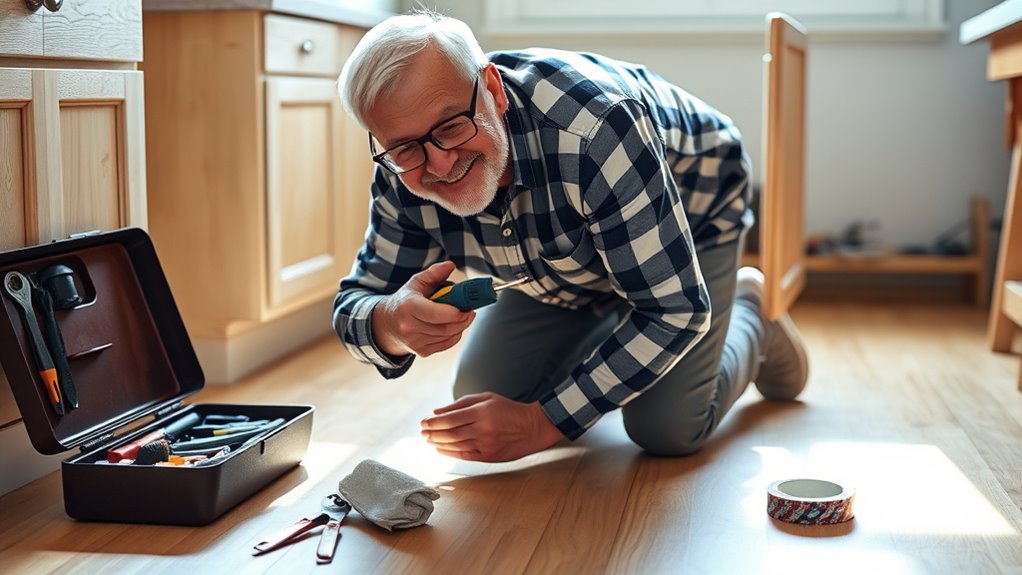
Ever wondered how to keep your appliances and equipment running smoothly for years? The key is simple maintenance and knowing some quick fixes you can do yourself. As a senior, you might feel hesitant about tinkering around, but with proper care and a focus on DIY safety, you can handle many small repairs confidently. The first step is to gather your tool essentials—basic screwdrivers, pliers, a wrench, and a flashlight. Having these on hand makes it easier to troubleshoot and fix minor issues without waiting for a professional. Just remember, safety always comes first. Keep your workspace well-lit, wear gloves if needed, and never force a tool or part that doesn’t seem to fit.
Keep your appliances running smoothly with simple maintenance and safe DIY fixes.
When tackling home repairs, start with simple tasks like tightening loose screws on cabinet hinges or replacing worn-out faucet washers. These small adjustments can prevent larger problems down the line. For appliances, regularly cleaning filters and checking for blockages keeps them functioning efficiently. For example, cleaning your dryer lint trap not only improves drying time but also reduces fire risks. If you notice a leaking pipe, tightening fittings or replacing a worn washer can stop water from wasting away. Always turn off the water supply before making repairs to avoid flooding or water damage.
Many minor repairs involve inspecting cords and switches on electrical devices. Look for frayed wires or loose connections, but avoid working on live circuits—unplug the device first. If you’re unsure about handling electrical parts, it’s best to seek help or consult a professional. Remember, DIY safety is about knowing your limits. Don’t attempt complicated repairs like rewiring outlets or fixing major appliances unless you have the proper training. Instead, focus on quick fixes that require minimal risk, such as replacing a broken door latch or adjusting a cabinet door. Understanding the importance of authenticity and self-awareness in DIY projects can also help you make safer choices.
Maintaining a set of tool essentials not only helps with repairs but also empowers you to troubleshoot common household issues safely. Keep your tools organized and in good condition, so they’re ready when you need them. Regular upkeep of your appliances, like defrosting the freezer or descaling your kettle, also prolongs their lifespan. By staying proactive with these simple maintenance tasks, you’ll keep your home running smoothly and avoid costly repairs down the line. Remember, with patience, proper tools, and attention to DIY safety, many small repairs are well within your reach, giving you independence and peace of mind in your home.
basic home repair tool kit for seniors
As an affiliate, we earn on qualifying purchases.
As an affiliate, we earn on qualifying purchases.
Frequently Asked Questions
How Can Seniors Prevent Falls During DIY Repairs?
To prevent falls during DIY repairs, you should focus on fall prevention and safety precautions. Always wear sturdy, non-slip shoes and use a stable ladder with someone nearby for support. Keep your work area well-lit and free of clutter. Take frequent breaks, avoid rushing, and use tools that are comfortable and easy to handle. Staying cautious and prepared helps you stay safe while tackling home repairs on your own.
What Tools Are Safest for Seniors to Use Alone?
When choosing tools to use alone, opt for lightweight tools that reduce strain and improve control. Look for ergonomic handles, which make gripping easier and minimize discomfort. These features help you work safely and efficiently, lowering the risk of accidents. Always prioritize tools designed with your comfort in mind, and never force a tool if it feels too heavy or awkward. Your safety is the top priority during any home repair.
How Often Should Home Repairs Be Inspected for Safety?
Think of your home as a trusted friend that needs regular check-ins. You should inspect for home hazards at least every six months, ensuring safety remains a top priority. Use a safety checklist to guide your inspections, focusing on potential issues like loose handrails or frayed cords. Regular inspections help catch problems early, keeping your home safe and comfortable while giving you peace of mind.
Are There Any Age-Friendly Home Maintenance Products?
You’ll find many age-friendly home maintenance products designed for safety and ease. Assistive devices like grab bars and ergonomic tools such as lightweight screwdrivers help you tackle repairs confidently. These products reduce strain and prevent accidents, making home upkeep safer. Look for items with non-slip grips, easy-to-reach features, and simple designs. Using assistive devices and ergonomic tools guarantees you can handle basic repairs independently and comfortably.
When Should Seniors Seek Professional Help Instead of DIY?
You might think you can handle every repair, but when it comes to safety, don’t test your luck. If a task requires climbing high, handling sharp tools, or involves electrical work, it’s time to call in elderly assistance or schedule a safety assessment. Trying to DIY these could backfire, risking injury. Seek professional help whenever you’re unsure—your safety’s worth more than fixing a leaky faucet yourself.
Conclusion
By mastering these simple repairs, you’re turning your home into a fortress of safety and comfort. Think of each fix as a sturdy brick in your personal castle, giving you confidence and independence. Remember, even the smallest repair can be a shining beacon of self-reliance. Keep these tips in your toolkit, and watch your home transform into a haven where you feel secure, empowered, and in control—your sanctuary shining brighter every day.