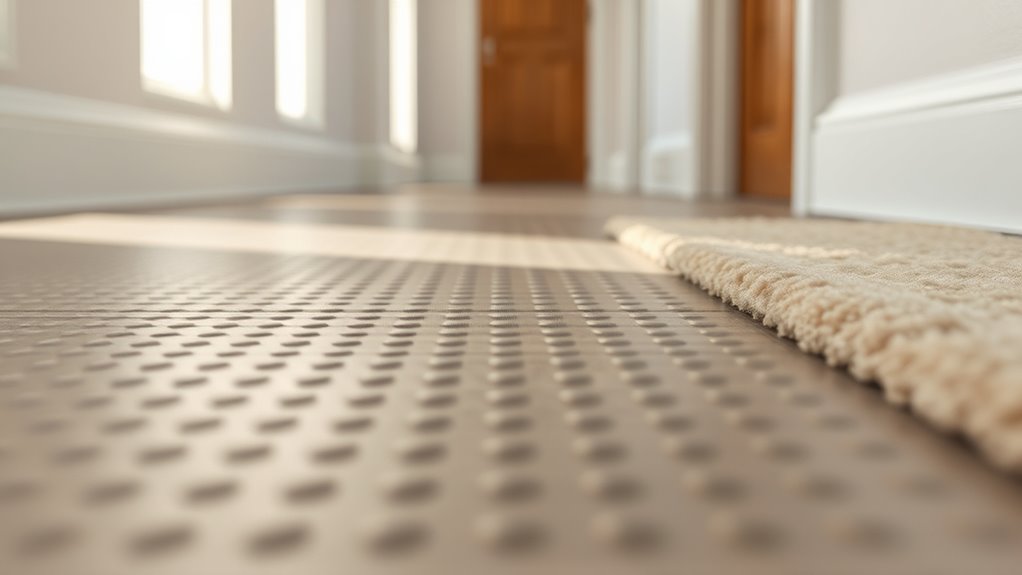
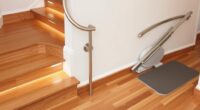
To prevent slips and falls, choose flooring with textured surfaces, anti-slip coatings, or embedded grip patterns that provide reliable traction, even when wet. Materials like rubber and vinyl offer durability, waterproof qualities, and impact absorption, making them ideal for high-traffic or moisture-prone areas. Regular cleaning and maintenance also help keep surfaces safe. For more ideas on creating a safer environment, discover the best flooring options tailored to your needs.

Get the little things that make your day delivered free with Prime
- Fast, free delivery on millions of items
- Prime Video, Amazon Music and more included
- Member-only deals all year
Key Takeaways
- Choose flooring with textured surfaces or embedded grip patterns to enhance slip resistance and prevent falls.
- Use anti-slip coatings or treatments on high-risk areas prone to moisture or spills.
- Select durable, impact-absorbing materials like rubber or vinyl for long-lasting safety.
- Maintain regular cleaning to remove debris, stains, and buildup that could cause slipping hazards.
- Prioritize flooring with proven slip-resistant features for environments like kitchens, hospitals, and outdoor walkways.

Choosing the right safety flooring is essential for creating secure and accident-free environments. When it comes to preventing slips and falls, you need a surface that offers excellent slip resistance and can withstand daily wear and tear. The flooring you select should not only grip well underfoot but also maintain its safety features over time, regardless of foot traffic or spills. Prioritizing slip resistance means opting for materials that have textured surfaces, anti-slip coatings, or embedded grip patterns. These features help reduce the risk of slipping, especially in areas prone to moisture or where spills are common. You want a flooring option that provides reliable traction, whether in commercial kitchens, hospitals, gyms, or outdoor walkways, to keep everyone safe.
Prioritize slip-resistant flooring with textured surfaces or anti-slip coatings for safer, long-lasting environments.
Material durability plays a critical role in choosing safety flooring because it determines how well the surface withstands heavy use and environmental stress. Durable materials resist scratches, dents, and fading, ensuring your investment remains effective for years. For example, rubber flooring is known for its resilience and ability to absorb impact, making it ideal for gyms and playgrounds. Vinyl flooring, on the other hand, offers high durability and waterproof qualities, perfect for areas exposed to moisture or frequent cleaning. When selecting flooring, consider how much foot traffic it will endure; high-traffic zones demand tougher materials that won’t deteriorate quickly or compromise slip resistance. Durable safety flooring not only protects users but also reduces maintenance costs and replacement expenses over time.
You should also think about how easy it is to maintain the flooring you choose. Surfaces that are resistant to stains, mold, and mildew tend to stay safer longer because they won’t develop slippery build-ups or become hazardous due to neglect. Regular cleaning and prompt spill management are essential, but the right flooring material will support these efforts rather than hinder them. Additionally, some safety flooring options come with built-in antimicrobial properties, helping to keep environments hygienic and safe for everyone.
Ultimately, your goal is to find a flooring solution that balances slip resistance with material durability, ensuring a long-lasting, safe environment. By selecting a surface that grips well and withstands daily challenges, you reduce the chance of slips, trips, and falls. Remember, investing in quality safety flooring isn’t just about compliance; it’s about protecting yourself, your loved ones, or your employees from preventable accidents. When you focus on slip resistance and durability, you create a safer space where everyone can move confidently, knowing that the flooring has been designed with their safety in mind.
As an affiliate, we earn on qualifying purchases.
Frequently Asked Questions
How Often Should Flooring Be Inspected for Safety Hazards?
You should conduct regular flooring inspections to identify safety hazards early. How often depends on usage and environment, but generally, inspect high-traffic areas monthly and less-used spaces quarterly. Look for loose tiles, worn surfaces, or spills that could cause slips. Promptly addressing safety hazards guarantees your flooring remains safe, reducing fall risks. Regular inspections keep you proactive, especially in busy or aging spaces where hazards can develop quickly.
Are There Cost-Effective Flooring Options for Large Areas?
For large areas, you want cost-effective flooring options that balance budget and durability. Consider budget alternatives like vinyl or laminate flooring, which are affordable and easy to install. Durable materials such as rubber or commercial-grade carpet tiles provide longevity and slip resistance. These choices help you stay within budget while ensuring safety and durability, making them ideal for extensive spaces without sacrificing quality or safety.
Can Existing Floors Be Easily Upgraded to Non-Slip Surfaces?
Upgrading your existing floors to non-slip surfaces is quite feasible. You can choose a suitable flooring material, like non-slip coatings or textured overlays, that can be applied directly over the current surface. The installation process is straightforward, often involving cleaning, applying the non-slip layer, and letting it cure. This way, you improve safety without a complete overhaul, making it a practical and effective upgrade.
What Maintenance Is Required to Keep Flooring Slip-Resistant?
Ever wonder how to keep your floors slip-resistant? Regularly clean your floors to remove dirt, spills, and debris that can cause slips. Use appropriate floor cleaning products designed for non-slip surfaces, and always dry thoroughly. Don’t forget hazard signage to alert others of potential dangers during cleaning. Consistent maintenance is key to maintaining safety, preventing accidents, and ensuring your flooring stays slip-resistant over time.
Are There Specific Flooring Choices Recommended for Elderly Safety?
For elderly safety, you should consider non-slip mats and textured tiles. Non-slip mats provide extra grip in areas prone to moisture, like bathrooms and kitchens. Textured tiles offer better traction compared to smooth surfaces, reducing fall risks. Choose flooring options with slip-resistant surfaces, and regularly clean them to prevent buildup of slick substances. These choices help create a safer environment, giving you peace of mind and reducing fall hazards for seniors.
Conclusion
Choosing the right safety flooring is like laying down a sturdy shield against falls. By selecting non-slip, cushioned, and seamless options, you create a safer environment where slips are less likely. Don’t wait for an accident to happen—think of your home or workspace as a fortress, and the flooring as the first line of defense. Invest in the best options today, and step confidently knowing you’ve minimized the risk of a slip-up.
NFL season / tailgating Picks
team gear
As an affiliate, we earn on qualifying purchases.