To prep your home for winter, start by scheduling a professional HVAC check and replacing filters to guarantee efficient heating. Seal gaps around windows and doors, and add insulation to keep warmth inside. Test and upgrade your thermostat to save energy, and manage vent directions for better heat distribution. Inspect your roof and gutters for damage, and clear pathways of snow and ice. For more tips to stay safe and warm, explore the full list.
Key Takeaways
- Schedule a professional HVAC inspection and replace filters to ensure efficient operation during winter.
- Seal gaps around windows and doors, and upgrade insulation to retain heat and prevent drafts.
- Test thermostats and install programmable models to optimize heating and save energy.
- Inspect roof, gutters, and siding for damage, and clear debris to prevent leaks and ice dams.
- Prepare emergency supplies, address home repairs, and ensure safety measures are in place for cold weather.
Are you ready to keep your belongings in top shape? Winter is approaching, and now’s the time to prepare your home for the cold weather ahead. One of the most important steps you can take is making sure your HVAC system is in peak condition. Schedule a professional inspection to check for any issues, clean or replace filters, and verify it’s functioning efficiently. A well-maintained HVAC system keeps your home warm and reduces energy costs during the chilly months. Furthermore, consider upgrading your insulation if it’s been a while since your last enhancement. Proper insulation helps retain heat, so your furnace doesn’t have to work overtime, saving you money and preventing drafts.
Start by sealing any gaps around windows and doors with weatherstripping or caulk. These small gaps can let in cold air and cause your heating system to work harder. Check your attic and basement for insulation levels; if they’re lacking, adding insulation upgrades can considerably improve your home’s thermal barrier. Better insulation keeps warm air inside and cold air out, making it easier to maintain a comfortable temperature inside. Don’t forget to inspect and insulate pipes, especially those in unheated areas, to prevent freezing and bursting during extreme cold snaps.
Seal gaps around windows and doors; upgrade attic and basement insulation; insulate pipes to prevent freezing.
As winter approaches, it’s wise to test your heating system’s thermostat to ensure it’s accurate and responsive. Consider installing a programmable thermostat if you don’t already have one. It allows you to set different temperatures for day and night, conserving energy when you’re asleep or away. Covering vents in unused rooms can also help redirect heat to the spaces you use most, increasing efficiency. Meanwhile, clear your gutters and downspouts to prevent ice dams and water damage, which can compromise your home’s insulation and structural integrity.
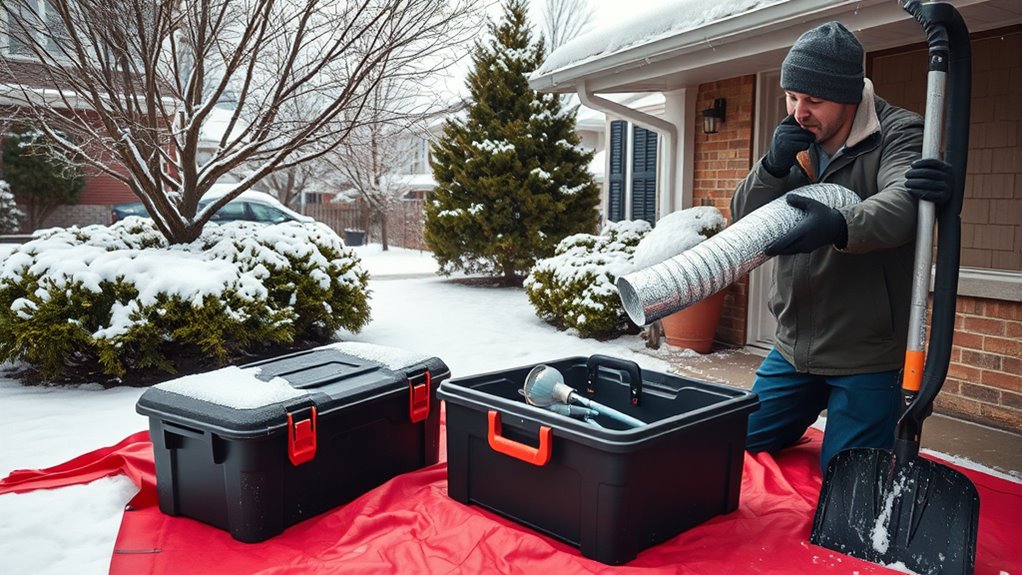
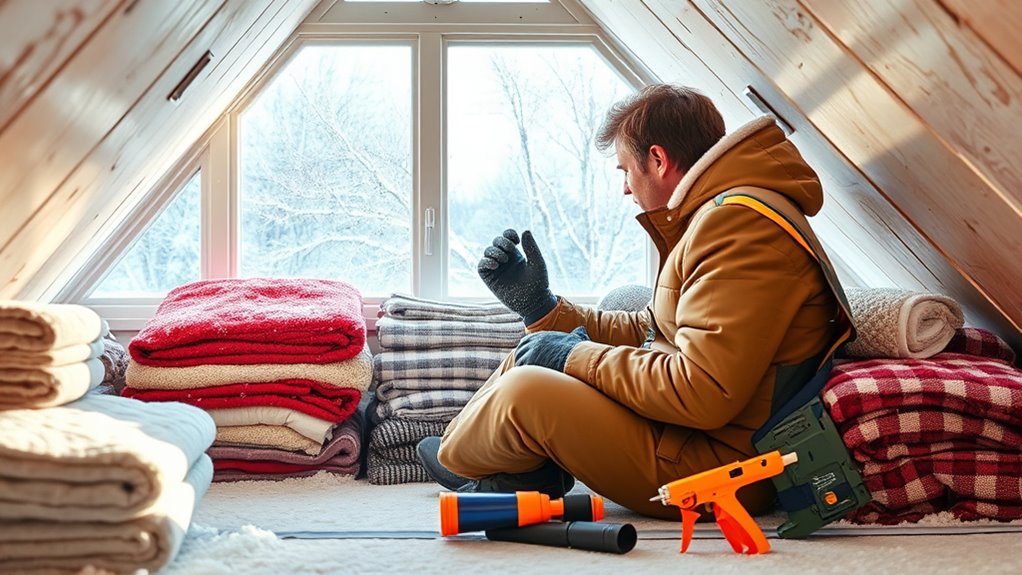
Outside, examine your roof and siding for any damage that could let in cold air or cause leaks. Trim back tree branches that could fall and damage your home during winter storms. Keep walkways clear of snow and ice to prevent accidents. Additionally, consider the benefits of portable camping gear such as portable heaters or weather-resistant tents to stay comfortable if you plan outdoor activities or need temporary shelter. Finally, check your emergency supplies, including blankets, candles, and items needed in case of power outages. Preparing your home now means you’ll stay warm, save on energy bills, and avoid costly repairs in the dead of winter. Taking these proactive steps ensures your home is ready to face the cold weather comfortably and efficiently.

AprilAire 1213 Air Filter High-Performance Upgrade Kit for 2120 and 2200 Air Purifiers – Replaces 201 Air Filter
- Performance Upgrade: Enhances air purifier performance at lower cost
- High-Performance Filter: Includes MERV 13 filter for better filtration
- Improved Filtration: Eliminates 40% more dust and 75% more viruses
As an affiliate, we earn on qualifying purchases.
As an affiliate, we earn on qualifying purchases.
Frequently Asked Questions
When Should I Start Winterizing My Home?
You should start winterizing your home during early fall, ideally before temperatures drop considerably. This allows you to complete seasonal maintenance and outdoor preparations without rush. By doing so, you prevent issues like frozen pipes and drafts. Check for leaks, insulate exposed pipes, and clean gutters. Starting early ensures you’re prepared for colder weather, making your home more energy-efficient and comfortable throughout the winter months.
How Often Should I Inspect My Heating System?
Think of your heating system as the heart of your home’s winter defense. You should schedule regular heating maintenance and system inspections at least once a year, ideally before winter hits. If you notice any issues, like strange noises or uneven heating, inspect your system more frequently. Regular inspections guarantee your system runs efficiently, preventing breakdowns and keeping you warm all season long.
What Are the Signs of Roof Damage in Winter?
You’ll notice roof damage signs in winter if you see excessive snow load, which strains your roof structure, or ice damming, causing water to back up and leak inside. Look for sagging areas, icicles hanging from eaves, or water stains on ceilings. These signs indicate your roof is under stress and needs attention, so inspect regularly and consider professional help to prevent further damage.
How Can I Prevent Frozen Pipes?
Imagine you’re back in the days of yore, wishing you had modern pipe insulation. To prevent frozen pipes, you should insulate exposed pipes with quality pipe insulation and wrap outdoor faucets with faucet protection. Keep your home warm by sealing drafts and letting a slow drip escape from faucets, especially during cold snaps. These simple steps save you from costly repairs and chilly surprises when winter’s at its coldest.
Are Energy-Efficient Upgrades Worth It for Winter?
You’ll find energy-efficient upgrades worth it for winter because they reduce your heating costs and improve comfort. Consider insulation upgrades to keep warm air inside and replace old windows with energy-efficient models to prevent drafts. These upgrades not only make your home cozier but also lower your energy bills over time. Investing in insulation and window replacements is a smart choice to prepare your home for cold weather and stay comfortable all winter long.
Conclusion
As you finish preparing your home for winter, remember that timing is everything—you might find that a small fix now prevents a big problem later. Sometimes, the best surprises come when you least expect them, like discovering a hidden draft just as the cold settles in. By staying vigilant and proactive, you’ll not only keep your home cozy but also stumble upon little improvements that make all the difference. Winter’s arrival is just the beginning of your home’s quiet resilience.