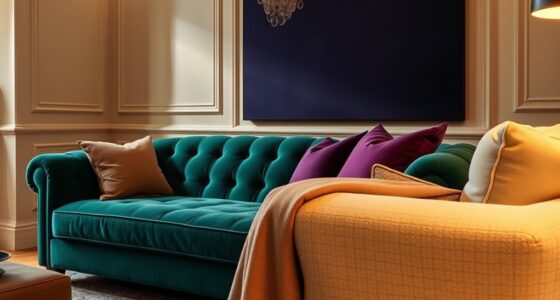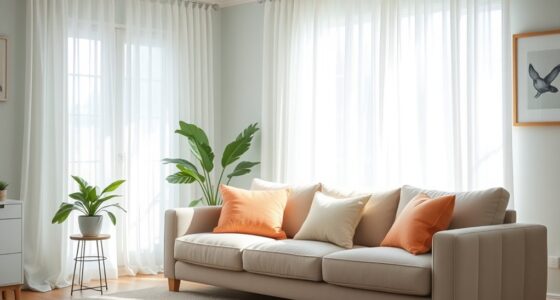
Layering shades within a monochromatic scheme is a smart way to achieve a sophisticated and cohesive look. By mixing lighter tints with darker tones, you add depth and visual interest without overwhelming the space or outfit. This technique highlights textures and architectural features or creates a subtle gradient effect that feels harmonious. Playing with different shades of one hue allows you to express elegance effortlessly—keep exploring to discover how to master this versatile approach.
Key Takeaways
- Use a variety of shades, tints, and tones of a single hue to create depth and visual interest.
- Layer lighter and darker shades strategically to highlight features and add dimension.
- Incorporate textures and patterns within the monochromatic palette to enhance complexity without disrupting harmony.
- Balance shades evenly throughout the design to maintain a cohesive and sophisticated aesthetic.
- Consider seasonal color psychology to select shades that evoke the desired mood and atmosphere.

Have you ever wondered how a single color can create a striking and cohesive design? Monochromatic schemes excel at doing just that by using different shades, tints, and tones of one hue. This approach allows you to craft a sophisticated look that feels both intentional and harmonious. When choosing a monochromatic palette, understanding color psychology can help you evoke specific emotions or moods. For example, blues often promote calm and serenity, while reds evoke energy and passion. By carefully selecting shades that align with your desired atmosphere, you can influence how viewers perceive and respond to your space or design.
Seasonal variations play a significant role in how you might adapt a monochromatic scheme. During winter, deeper, richer shades like navy or charcoal can create a cozy, inviting environment. In contrast, spring might inspire lighter, pastel versions of your chosen hue to feel fresh and lively. Summer could call for brighter, more saturated shades to reflect vibrancy and warmth, while fall might inspire muted, earthy tones that evoke comfort and stability. Recognizing these seasonal shifts allows you to modify your monochromatic palette for maximum impact throughout the year, keeping your design fresh and relevant.
Layering shades within a single color family adds depth and dimension to your design without overwhelming the senses. Think of it as painting with a nuanced brush, where each shade contributes to a cohesive story. By combining lighter tints with darker tones, you create visual interest and contrast, guiding the eye naturally across the space. This technique is especially effective in interior design, where varying shades can highlight architectural features or define different areas without breaking the harmony. In fashion, layering monochromatic pieces can produce a polished, elegant look that’s easy to accessorize and adapt.
Furthermore, choosing a monochromatic scheme simplifies decision-making. Instead of juggling multiple colors, you focus on a single hue and its variations, making it easier to maintain consistency. This approach also provides flexibility; you can introduce texture and pattern to add complexity without disrupting the overall unity. The key is balancing shades thoughtfully so that each one enhances the others, creating a seamless flow that feels intentional and refined.
In essence, mastering monochromatic schemes involves understanding the power of a single color and its many variations. By considering color psychology, seasonal shifts, and layering techniques, you can craft spaces or outfits that radiate sophistication and harmony. It’s a timeless method that, when executed skillfully, highlights your eye for detail and your ability to create cohesive, stylish designs with simplicity and grace. Additionally, appliance compatibility considerations can ensure your design choices are both functional and aesthetically pleasing.

MEEDEN 12-Well Round Porcelain Watercolor Paint Palette for Watercolor Gouache Acrylic Oil Painting, 7-Inch
Made of premium white eco-friendly ceramic material, so it is very durable. Ideal for watercolor, gouache, acrylic, oil,…
As an affiliate, we earn on qualifying purchases.
As an affiliate, we earn on qualifying purchases.
Frequently Asked Questions
How Can I Incorporate Monochromatic Schemes Into Everyday Wear?
You can incorporate monochromatic schemes into your everyday wear by experimenting with color mixing techniques, blending different shades of the same hue to add depth. Use fabric textures like knits, silks, and denim to create visual interest. Layer lighter and darker tones strategically, and accessorize with subtle jewelry or shoes in matching shades. This approach keeps your outfit cohesive yet dynamic, making your look effortlessly sophisticated and versatile for any occasion.
What Color Combinations Work Best for Monochromatic Layering?
You’ll want to pick shades within the same color family that offer subtle contrast, like light and dark blues or soft greys. Use color contrast to add depth, and don’t shy away from pattern mixing—think striped tops with solid trousers—to keep your look interesting. Layer different textures and shades for a sophisticated, cohesive style that’s both modern and easy to wear daily.
How Do I Avoid Looking Monotonous With Monochromatic Outfits?
To avoid looking monotonous with monochromatic outfits, you should play with color contrast and pattern mixing. Incorporate different textures and subtle variations in shades to add depth. Use contrasting accessories or a statement piece to break up the look. Mixing patterns like stripes or florals within the same color family creates visual interest without losing the sophisticated vibe. This approach keeps your outfit fresh and dynamic.
Are Monochromatic Schemes Suitable for All Skin Tones?
Did you know that 85% of people find monochromatic outfits flattering? Monochromatic schemes can suit all skin tones when you focus on skin tone harmony and use color contrast techniques. For warmer skin tones, opt for deeper, richer shades, while cooler tones look great with softer, muted hues. Play with contrast to highlight your features, ensuring your outfit complements your natural complexion for a sophisticated, cohesive look.
What Accessories Complement Monochromatic Layered Looks?
You can elevate your monochromatic layered look with the right accessories. Opt for jewelry pairing that adds subtle contrast, like silver or gold pieces, to highlight your layers without overpowering them. Choose handbag choices in similar or complementary shades to create a cohesive appearance. Keep accessories minimal yet intentional, so they enhance your sophisticated style without detracting from the layered shades. This balance amplifies your chic, polished look effortlessly.

LANANAS Neutral Couch Throw Pillow Covers 18×18 Inch Set of 4 Decorative Farmhouse Boho Throw Pillows for Living Room, Couch, Bed, Sofa Soft Corduroy Accent Home Decor (Neutral Brown, 18×18 Inch)
COVERS ONLY.
As an affiliate, we earn on qualifying purchases.
As an affiliate, we earn on qualifying purchases.
Conclusion
So, next time you think monochromatic schemes are just about boring sameness, remember—they’re actually a masterclass in subtlety and depth. Layering shades isn’t lazy; it’s intentional artistry. Ironically, by sticking to one color, you might just create the most dynamic, sophisticated look you’ve ever pulled off. Sometimes, the simplest choices—like a single hue—can speak volumes. So go ahead, embrace the monochrome myth, and let your style quietly prove everyone wrong.

Lativo Black Peel and Stick Wallpaper 118inL 17.7inW Black Silk Embossed Floral Contact Paper for Cabinets Drawers Furniture Textured Flower Removable Wallpaper for Kitchen Bathroom Waterproof Thicken
When you open the wallpaper and if see wrinkles, don't worry. It won't affect the pasting effect. You…
As an affiliate, we earn on qualifying purchases.
As an affiliate, we earn on qualifying purchases.

LAMIT Natural Ivory Linen Semi Sheer Curtains 84 inch Length, Cream Light Filtering Soft Thick Neutral Living Room Drapes with Bronze Grommet for Bedroom/Farmhouse, 2 Panels, 52 x 84 Inch
Packing Detail: The package includes 2 natural ivory linen curtains and each linen textured curtain measures 52 inch…
As an affiliate, we earn on qualifying purchases.
As an affiliate, we earn on qualifying purchases.