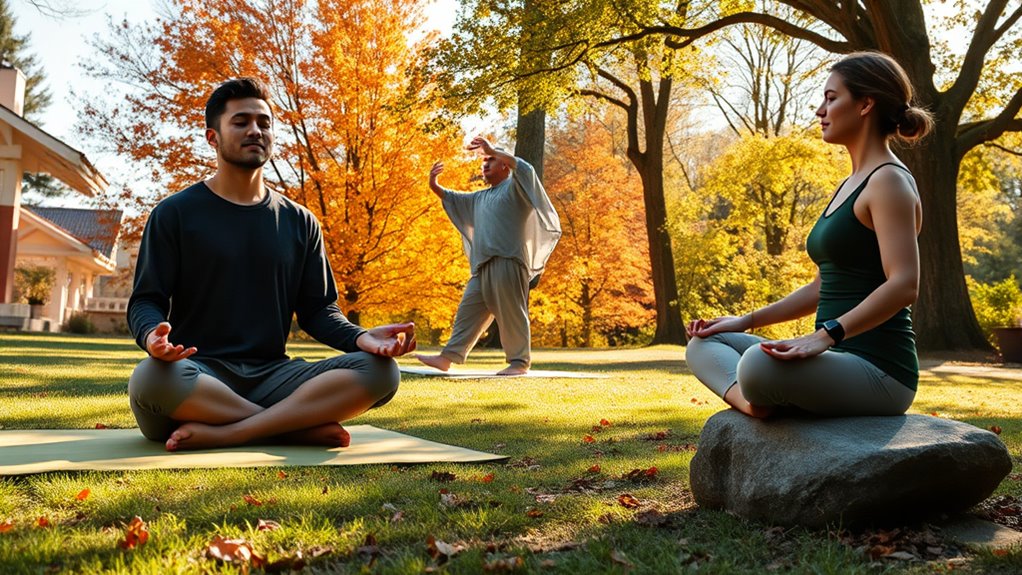

Practicing mindfulness through yoga, tai chi, and meditation can greatly lower your stress levels, boost mental clarity, and improve overall well-being. Yoga combines postures, breathing, and meditation, helping you relax physically and mentally. Tai chi’s slow movements improve balance and calm the mind, while meditation trains you to observe thoughts without judgment. With consistent practice, these techniques can become powerful tools for maintaining peace and resilience—discover more ways to incorporate them effectively into your life.
Key Takeaways
- Yoga, Tai Chi, and Meditation are effective mindfulness practices that reduce stress and promote mental and physical well-being.
- Yoga combines physical postures, breath control, and meditation to enhance relaxation and body awareness.
- Tai Chi involves slow, deliberate movements and deep breathing to improve balance, flexibility, and inner calm.
- Meditation focuses on quieting the mind, observing thoughts non-judgmentally, and building emotional resilience.
- Regular practice of these techniques can lead to long-term mental clarity, emotional stability, and overall health improvements.
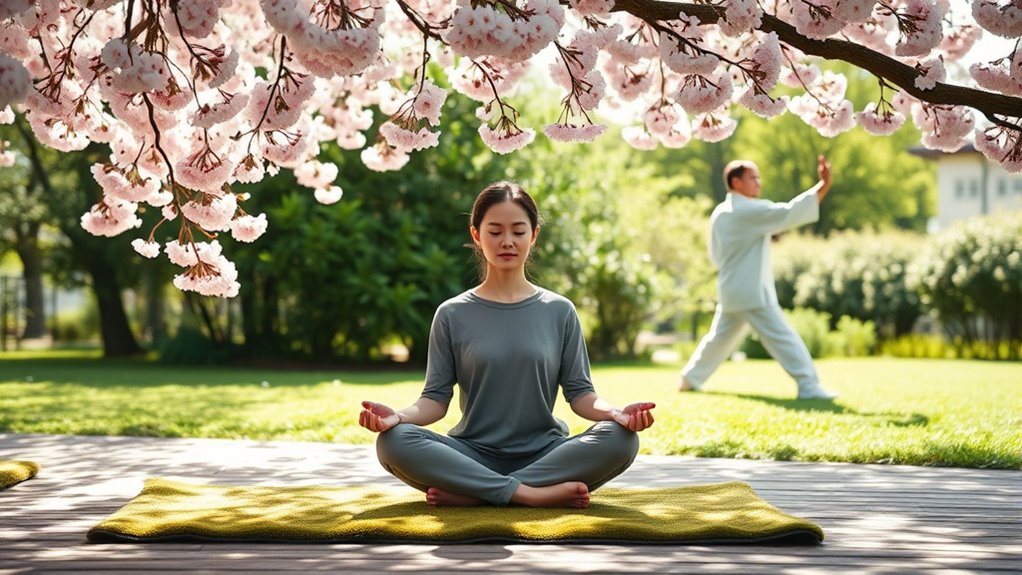
Have you ever wondered how to reduce stress and improve your overall well-being? Mindfulness practices like yoga, tai chi, and meditation can be powerful tools to help you achieve that. These activities focus on cultivating awareness of the present moment, which is at the core of mindfulness techniques. When you engage in mindfulness practices regularly, you’ll notice a considerable decline in stress levels and an improvement in your mental clarity and emotional stability. The key is to integrate these activities into your routine and approach them with an open mind and patience.
Yoga is widely recognized as an effective mindfulness technique that combines physical postures, breathing exercises, and meditation. As you move through each pose, focus on your breath and bodily sensations, allowing your mind to settle into the present. This mindful approach to movement helps to release tension stored in your muscles and calms your nervous system. The practice encourages you to be aware of your body and breath, which promotes stress reduction and enhances your overall sense of calm. Even a short daily session can make a noticeable difference, especially when you prioritize mindful awareness over perfection in each pose.
Tai chi, often described as “meditation in motion,” emphasizes slow, deliberate movements and deep breathing. As you perform each movement with mindfulness, you create a flowing meditation that anchors you in the present moment. This practice not only improves your balance and flexibility but also helps you develop a sense of tranquility and mental clarity. Because tai chi involves gentle, continuous motion, it’s accessible to people of all ages and fitness levels. Regular practice can markedly lower your stress levels and foster a feeling of inner peace, making it an excellent choice for stress reduction.
Meditation, in its many forms, is perhaps the most straightforward mindfulness technique for reducing stress. Whether you prefer guided meditation, focused breathing, or body scans, the goal is to quiet your mind and observe your thoughts without judgment. When you dedicate even a few minutes each day to meditation, you train your brain to respond more calmly to stressors. This mental discipline cultivates resilience and emotional balance over time. Meditation also helps you develop a greater awareness of your thoughts and feelings, empowering you to manage them more effectively. Consistent practice can lead to lasting improvements in your mental health and overall well-being.
Incorporating mindfulness techniques like yoga, tai chi, and meditation into your daily life can transform how you handle stress. These practices teach you to slow down, pay attention, and be present, reducing the impact of stressors and promoting a sense of peace. With patience and persistence, you’ll discover that mindfulness isn’t just a temporary fix but a lifelong tool to enhance your mental, emotional, and physical health. Additionally, understanding the importance of sleep and its connection to mental health can further enhance the benefits of your mindfulness journey.

YOGATI Yoga Mat with Alignment Lines. Exercise mat with carry strap. Pilates mats for yoga or Fitness. Non slip Workout Mat. Thick Yoga Mats for women and men. Gym mats for home. Yoga matt thick.
- Comfort and Cushioning: Provides superior cushioning for exercises
- Joint Protection: Protects joints during intense workouts
- Lightweight and Wide: Easy to carry and spacious for movement
As an affiliate, we earn on qualifying purchases.
As an affiliate, we earn on qualifying purchases.
Frequently Asked Questions
Can Mindfulness Practices Improve Sleep Quality?
Yes, mindfulness practices can improve sleep quality by promoting relaxation techniques that ease your mind and body. By engaging in activities like yoga, tai chi, or meditation, you activate your relaxation response, which helps reduce stress and anxiety. This sleep enhancement makes it easier for you to fall asleep faster and enjoy more restful sleep. Incorporating these practices into your routine can lead to better overall sleep and improved well-being.
Are There Any Risks for Beginners Practicing Mindfulness?
While mindfulness practices generally offer gentle benefits, you should be aware of some safety precautions to navigate beginner challenges. Some may experience emotional discomfort or frustration initially. To stay safe, start slowly, listen to your body, and consider guidance from experienced instructors. Being mindful of your limits helps prevent overwhelm. With patience and proper precautions, you can enjoy the many rewards without undue risks.
How Often Should I Practice for Noticeable Benefits?
You should practice mindfulness daily for noticeable benefits. Consistency is key, so aim for at least 10-20 minutes each day, which is an ideal duration for most beginners. By maintaining regular practice, you’ll enhance your mental clarity and reduce stress more effectively. Remember, the more consistent you are, the quicker you’ll experience positive changes. Stick with it, and you’ll see the benefits unfold over time.
Can Mindfulness Help Manage Chronic Pain?
Yes, mindfulness can help manage chronic pain by promoting pain relief and emotional regulation. When you practice regularly, you become more aware of your pain and emotional responses, which helps reduce their intensity. This awareness allows you to respond calmly instead of reacting negatively. Consistent mindfulness practice can lead to better pain management, emotional stability, and a greater sense of control over your condition.
What Equipment or Space Is Needed for Mindfulness Exercises?
You don’t need much equipment for mindfulness exercises—just create a calming environment with a quiet space and comfortable seating or a mat. Focus on mindful breathing, which can be practiced anywhere. Dim the lights, eliminate distractions, and perhaps add calming scents or soft music to enhance your experience. This simple setup helps you stay present and relaxed, making it easy to incorporate mindfulness into your daily routine.
Conclusion
By incorporating mindfulness practices like yoga, tai chi, and meditation into your daily routine, you can cultivate greater calm and clarity. These techniques help you stay present and reduce stress, empowering you to handle life’s challenges better. So, why not take a moment today to breathe, move, or meditate? Isn’t investing in your mental well-being the best gift you can give yourself? Start small, stay consistent, and experience the peaceful benefits firsthand.