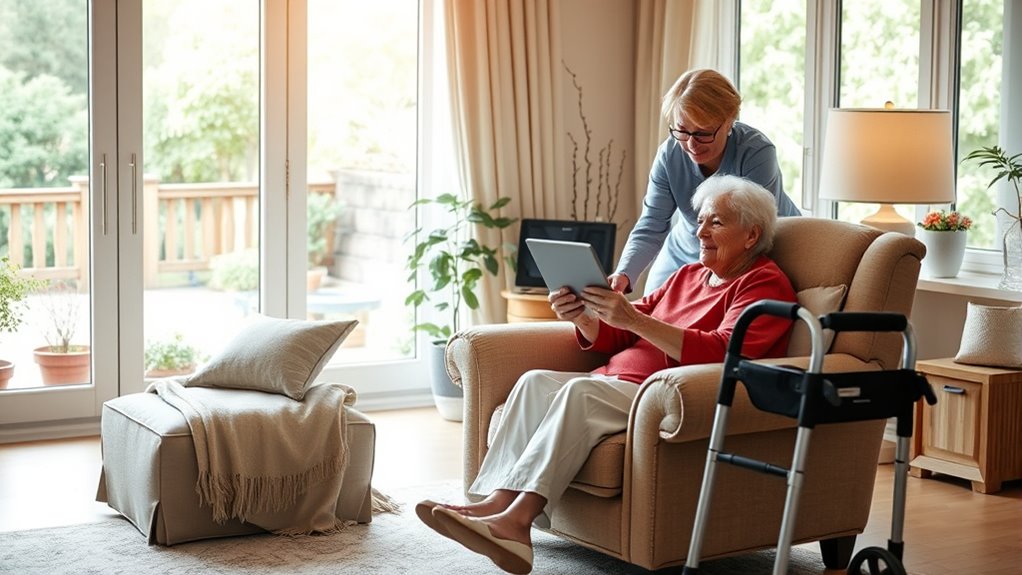

To age in place comfortably, focus on making home modifications like installing grab bars, widening doorways, and adding ramps to improve safety and accessibility. Engage with your community by joining local activities or senior centers to stay socially connected and active. Seek guidance from professionals to tailor solutions that suit your needs, ensuring safety without sacrificing comfort. Embracing these strategies helps you maintain independence and enjoy your familiar surroundings longer; discover more tips to support your journey.
Open a free Amazon Business account
Business pricing, bulk buying and tax-exempt orders.
As an affiliate, we earn on qualifying purchases.
Key Takeaways
- Implement home modifications like grab bars, ramps, and widened doorways to enhance safety and accessibility.
- Foster community involvement through social activities and local events to maintain engagement and mental stimulation.
- Seek professional guidance from occupational therapists to identify tailored, cost-effective safety solutions.
- Create a supportive environment that encourages independence and confidence while reducing fall risks.
- Maintain an active lifestyle by participating in hobbies, volunteering, and building social networks for holistic support.

Have you ever wondered how you can stay comfortable and independent as you age? Aging in place is all about creating an environment that supports your changing needs while allowing you to remain in the home you love. One of the key ways to do this is through thoughtful home modifications. These adjustments might include installing grab bars in the bathroom, widening doorways for easier wheelchair access, or adding ramps outside your home. Such modifications make daily activities safer and easier, reducing the risk of falls and accidents. The goal is to adapt your living space so it continues to meet your needs as they evolve, without the need to relocate or depend solely on in-home care.
Creating a safe, adaptable home supports your independence as you age in place.
But staying independent isn’t just about physical changes; community engagement plays a crucial role too. Connecting with your neighbors, participating in local events, or joining senior centers can help you maintain a sense of belonging and purpose. Engaging with your community keeps you socially active and mentally stimulated, which are essential components of healthy aging. It also provides opportunities to access resources and support networks that can assist with everyday challenges. When you foster these connections, you create a support system that complements your home modifications, making aging in place a sustainable, enjoyable experience.
To maximize your independence, consider working with professionals who specialize in home modifications for aging adults. An occupational therapist or home modification expert can help identify the most suitable changes for your home, ensuring safety without sacrificing comfort. They can also guide you on affordable solutions and assist with managing the installation process. Additionally, understanding the role of creativity in problem-solving can help you adapt quickly to new challenges and find innovative solutions for your living environment. Simultaneously, seek ways to boost your community engagement. Volunteering, joining clubs, or attending local workshops can help you stay active and connected. These activities not only enrich your life but also build relationships that can be invaluable in times of need.
Ultimately, aging in place requires a balanced approach—adapting your home environment through thoughtful modifications while nurturing your social life through community involvement. These strategies work together to support your independence, boost your confidence, and enhance your overall well-being. Remember, staying comfortably in your own home doesn’t mean you have to do everything alone. By making smart adjustments and staying engaged with your community, you create a supportive network that helps you thrive, no matter your age. The key is to be proactive, seek support when needed, and embrace the opportunities to stay connected and safe in your familiar surroundings.
As an affiliate, we earn on qualifying purchases.
Frequently Asked Questions
What Are the Initial Signs I Should Look for to Consider Aging in Place?
You should watch for early signs like difficulty with mobility, such as trouble walking or balancing, and subtle changes in cognitive abilities, like forgetfulness or confusion. If you notice these signs, it’s time to think about aging in place options. Addressing these issues early helps you maintain independence, improves safety, and allows you to implement support strategies before challenges become more serious. Stay attentive to these early indicators for a smoother transition.
How Do I Assess My Home for Aging-In-Place Modifications?
Start by walking through your home and noting areas where fall prevention is needed, like loose rugs or poor lighting. Then, assess if smart home technology, such as motion sensors or voice-activated controls, can improve safety. Consider installing grab bars in bathrooms and ensuring pathways are clear. Regularly evaluate your space to identify new hazards, and incorporate these modifications to support your independence and safety.
What Financial Assistance Options Are Available for Home Modifications?
You can explore financial assistance options like using your home equity through a home equity loan or line of credit to fund modifications. Additionally, check if you qualify for tax credits, such as the Home and Community-Based Services (HCBS) tax credits or the Residential Energy Efficiency Tax Credit, which can offset renovation costs. Local grants and state programs may also offer support, helping make your home safer and more accessible.
How Can I Ensure Safety Without Compromising Independence?
To guarantee your safety without sacrificing independence, you should incorporate assistive technology like voice-activated devices and smart home systems. These tools help you perform tasks easily and reduce risks. Additionally, stay socially engaged, as it keeps your mind sharp and offers emotional support. Regularly assess your environment for hazards and make modifications as needed. Balancing technology and social connection empowers you to live safely and independently at home.
What Community Resources Support Aging in Place Effectively?
Your community offers resources that can transform your daily life into a fortress of safety and independence. Explore community programs like transportation, meal delivery, and home repair services, which support your needs. Volunteer services also provide companionship and assistance with chores or errands. These resources are designed to empower you to stay in your home longer, making aging in place not just a goal, but a vibrant, supported reality.
Conclusion
Staying in your home offers comfort and familiarity, yet it also demands adaptability and support. While independence provides peace of mind, it’s the right strategies that guarantee you can truly age in place safely. Embrace the balance between staying rooted in your community and knowing when to seek assistance. With thoughtful planning, you can enjoy the best of both worlds—maintaining your independence while embracing the support that keeps you safe and thriving.
Evergreen bestsellers Picks
bestsellers
As an affiliate, we earn on qualifying purchases.