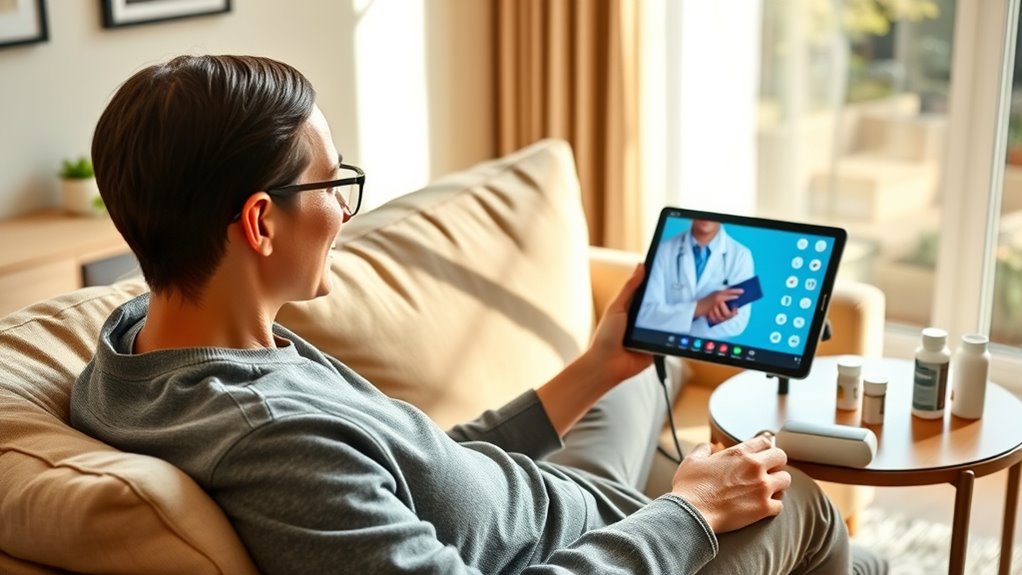

Telehealth and remote services let you access medical care from home through virtual visits, remote monitoring, and digital health tools. You can chat with healthcare providers via video calls, track your essential signs with wearable devices, and receive timely advice without leaving your house. These options make healthcare more convenient, personalized, and accessible, especially for managing chronic conditions or reaching specialists. To discover how you can make the most of these innovative services, keep exploring what’s available.
Key Takeaways
- Telehealth enables real-time video consultations with healthcare providers from home, reducing wait times and enhancing convenience.
- Remote monitoring devices track vital signs continuously, allowing proactive management of chronic conditions remotely.
- Telehealth services provide 24/7 access to care, including follow-ups, medication management, and mental health support.
- Patients in rural or underserved areas can connect with specialists without travel, improving access and care quality.
- Overall, telehealth makes healthcare more accessible, efficient, and patient-centered by breaking down traditional barriers.
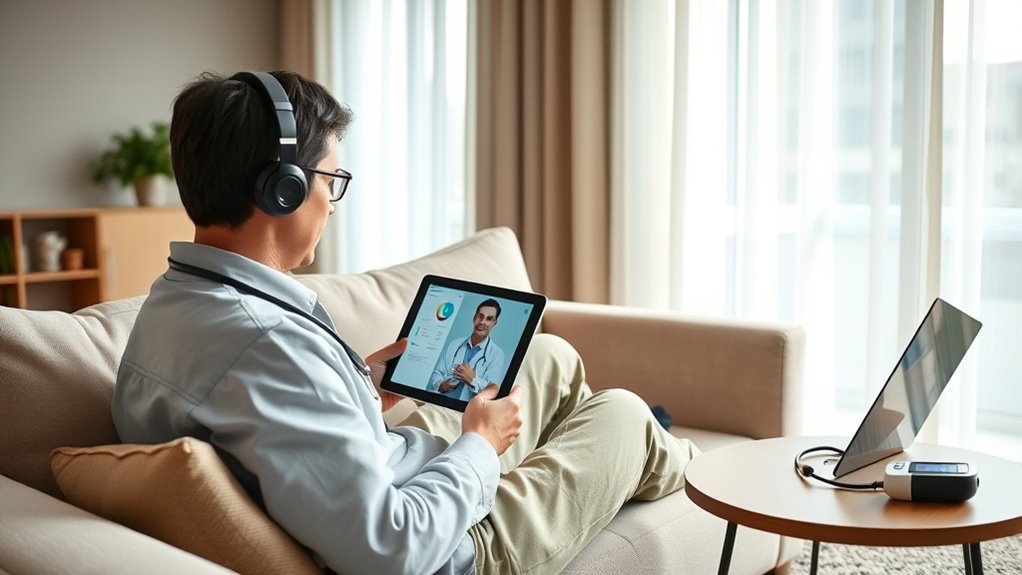
Have you ever wondered how technology is transforming healthcare? Today, you can access medical care from the comfort of your home through telehealth and remote services. These innovations make it easier than ever to connect with healthcare providers without needing to visit a clinic physically. Virtual consultations are a core part of this shift, allowing you to speak directly with doctors, nurses, or specialists via video calls. Instead of waiting days for an appointment, you can now get medical advice, discuss symptoms, or even review test results in real time. This convenience not only saves you time but also reduces exposure to potential illnesses in crowded waiting rooms.
Discover how telehealth and virtual visits are making healthcare more accessible and convenient from home.
Remote monitoring takes this convenience even further by enabling healthcare providers to keep an eye on your health outside of traditional visits. If you have a chronic condition like diabetes or hypertension, wearable devices can track your vital signs continuously. These devices transmit data directly to your doctor, who can monitor your health remotely and identify issues before they become emergencies. For instance, if your blood sugar levels spike unexpectedly, your provider can adjust your treatment plan promptly. This proactive approach helps you manage your health more effectively and often prevents hospitalizations.
With virtual consultations and remote monitoring, healthcare becomes more personalized and proactive. You no longer need to wait for symptoms to worsen before seeking help. Instead, you can engage with your healthcare team whenever you need, whether it’s for a follow-up, medication management, or mental health support. Plus, these services are often available 24/7, giving you access to care outside typical office hours. This flexibility makes it easier to fit healthcare into your busy schedule and ensures you’re not left waiting until the next available appointment.
Another significant benefit of telehealth is increased access to specialists, especially if you live in rural or underserved areas. Traveling long distances for specialized care can be challenging, expensive, and time-consuming. With virtual consultations, you can connect directly with specialists without leaving your home. This expands your options and ensures you receive expert advice no matter where you’re located. Additionally, remote monitoring tools provide continuous insights into your health, giving your healthcare team a more thorough understanding of your condition over time.
In essence, these advancements in telehealth and remote services empower you to take control of your health more actively. They break down barriers like distance, time, and mobility, making quality healthcare more accessible and efficient. Whether it’s through virtual consultations or remote monitoring, you’re now better equipped to manage your health proactively, receive timely care, and maintain a higher quality of life—all from the comfort of your home. Understanding how technology is transforming healthcare can help you make informed decisions about utilizing these innovative services.
Frequently Asked Questions
What Are the Costs Associated With Telehealth Services?
The costs of telehealth services vary depending on your insurance coverage and the provider. Generally, you’ll find a favorable cost comparison to in-person visits, often with lower copays or fees. Many insurance plans now cover telehealth, reducing your out-of-pocket expenses. However, it is crucial to check your specific policy to understand coverage details and any additional costs like technology fees or non-covered services.
How Secure Is My Personal Health Information Online?
Your personal health information online is protected, but stay cautious. Data encryption keeps your details secure, preventing unauthorized access, while privacy policies clarify how your data is used and stored. Regularly review these policies, and choose reputable providers with strong security measures. By being vigilant, you can confidently share sensitive info, knowing encryption and policies work together to safeguard your privacy, providing peace of mind in your digital healthcare journey.
Can Telehealth Replace In-Person Doctor Visits Entirely?
No, telehealth can’t fully replace in-person doctor visits. While virtual consultations and remote diagnostics are great for minor issues and follow-ups, they lack the hands-on examination and immediate testing that in-person visits offer. For complex conditions, physical assessments are essential. You should view telehealth as a complementary option that enhances your healthcare access, but not a complete substitute for necessary in-person care.
What Technology Do I Need to Access Remote Healthcare?
You need digital devices like a smartphone, tablet, or computer, along with reliable internet connectivity to access remote healthcare. Coincidentally, many people already have these tools for daily life, making telehealth easily accessible. Make certain your device has a camera and microphone for video consultations. A stable internet connection is essential for clear communication, so check your Wi-Fi speed regularly to avoid disruptions during your virtual appointments.
Are There Limitations on the Types of Conditions Treatable Remotely?
Yes, there are limitations on the types of conditions treatable remotely. While telehealth works well for many issues, it’s less effective for acute emergencies, complex surgeries, or certain chronic conditions needing in-person exams or procedures. You might find remote care helpful for managing ongoing chronic conditions like diabetes or hypertension, but for new, severe, or complicated health problems, your healthcare provider may recommend an in-person visit to guarantee proper diagnosis and treatment.
Conclusion
As you explore the world of telehealth and remote services, you realize they’re transforming healthcare in ways you never imagined. But as technology advances, questions arise—what new possibilities or challenges could this bring? Will your next appointment be just a click away, or will unseen hurdles emerge? The future of at-home care is unfolding rapidly, and only time will tell how deeply it will change your relationship with health. Are you prepared for what’s next?