
To prevent falls and keep pathways clear, make certain your bedroom has good, even lighting, especially near walkways and entryways. remove clutter, cords, and loose rugs that could cause trips or slips. Arrange furniture to create wide, unobstructed routes and anchor rugs securely with non-slip backing. Regularly check for hazards like loose carpets or wobbly furniture. Maintaining a safe environment not only reduces injury risks but also promotes restful sleep; discover more tips to enhance your safety.

Get the little things that make your day delivered free — and shop member deals
- Fast, free delivery on millions of items
- Access to Prime Big Deal Days deals on October 6–7
- Prime Video, Amazon Music and more included
Key Takeaways
- Ensure adequate, evenly distributed lighting with nightlights and adjustable lamps to improve visibility at night.
- Keep pathways clear of clutter, cords, and furniture to prevent trips and falls.
- Secure rugs with non-slip backing and eliminate loose carpeting or uneven flooring.
- Arrange furniture to allow easy access from all sides and avoid sharp-edged pieces in high-traffic areas.
- Regularly inspect and maintain furniture, cords, and flooring to identify and fix hazards promptly.

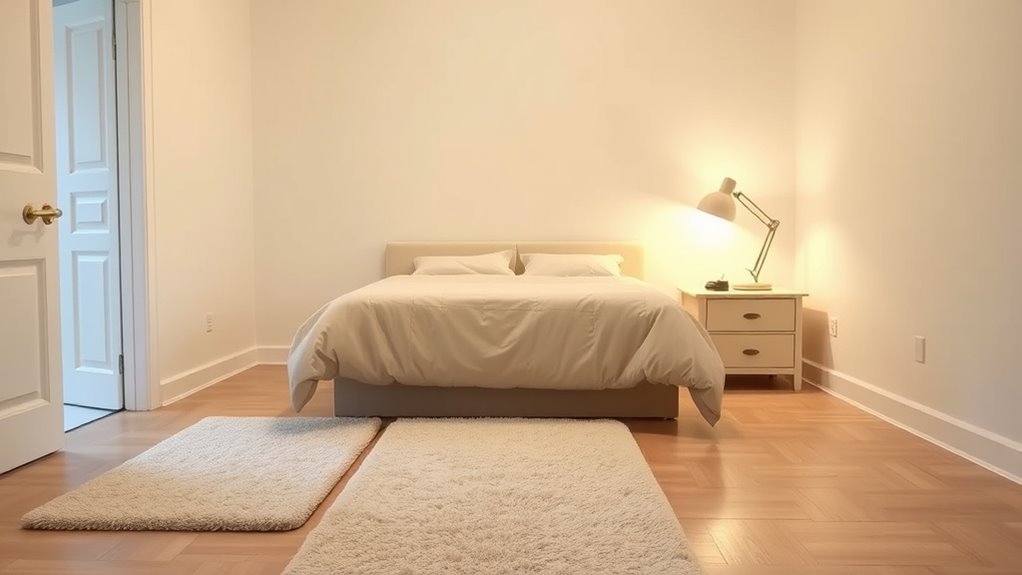
Have you ever considered how safe your bedroom really is? Many people overlook potential hazards lurking in what should be a safe, restful space. One of the most common issues involves lighting hazards, which can lead to trips and falls if not managed properly. Poor or uneven lighting creates shadows and dark spots, making it harder to see obstacles like loose rugs, clutter, or uneven flooring. Bright, well-placed lighting is essential, especially near pathways, the bed, and doorways. Consider installing nightlights or using adjustable lamps so you can brighten up the room when needed, reducing the risk of accidents at night.
Ensure your bedroom is well-lit to prevent trips and falls in the dark.
Another critical aspect of bedroom safety is furniture arrangement. An overcrowded or poorly organized room can turn into a fall hazard. Make sure your furniture isn’t blocking walkways or doorways. Keep pathways clear of clutter, cords, or items that could cause you to trip. Position your bed and other large furniture pieces in a way that allows easy access from all sides. Avoid placing furniture in a way that requires you to navigate around sharp corners or unstable pieces, which could tip or cause you to stumble. Also, ensure that furniture with sharp edges, like nightstands or dressers, are placed away from high-traffic zones to minimize injury risk if you accidentally bump into them.
Check that lamps, chargers, and other cords are safely tucked away and don’t create tripping hazards. Using cord organizers or clips keeps these lines neat and out of the way. When arranging furniture, keep the pathways wide enough to walk comfortably without feeling cramped. Narrow or cluttered routes increase the likelihood of falls, especially during nighttime when visibility is lower. Using rugs with non-slip backing can also help prevent slips, but make sure they are securely anchored so they don’t slide underfoot.
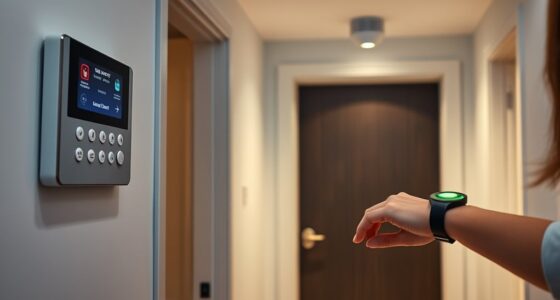
In addition to lighting and furniture placement, regularly inspecting your room for hazards is a good habit. Look for loose carpeting, frayed cords, or furniture that wobbles. Ensuring that everything is sturdy and secure reduces the chance of accidents. Remember, a safe bedroom isn’t just about preventing falls; it’s about creating an environment where you feel secure and comfortable. Small adjustments, like improving lighting, rearranging furniture, and removing clutter, can make a significant difference. Keeping pathways clear and well-lit transforms your bedroom into a space designed for safe, restful sleep. Incorporating digital safety awareness into your routine can also help you identify and eliminate hazards that may not be immediately obvious.
As an affiliate, we earn on qualifying purchases.
Frequently Asked Questions
How Can I Prevent Electrical Hazards in My Bedroom?
To prevent electrical hazards in your bedroom, prioritize electrical safety by regularly inspecting cords and outlets for damage. Use cord management solutions like clips or covers to keep cords organized and away from walkways, reducing trip risks. Always unplug devices when not in use, avoid overloading outlets, and keep liquids away from electrical items. These steps help minimize fire risks and guarantee a safer, hazard-free environment.
What Are the Best Lighting Options for Fall Prevention?
Research suggests that proper lighting reduces falls considerably. For nighttime visibility, you should opt for soft, warm LED lights or motion-activated lighting. Consider installing nightlights or low-level pathway lighting along hallways and near your bed. Make certain lighting installation is strategic, directing light where you walk most often. This way, you’ll maintain clear pathways, minimize tripping risks, and create a safer, more comfortable environment during nighttime hours.
How Do I Choose Non-Slip Rugs Safely?
To choose non-slip rugs safely, look for area rugs with a rubber or latex backing that’s slip resistant. Make certain they have a textured surface to prevent slipping and check for secure edges that won’t curl or bunch. You can also layer slip resistant mats underneath your rugs for extra grip. Always test the rug’s stability before walking on it, and replace any worn or damaged backing immediately to maintain safety.
Are There Specific Furniture Tips for Elderly Safety?
Think of your bedroom as a well-orchestrated dance floor, where furniture arrangement guides your steps safely. Stick to elderly friendly designs by choosing furniture with rounded edges, sturdy frames, and lower heights. Keep larger pieces away from walkways to prevent trips. Use supportive chairs and beds that are easy to get in and out of. Properly arranged furniture creates a safe, comfortable space, ensuring you move confidently and securely.
How Often Should I Check for Potential Hazards?
You should check for potential hazards in your bedroom at least once a month as part of your safety routine. Regular hazard inspection helps you identify loose rugs, clutter, or unsecured furniture that could cause falls. Staying consistent guarantees your environment remains safe and reduces risks. Make it a habit to examine pathways, lighting, and furniture for any changes that might compromise safety, so you can address issues promptly.
Conclusion
By keeping your bedroom free of clutter and ensuring clear pathways, you create a safe sanctuary where accidents fade into the shadows. Imagine slipping into a peaceful night, where the soft glow of a bedside lamp guides your steps and every surface is purposeful and tidy. When you prioritize fall prevention, you craft a tranquil retreat that welcomes restful sleep and peace of mind, transforming your space into a haven of safety and serenity.
Fall Picks
fall essentials
As an affiliate, we earn on qualifying purchases.