To prevent trips and slips, start by using non-slip pads underneath your rugs, ensuring they grip your flooring securely. Secure the edges with double-sided tape or rug grippers to stop curling and shifting, especially in high-traffic areas. Combining these methods offers extra stability and safety. Properly securing your rugs not only reduces hazards but keeps your space looking neat. Keep exploring to discover effective techniques that can make your home safer and more secure.
Key Takeaways
- Use non-slip pads under rugs to enhance grip and prevent shifting on various flooring surfaces.
- Secure rug edges with double-sided tape or adhesive strips to prevent curling and lifting.
- Combine non-slip pads with edge securing methods for maximum stability and safety.
- Ensure proper application by cleaning floors thoroughly before attaching securing products.
- Regularly check and adjust securing methods to maintain safety and prevent tripping hazards.
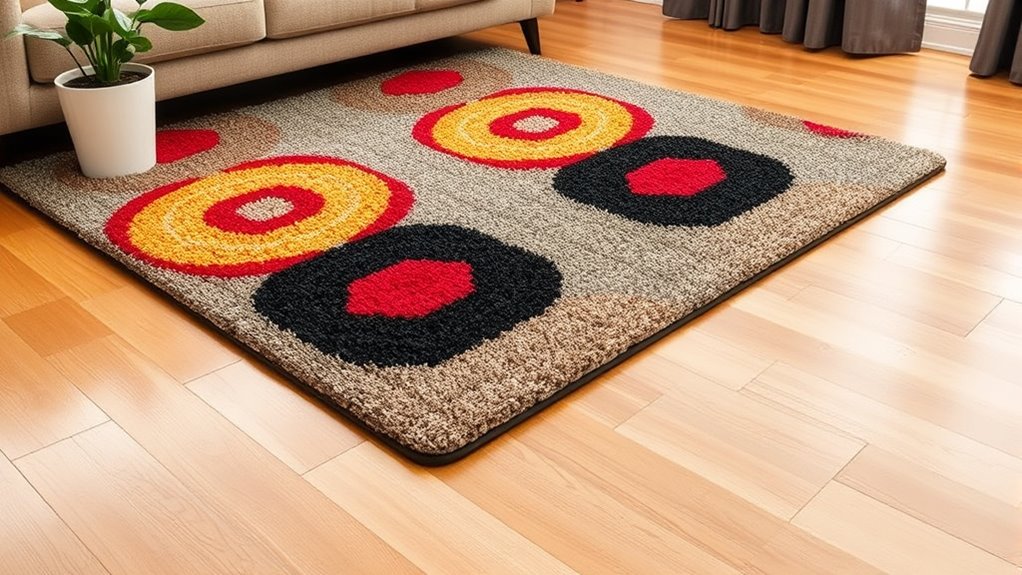
Are you tired of rugs slipping and sliding on your floors? If so, you’re not alone. Rugs that move can cause trips, falls, and even injuries, especially in high-traffic areas or households with children and seniors. The good news is that securing your rugs doesn’t have to be complicated. Using the right tools, like non slip pads and edge securing techniques, can make a significant difference in keeping your rugs firmly in place.
Tired of rugs slipping? Use non-slip pads and edge securing techniques for safety and stability.
Non slip pads are a simple yet effective solution. These pads are designed to stick to the underside of your rug, creating a barrier between the rug and the floor. When you place a non slip pad underneath, it prevents the rug from bunching up or shifting as you walk across it. They work on various surfaces, including hardwood, tile, and laminate flooring, making them versatile for any room. To get the best results, choose a pad that matches the size and shape of your rug, ensuring full coverage and maximum grip. Applying non slip pads is straightforward—just cut or select a pad that fits under your rug, peel off the adhesive backing if necessary, and press the rug firmly onto the pad. This simple step can drastically reduce slipping and give you peace of mind. Additionally, properly cleaning the floor before applying securing methods ensures better adhesion and longer-lasting results.
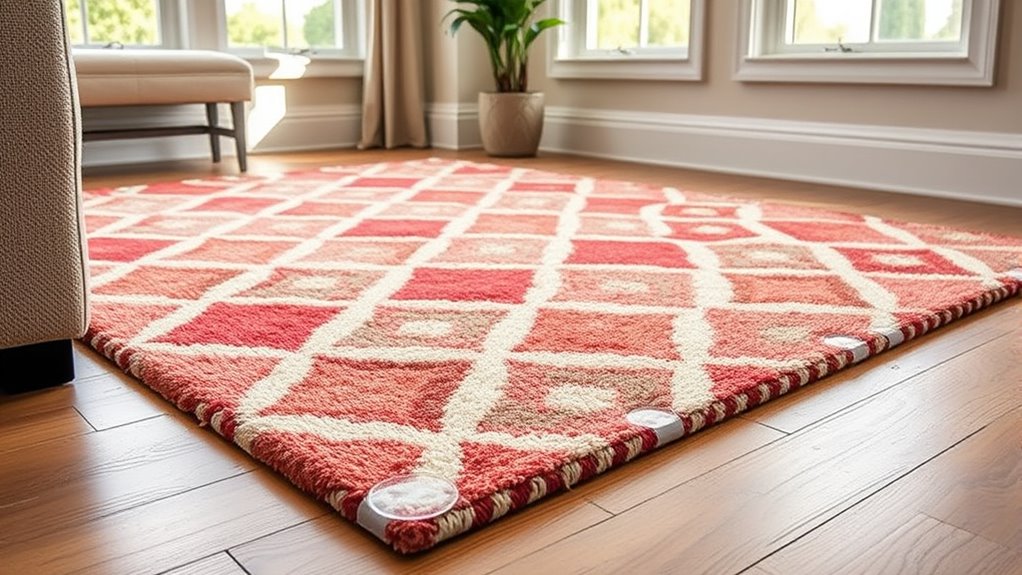
Edge securing is another essential method to keep rugs in place, especially for larger or more problematic pieces. Edges tend to lift or curl over time, creating a tripping hazard. To combat this, you can use specialized edge securing techniques, such as double-sided carpet tape, rug grippers, or adhesive strips designed for flooring. These products work by anchoring the edges of your rug directly to the floor, preventing curling and shifting. When applying edge securing measures, make sure to clean the floor thoroughly to guarantee proper adhesion. Apply the tape or securing strips evenly along the perimeter of the rug, pressing down firmly to guarantee a strong bond. For added security, some people use corner anchors or rug grips that hold the corners or edges more securely in place. This is especially helpful in high-traffic areas or on surfaces where non slip pads alone might not be enough.
Combining non slip pads with edge securing techniques offers the most dependable protection against slipping and tripping hazards. Non slip pads provide grip underneath, while edge securing keeps the borders flat and anchored down. By taking these simple steps, you can enjoy your rugs without fear of accidents, creating a safer and more comfortable environment. Securing your rugs isn’t just about aesthetics—it’s about safety and peace of mind. With the right tools and proper application, you’ll keep your rugs firmly in place, no matter how much foot traffic you have.
Frequently Asked Questions
How Often Should I Replace Non-Slip Rug Pads?
You should replace your rug pad every 1 to 3 years, depending on its rug pad longevity. Regularly check for signs of wear, such as reduced grip or visible damage, which indicate it’s time for a replacement. Following a consistent replacement schedule keeps your rugs secure and prevents accidents. Keep an eye on how well it maintains its non-slip properties, and don’t wait too long to swap it out for safety.
Can Certain Rugs Be More Prone to Slipping?
Yes, certain rugs are more prone to slipping. Rugs made from smooth materials like silk or low-pile wool tend to slide more easily, especially if they’re small or placed on slippery surfaces like hardwood or tile. Larger rugs can also slip if they don’t have proper backing or a secure rug pad. To prevent accidents, choose rugs with textured materials or add non-slip pads, especially for high-traffic areas.
Are There Eco-Friendly Options for Securing Rugs?
Did you know that eco-friendly options make up over 30% of home improvement products? You can secure your rugs sustainably using biodegradable adhesives or natural fiber pads, which are both effective and environmentally conscious. These alternatives avoid harsh chemicals, reduce waste, and are safe for your family and pets. By choosing biodegradable adhesives or natural fiber pads, you support eco-friendly living while keeping your rugs secure and your home safe.
How Do Weather Conditions Affect Rug Safety?
Weather hazards like rain, snow, and ice can considerably impact outdoor rug safety. Wet conditions make rugs slippery, increasing the risk of trips and slips, while snow and ice can cause the rug to shift or become unstable. To keep yourself safe, regularly check weather conditions, guarantee your outdoor rug is secured properly, and use non-slip pads or rugs designed for outdoor use. Staying vigilant helps prevent accidents in changing weather.
What’s the Best Way to Clean Rug Grip Products?
Did you know that proper cleaning can maintain rug grip effectiveness for up to a year? To clean rug pads, remove the rug and vacuum both sides thoroughly. For stubborn dirt, use a damp cloth with mild soap, then air dry. Avoid soaking the pad, as excess moisture reduces grip effectiveness. Regular cleaning keeps your rug secure and extends its lifespan, ensuring safety and comfort in your space.
Conclusion
Just as a master artist guarantees every brushstroke is perfect, securing your rugs and carpets safeguards your space, preventing trips and slips. Think of it as weaving a safety net beneath your feet, much like Theseus’ thread guiding him safely through the labyrinth. By taking these simple steps, you create a secure, inviting environment where accidents are minimized, and peace of mind prevails. After all, a well-secured rug is the quiet guardian of your home’s harmony.