
TL;DR

Get the little things that make your day delivered free with Prime
- Fast, free delivery on millions of items
- Prime Video, Amazon Music and more included
- Member-only deals all year
The Good Trade published a 2026 guide to 11 soft sheet sets from brands it describes as sustainable, with listed prices ranging from $110 to $699. The recommendations span materials and preferences, but the source does not provide a standardized comparative test, detailed evidence for every sustainability claim or current availability for each product.
The Good Trade has published a 2026 guide naming 11 bed-sheet sets it recommends for softness from brands it presents as sustainable, with listed prices ranging from $110 to $699. The selection covers cotton, bamboo-derived fabric and linen, and is organized around sleeping preferences and product features rather than a single overall winner.
The guide assigns each recommendation a distinct category: ettitude is its pick for hot sleepers at $410; Brooklinen for warmth and indulgence at $350; Sijo for silky sheets at $110 and up; and Coyuchi for undyed options at $278 and up. Naturepedic is listed for luxury organic cotton and sustainability specifications at $699, while Avocado is the eco-conscious shopper pick at $199 and up.
The other selections are Lunaweft for sensitive and skincare-focused sleepers at $245, Greenrow for vibrant patterns and closed-loop production at $349, Pact for affordable organic cotton at $160, Piglet in Bed for durability and European-based shoppers at $355, and MagicLinen for linen sheets at $374. These are the publication’s category labels and prices; they do not establish that a set will suit every sleeper or that prices will remain unchanged.
The report says its editor has reviewed nontoxic bedding for years and tested natural-fiber sheets at various price points. The Good Trade also discloses that its editors research and test products and that the publication may earn commissions through some links. The supplied report does not detail a scoring system, side-by-side test results or how each individual recommendation performed.
How the Guide Separates Sheet Choices
The list gives shoppers a way to compare products by material, feel, use and price, rather than treating softness as a single measurable quality. Someone who sleeps hot, prefers linen or wants undyed fabric can start with a relevant category, while the listed prices show the range represented in the guide. They are not a complete market survey, and the most expensive option is not presented as the best choice for everyone.
The sustainability framing also matters because it is not one universal product attribute. The report describes several kinds of certifications and company practices, including organic-material standards, chemical screening, emissions testing, labor criteria and climate commitments. A shopper interested in those claims will need to check what applies to the particular sheet set and what each certification covers; a brand-level label does not automatically answer every product-level question.
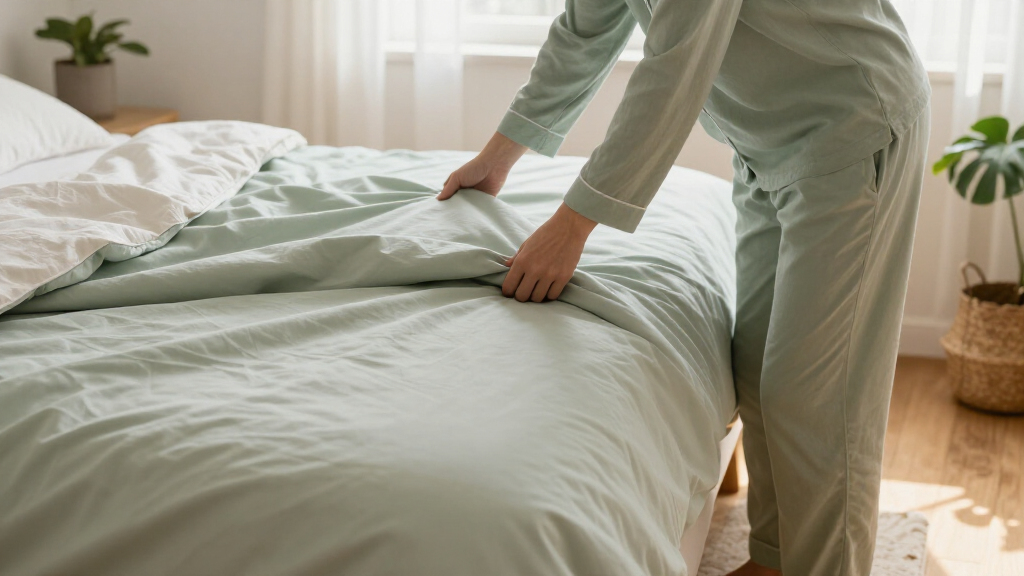
sustainable organic cotton bed sheets
As an affiliate, we earn on qualifying purchases.
As an affiliate, we earn on qualifying purchases.
What Shapes Softness and Sustainability
The Good Trade says fiber, fabric quality, weave and thread count affect how sheets feel. It names Egyptian, pima and supima cotton, as well as bamboo blended with premium cotton, as materials that can produce a smooth feel. It describes sateen as a route to a more luxurious feel, percale as crisp, linen as a fabric that softens with time, and jersey knit as casual and comfortable. These are general descriptions in the guide, not independent findings for every product in its list.
On thread count, the publication recommends 300 to 600 for softness and durability, and says counts above 600 do not necessarily make sheets softer. It also advises gentle washing with mild liquid detergent and low-heat drying, or air-drying, while directing readers to follow each product’s care label. Its certification discussion includes GOTS, MADE SAFE, GREENGUARD and OEKO-TEX, among others, which address different standards rather than providing interchangeable guarantees.
“The optimal range for soft bed sheets that are still durable will be between 300 and 600.”
— The Good Trade, in its 2026 sheet guide
What the Product List Does Not Show
The supplied report does not provide a full account of its testing methods, the duration of testing, a shared softness scale or detailed results for each set. It also does not establish that the 11 products were tested against one another under identical conditions. The descriptions should be read as editorial recommendations, not as a controlled ranking or guarantee of comfort, durability or performance.
Although the guide discusses sustainability certifications and practices, the available source material does not specify which certifications apply to each named sheet set or verify every product-level claim. Prices are presented as listed at publication, and the source does not confirm current prices, stock, shipping terms or later product changes. Readers may need to consult the brands’ current listings and certification records before buying.
Check Current Listings Before Buying
The guide presents its recommendations for 2026, but the source material gives no announced follow-up test, update schedule or next publication milestone. The practical next step for readers is to compare current brand product pages with the guide’s categories, confirm the exact fiber and weave, review care instructions and check which certifications apply to the specific set. They should also verify the current price and availability, as both can change after publication.
Key Questions
Which sheet set is the least expensive in the guide?
Sijo is listed at $110 and up for silky sheets. Pact is listed at $160 for affordable organic cotton. These are the prices given in the report and may not match current listings.
Which sets does The Good Trade recommend for hot sleepers?
The guide names ettitude, listed at $410, as its pick for hot sleepers. It does not provide a standardized temperature or cooling test in the supplied material.
Does a higher thread count mean softer sheets?
Not necessarily, according to The Good Trade. It recommends a 300-to-600 thread-count range for softness and durability and says counts above 600 do not automatically feel softer.
Are all 11 products confirmed to have the same sustainability certifications?
No such product-by-product confirmation appears in the supplied report. It discusses certifications and sustainability standards generally, so shoppers should check which credentials apply to each specific product.
Source: rss
NFL season / tailgating Picks
team gear
As an affiliate, we earn on qualifying purchases.