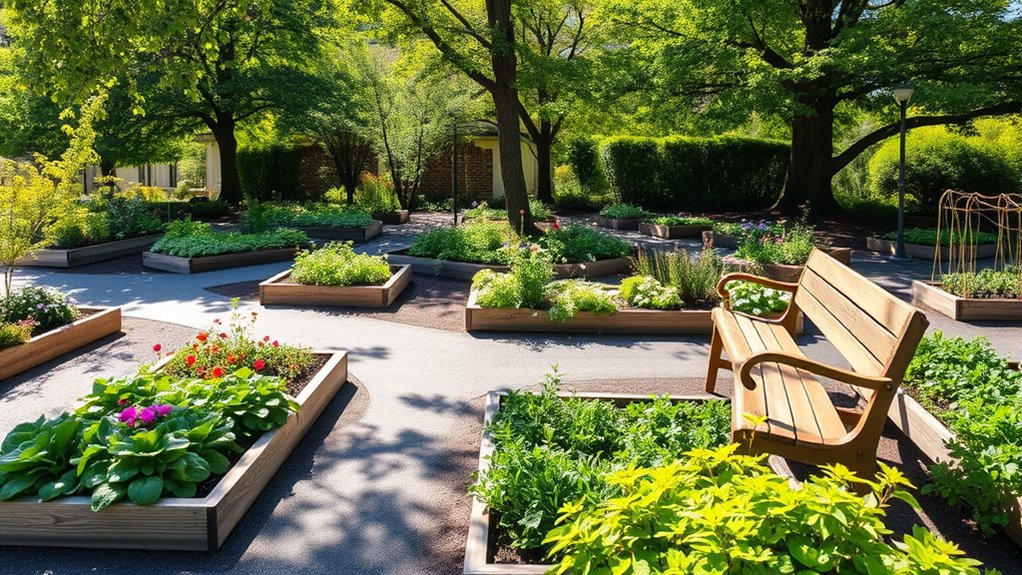

Accessible gardens and outdoor spaces make it easy for you to enjoy nature by including features like raised beds and smooth, wide pathways. Raised beds reduce strain and allow for easier gardening, especially if you have mobility challenges. Smooth, slip-resistant paths at least 36 inches wide connect different areas and prevent obstacles. By designing with community input and thoughtful features, you create a welcoming space for everyone—continuing down this path will reveal how to make your outdoor area truly inclusive.
Key Takeaways
- Incorporate raised beds at varying heights to accommodate mobility challenges and reduce physical strain for gardeners.
- Design wide, slip-resistant, smooth pathways at least 36 inches wide to ensure safe wheelchair and stroller access.
- Engage community members, especially those with disabilities, in planning and building accessible garden features.
- Use gentle curves and include resting areas like benches to improve navigation and comfort throughout the outdoor space.
- Apply intentional, collaborative design principles to create inclusive, vibrant gardens that foster activity and community connection.

Accessible gardens and outdoor spaces are crucial for creating inclusive environments where everyone can enjoy nature’s beauty. When designing these spaces, you want to focus on thoughtful garden design that prioritizes ease of access and safety. One of the most effective ways to achieve this is by incorporating raised beds. Raised beds elevate the planting area, making gardening possible for individuals with mobility challenges, such as those who use wheelchairs or have difficulty bending. They also help reduce strain on your back and knees, making gardening a more comfortable and enjoyable activity for everyone. Additionally, using a variety of heights in your garden design can accommodate different needs, ensuring that all visitors can participate in planting, maintenance, and harvesting. Incorporating sustainable practices in garden design further enhances the environmental benefits and longevity of accessible outdoor spaces.
Community involvement plays an indispensable role in creating and maintaining accessible outdoor spaces. When you include community members in the planning process, you gain valuable insights into what features will best serve everyone’s needs. Engaging local residents, particularly those with disabilities or mobility issues, helps ensure the space truly meets their requirements. Plus, involving the community fosters a sense of ownership and pride, encouraging ongoing care and support. You might organize workshops or volunteer days to help build raised beds, install smooth pathways, or plant accessible gardens. This not only spreads awareness about accessibility but also strengthens bonds within the community.
Smooth, wide pathways are another key element of inclusive garden design. By replacing uneven or gravel paths with smooth, slip-resistant surfaces, you make it easier for everyone to navigate the space safely. These pathways should be wide enough to accommodate wheelchairs, walkers, or strollers, ideally at least 36 inches across. When you design these pathways, consider gentle curves rather than sharp turns to avoid obstacles and improve flow. Adding resting spots along the way, such as benches or shaded areas, allows visitors to pause and enjoy the surroundings comfortably. Properly planned pathways connect all key areas of your garden, from entrance points to seating zones and planting beds, creating a seamless experience for all users. Learning from existing event logistics, careful planning ensures safety and efficiency in outdoor spaces.
Ultimately, designing accessible gardens and outdoor spaces requires intentional planning and community collaboration. By integrating raised beds, smooth pathways, and other inclusive features, you create a space where everyone can explore, learn, and relax in nature. When you involve the community in this process, you not only enhance the design but also foster a sense of collective ownership. In the end, accessible outdoor spaces become vibrant hubs of activity and connection, enriching the lives of all who visit.
Frequently Asked Questions
What Are the Best Materials for Accessible Garden Pathways?
You should choose durable, slip-resistant materials like concrete, brick, or compacted gravel for accessible garden pathways. These options provide stability and ease of movement, especially if you incorporate garden lighting for safety at night. To keep pests at bay, use pest-resistant materials or include pest control measures around your paths. This guarantees your garden remains safe and accessible, making your outdoor space enjoyable and easy to navigate.
How Can Raised Beds Be Adapted for Wheelchair Users?
You can adapt raised beds for wheelchair users by adjusting garden bed height to around 24-30 inches, making gardening easier and more accessible. Incorporate wheelchair access ramps for seamless entry and make sure pathways around the beds are wide and smooth. This setup transforms a traditional garden into an inclusive space, allowing you to comfortably reach, tend, and enjoy your plants without barriers, creating a welcoming environment for all.
Are There Specific Plants Recommended for Accessible Gardens?
You should choose plants with good plant compatibility, like herbs, lettuce, and cherry tomatoes, which thrive together and make pest management easier. Opt for low-maintenance, disease-resistant varieties to reduce intervention. Consider native plants to guarantee they adapt well to your environment. By selecting these, you create a garden that’s easier to care for and more enjoyable, especially for wheelchair users who benefit from accessible, manageable spaces.
How Do I Ensure Safety in a Garden Designed for Accessibility?
You can guarantee safety in your accessible garden by installing proper garden lighting that illuminates paths and raised beds, preventing accidents. Keep walkways clear of obstacles and use slip-resistant materials. Incorporate wildlife habitats carefully, avoiding sharp tools or toxic plants near paths. Regularly inspect your garden for hazards, and encourage mindful movement. With these steps, you’ll create a safe, inviting space that feels as secure as a fortress, encouraging joyful gardening for everyone.
What Maintenance Tips Are Best for Accessible Outdoor Spaces?
To keep your accessible outdoor space thriving, stick to regular watering schedules suited to your plants’ needs, ensuring consistent moisture without overwatering. Keep paths clear and smooth to prevent trips, and regularly check for pests to prevent damage. Use eco-friendly pest control methods, and prune plants as needed. Consistent maintenance helps your garden stay safe, functional, and inviting for everyone who uses it.
Conclusion
So, after all this talk about accessible gardens and smooth paths, you might think they’re just nice extras. But in reality, they’re lifelines—making outdoor spaces truly welcoming for everyone. Ironically, what seems like simple design choices can make the difference between feeling excluded or included. It’s a small effort, yet it opens up a world of beauty and independence. Don’t overlook the power of accessible gardens—they’re more than just functional; they’re transformative.