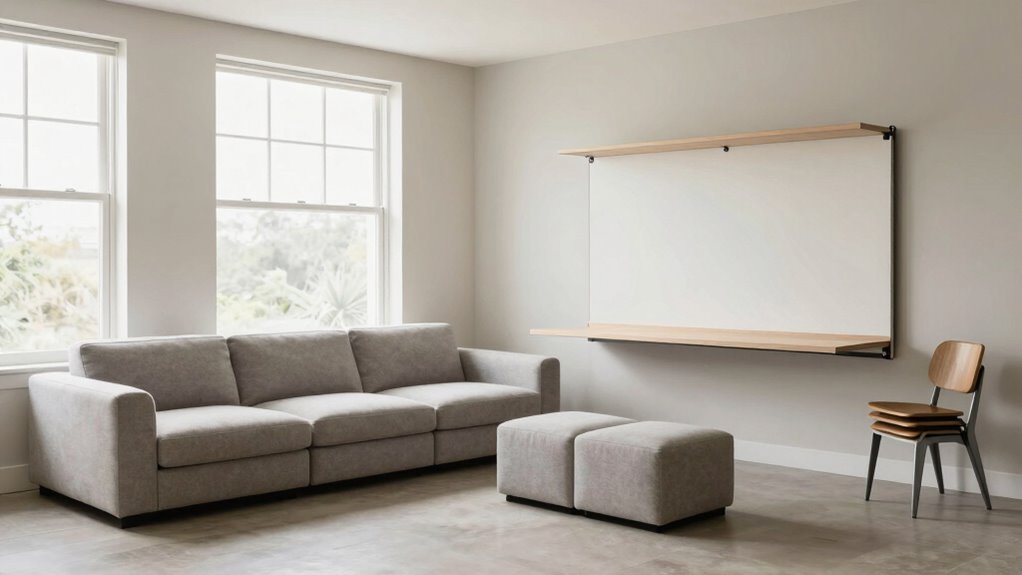

You can make your home more adaptable by choosing multifunctional furniture like fold-away beds, modular seating, and lightweight partitions that are easy to move. Plan open layouts that can be reconfigured easily and incorporate accessible storage to reduce clutter. Regularly experiment with different arrangements to find what works best for your needs. By investing in flexible furniture and smart space planning now, you’ll be ready for any change. Keep exploring for more tips on creating a versatile living space.
Key Takeaways
- Incorporate multifunctional furniture like sofa beds and modular seating for versatile use.
- Design open floor plans with lightweight partitions to allow easy reconfiguration.
- Prioritize adaptable storage solutions accessible from multiple areas to reduce clutter.
- Regularly reassess and experiment with different layouts to anticipate future needs.
- Plan flexible zones for various activities, such as work, relaxation, or entertainment.
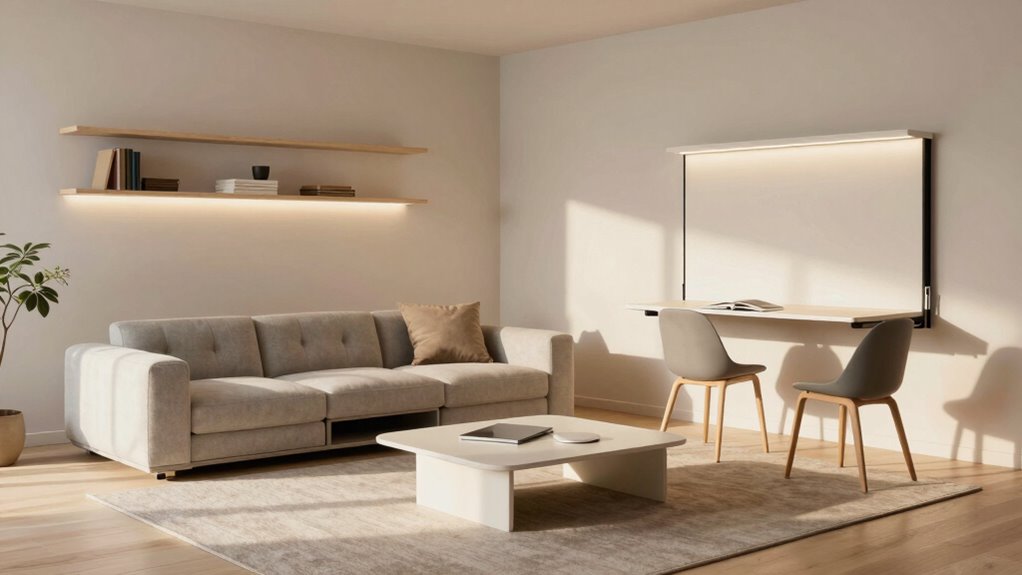
Have you ever wished your home could easily adapt to changing needs? Maybe you want a space that transforms from a cozy living room into a guest bedroom or a home office without a lot of hassle. The good news is, you can make your home more adaptable before you actually need to, and it all starts with smart furniture and flexible layouts. These strategies let you maximize your space and create a home that responds to your lifestyle changes seamlessly. Incorporating emerging trends in digital publishing can also help you discover innovative ideas and solutions for adaptable home design.
Smart furniture is a game-changer in creating adaptable spaces. Think of pieces that serve multiple purposes—like a sofa bed, an extendable dining table, or storage ottomans. These items let you quickly switch functions without sacrificing style or comfort. For example, a fold-away wall bed or Murphy bed allows you to turn your bedroom into a multi-use room in minutes. Similarly, modular seating can be rearranged to suit different gatherings or personal preferences. Investing in multifunctional furniture now means you’re ready for future needs, whether it’s hosting guests unexpectedly or creating a dedicated workspace. Incorporating flexible layouts also enables you to change your space easily, which is crucial for adapting to new routines or unexpected circumstances. Additionally, understanding how contrast ratio and other image qualities impact home entertainment setups can help you optimize your space for both work and leisure activities.
Smart furniture transforms spaces with multi-purpose pieces like Murphy beds and modular seating for effortless versatility.
Flexible layouts are equally important. Instead of fixed furniture arrangements, opt for open, versatile floor plans that can be easily reconfigured. Use lightweight, movable partitions or screens to section off areas when needed—perfect for creating temporary offices or play zones. Keep your furniture lightweight and easy to shift around; this way, you can carve out different zones without much effort. You might also consider multi-use zones, like a corner that functions as both a reading nook and a mini home gym, depending on your mood or schedule. Arranging your furniture in a way that encourages movement and reorganization means your home can evolve effortlessly as your needs change. Planning ahead is key. Think about how your space could serve you in different scenarios and choose furniture and layouts that are adaptable. Incorporate storage solutions that are accessible from multiple areas, so you can keep essentials handy without cluttering your space. Regularly reassess your setup and be willing to experiment with different configurations. When you approach your home with flexibility in mind, you’ll find it easier to adjust to new routines, unexpected visitors, or even future expansions.
Frequently Asked Questions
What Are Budget-Friendly Ways to Enhance Space Adaptability?
To enhance space adaptability on a budget, consider furniture reconfiguration, like using foldable or multi-purpose pieces that can shift as needed. Incorporate modular storage options that can be rearranged or expanded, helping you optimize space without buying new furniture. Keep your space flexible by choosing lightweight, movable furniture and utilizing vertical storage solutions. These simple, affordable strategies allow you to easily adapt your home for changing needs.
How Can I Prioritize Spaces for Future Flexibility?
You should prioritize spaces by focusing on multifunctional furniture and modular room design, which maximize flexibility. Identify rooms that could serve multiple purposes, like a guest bedroom doubling as a home office. Choose furniture that easily transforms or moves, and plan layouts that can adapt to different functions. By doing this, you create a versatile home that’s ready for future needs without major renovations, saving time and money.
Are There Specific Materials Best for Adaptable Home Features?
Opt for modular furniture and versatile materials to make your home more adaptable. Modular furniture allows you to reconfigure pieces easily for different needs, while versatile materials like lightweight wood, metal, or durable fabrics can withstand frequent changes. These choices help you create flexible spaces that can evolve with your lifestyle, saving you time and money in the long run. Prioritizing these materials guarantees your home remains functional and adaptable whenever you need it.
How Do I Incorporate Technology Into Adaptable Spaces?
Did you know that smart furniture can enhance space efficiency by up to 30%? To incorporate technology into adaptable spaces, choose smart furniture with built-in tech features and modular walls that can easily reconfigure your layout. Use automation for lighting, blinds, and climate control to make adjustments effortless. These innovations allow your home to evolve with your needs, creating a seamless and intelligent environment that adapts effortlessly.
What Common Mistakes Should I Avoid When Designing Flexible Homes?
Avoid common mistakes like neglecting multi-purpose furniture and modular design, which are key to flexibility. Don’t overlook the importance of clear pathways and adequate lighting, as they enhance usability. Refrain from over-cluttering, which hampers adaptability. Also, resist the urge to fix furniture permanently; instead, opt for movable pieces. These strategies guarantee your home remains functional and adaptable, ready to meet changing needs without costly renovations.
Conclusion
Remember, a stitch in time saves nine. By planning ahead and making your home spaces adaptable now, you avoid costly, stressful changes later. Incorporate multifunctional furniture, flexible layouts, and smart storage solutions to keep your space versatile. Stay proactive, and your home will effortlessly meet your changing needs. When you prepare today, you’ll thank yourself tomorrow—your future self will thank you for making smart choices now, ensuring your home remains comfortable and functional no matter what comes next.