
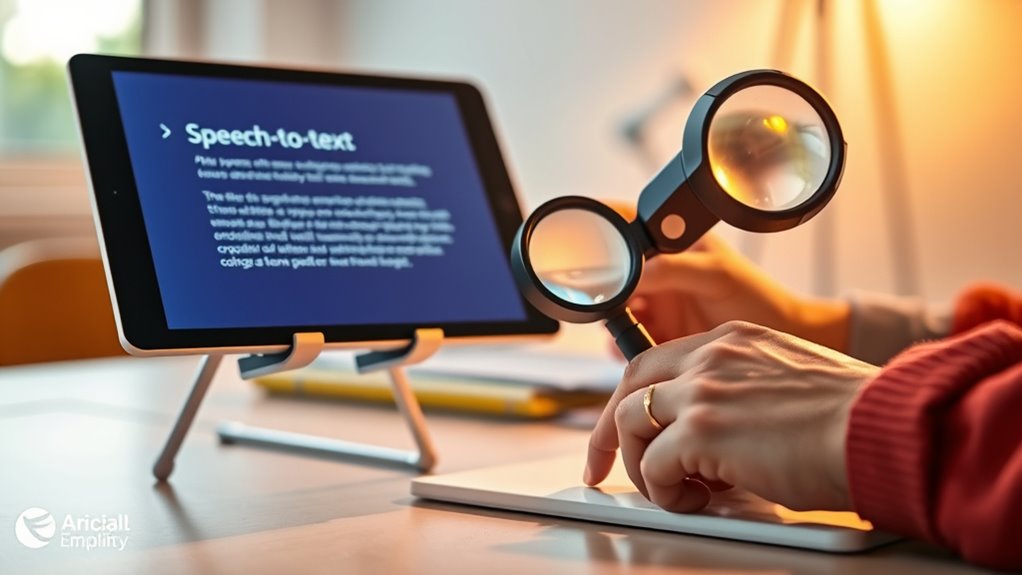
Integrating assistive technologies like speech-to-text and screen magnifiers creates more inclusive digital spaces where you can participate fully. Speech recognition allows you to use your voice for commands, improving accessibility for mobility or visual challenges. Screen magnifiers enhance visibility, reducing eye strain and improving comprehension. Combining these tools with other features like high-contrast modes makes your experience even better. Continue exploring to discover how these solutions can empower your daily interactions and boost independence.
Key Takeaways
- Integrating speech-to-text and magnification tools creates inclusive environments supporting diverse user needs.
- Voice recognition technology enables hands-free control, benefiting users with mobility or visual impairments.
- Screen magnifiers enhance visibility for low-vision users, improving reading and comprehension.
- Combining assistive tools like high-contrast modes and text-to-speech offers comprehensive accessibility solutions.
- Easy implementation and customization of these technologies promote independence in educational, workplace, and home settings.
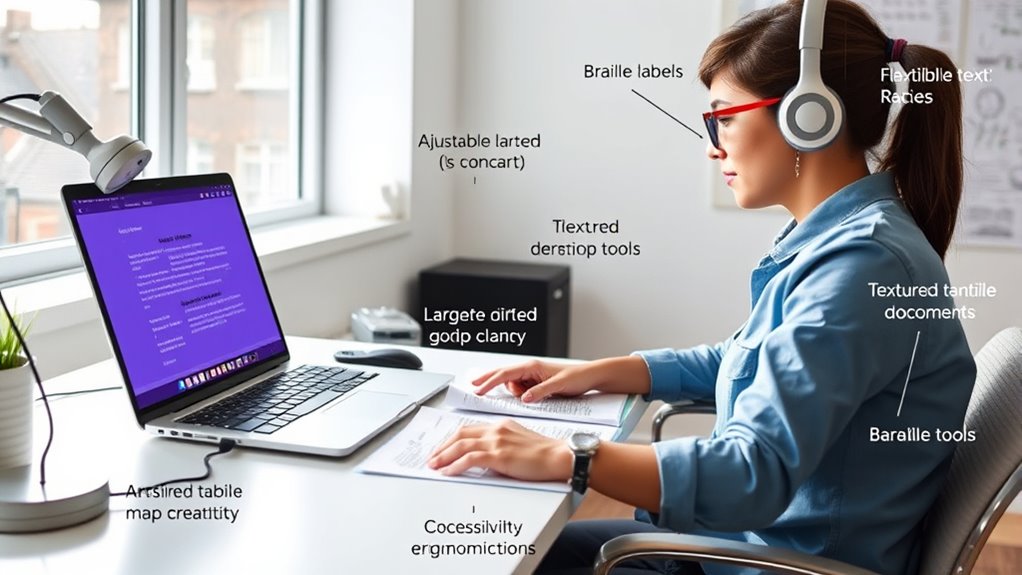
Assistive technology integration has become essential in creating inclusive environments that support diverse learning and working needs. When you incorporate tools like voice recognition and screen magnification, you make it easier for individuals with disabilities to access information and participate fully. Voice recognition technology allows you to speak commands, dictations, or queries instead of typing or using manual controls. This can be a game-changer for people with mobility challenges, ADHD, or visual impairments. You simply speak into a device or software, and it converts your voice into text or performs tasks on your behalf. This not only speeds up workflow but also reduces frustration and physical strain. For those who find typing difficult or time-consuming, voice recognition offers a seamless way to interact with computers, smartphones, or other digital tools. It’s adaptable across various applications, whether you’re composing emails, filling out forms, or navigating software menus. Additionally, understanding essential oils and their benefits can support well-being and comfort in accessible environments.
Screen magnification is another essential assistive technology that greatly enhances accessibility. If you have low vision or are visually impaired, you can use magnifiers to enlarge text, images, and interface elements on your screen. This helps you see details more clearly without straining your eyes or needing to squint. Many operating systems and software programs have built-in magnification features that you can customize to fit your needs. You can zoom in on specific areas or enlarge the entire screen, making reading and comprehension much easier. Screen magnification also works well in combination with other assistive tools, such as high-contrast modes or text-to-speech functions, creating a more all-encompassing accessible environment. When you activate magnification, you gain better control over your viewing experience and reduce the cognitive load of trying to interpret small or unclear visuals.
Integrating these technologies into your environment is straightforward and highly effective. Many devices and software platforms are designed with accessibility in mind, making it simple to enable voice recognition and magnification features with just a few clicks or taps. Training yourself or others on how to use these tools maximizes their benefits and promotes independence. Whether you’re in a classroom, workplace, or home setting, these assistive technologies empower you to overcome barriers and engage more fully with digital content. By choosing the right mix of voice recognition and screen magnification, you’re creating a more inclusive space where everyone has the tools they need to succeed. This proactive approach not only supports individual needs but also fosters a culture of accessibility and understanding.
Frequently Asked Questions
How Do I Determine Which Assistive Technology Best Suits My Needs?
To determine which assistive technology best suits your needs, start with a thorough technology assessment focused on your specific user needs. Consider your daily challenges, preferences, and goals. Try out different tools like speech-to-text or magnifiers to see what feels most comfortable and effective. Consulting with specialists or occupational therapists can also help identify the right solutions, ensuring you choose technology that truly enhances your independence and productivity.
What Training Is Required to Effectively Use Speech-To-Text Tools?
To effectively use speech-to-text tools, you need training that covers the software’s features and capabilities. Focus on skill development by practicing voice commands, editing, and formatting text. Training requirements may include tutorials, hands-on sessions, and ongoing support to build confidence. Regular practice helps you become comfortable and efficient with the technology, ensuring you can maximize its benefits for your communication and productivity needs.
Are Assistive Technologies Compatible With All Operating Systems?
Did you know that over 80% of assistive technologies are compatible across multiple operating systems? You’ll find that device compatibility and software integration vary widely. Most mainstream assistive tools support Windows, macOS, and Android, but some may have limited features or require specific updates. To guarantee seamless use, always check device compatibility before installation and confirm that software integrates smoothly with your operating system.
How Can I Customize Magnifiers for Different Visual Impairments?
You can customize magnifiers for different visual impairments by adjusting magnifier settings and visual customization options. Explore your device’s accessibility menu to change zoom levels, color filters, and contrast. Many magnifiers allow you to set personalized shortcuts for quick access. Experiment with these features to find the most comfortable and effective visual experience tailored to your specific needs, making reading easier and reducing eye strain.
What Funding Options Are Available for Acquiring Assistive Devices?
You can explore grant programs designed for assistive technology funding, which often provide financial support for devices like speech-to-text tools and magnifiers. Additionally, look into fundraising opportunities such as community events or online campaigns to raise funds. Combining these options increases your chances of acquiring the necessary devices. Be sure to research local resources, nonprofit organizations, and government programs that might offer financial assistance tailored to your needs.
Conclusion
By integrating speech-to-text, magnifiers, and other assistive technologies, you can access superhuman abilities to navigate digital worlds effortlessly. Imagine transforming your everyday struggles into moments of effortless mastery—like having a secret weapon that makes obstacles vanish instantly. These tools don’t just help; they revolutionize your life, turning challenges into triumphs. Embrace assistive technology today, and watch your capabilities skyrocket beyond what you ever thought possible!