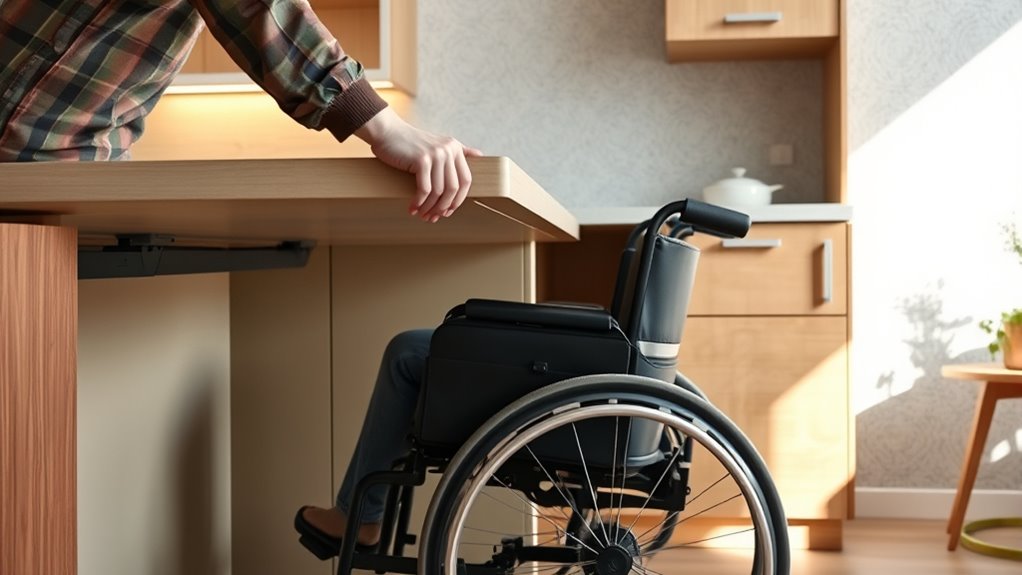

To make your kitchen more accessible, lower your countertops to about 30 inches from the floor to suit seated work. Adjust cabinetry by adding open shelves, pull-out drawers, or lowering cabinets so you don’t have to stretch or reach awkwardly. Use lever handles and guarantee proper lighting for safety. Keep pathways clear and frequently used items within easy reach. For more tips on creating a safer, more comfortable space, explore further adjustments today.
Key Takeaways
- Lower countertops to about 30 inches or adjustable height for comfortable seated access.
- Install open shelving, pull-out drawers, or lazy Susans at accessible heights to minimize reaching.
- Use lever handles on cabinets and drawers to enhance ease of operation from a seated position.
- Ensure pathways and workspace areas are clear, with a 60-inch diameter for easy wheelchair navigation.
- Optimize layout by keeping frequently used items within a 24-inch reach radius to improve efficiency.

Adjusting your kitchen to accommodate a wheelchair can markedly improve both accessibility and independence. When you lower countertops and adjust cabinetry, you create a space that promotes ease of movement and simplifies everyday tasks. The key is to prioritize kitchen safety while implementing ergonomic design principles, guaranteeing that everything you need is within reach without risking injuries or discomfort.
Start by lowering countertops to a height that allows you to comfortably work while seated. A good rule of thumb is to set the surface at about 30 inches from the floor, but you should adjust based on your specific needs. This height makes it easier to prep food, wash dishes, or access appliances without straining or awkwardly reaching. When countertops are at an appropriate level, you reduce the risk of accidents caused by overreaching or unstable movements—an essential aspect of kitchen safety. Additionally, consider the depth of the countertops; shallow surfaces provide more clearance for wheelchair wheels and make maneuvering smoother.
Next, focus on adjusting cabinetry to suit your height and reach. Installing open shelving or lower cabinets can eliminate the need to stretch or stand on tiptoes. Incorporate pull-out drawers, lazy Susans, and other accessible storage solutions that allow you to access items with minimal effort. When cabinets are within easy reach, you minimize the likelihood of knocking over items or straining your back. It’s also smart to keep frequently used items at waist level, reducing unnecessary movement and improving ergonomic design within your space. For optimal safety and functionality, consider using accessible storage solutions that are designed specifically for wheelchair users.
Lighting and handles are essential details that enhance safety and usability. Switch to lever-style handles on cabinets and drawers—they’re easier to operate than knobs, especially when using a wheelchair. Proper lighting eliminates shadows and ensures you can see clearly what you’re working on, reducing the chance of accidents. Keep pathways clear and free from clutter to prevent tripping hazards, emphasizing overall kitchen safety.
Finally, think about the overall layout. Keep essential elements within a 24-inch reach radius to streamline your workflow. Use accessible appliances that are easy to operate from a seated position, and ensure clear turning space—at least 60 inches in diameter—so you can navigate comfortably. These adjustments not only make your kitchen safer but also optimize ergonomic design, letting you work efficiently and comfortably.
Frequently Asked Questions
How Do I Ensure Safety When Lowering Countertops?
To guarantee safety when lowering countertops, you should follow proper safety precautions and prioritize ergonomic design. Secure the workspace by clearing clutter and using stable equipment. Use appropriate tools and lift gradually to prevent strain or accidents. Make sure the countertop is securely supported during adjustment, and check for stability afterward. Taking these steps helps protect you from injury and ensures the adjusted countertops are safe and functional for wheelchair users.
What Materials Are Best for Adjustable Cabinetry?
Did you know that choosing the right materials can extend your cabinetry’s lifespan by over 20%? For adjustable cabinetry, opt for materials with high durability like solid wood, plywood, or metal, which withstand frequent adjustments. While stainless steel offers excellent durability, it can be costly. Consider your budget and the need for strength—these choices guarantee your cabinetry remains functional and safe for years to come.
How Much Space Is Needed for Wheelchair Maneuvering?
You’ll need at least 30 inches of wheelchair clearance and a 60-inch diameter for maneuvering space, ensuring easy movement around your kitchen. This allows you to comfortably turn, approach counters, and access cabinets without obstruction. Measure your space carefully, and consider wider clearances if you use larger wheelchairs or require additional turning room. Adequate maneuvering space makes your kitchen more functional, safe, and accessible for everyday use.
Can These Modifications Be Reversed or Changed Later?
Yes, these modifications can often be reversed or adjusted later, but reversibility concerns depend on how you implement them. If you use removable or adjustable hardware, future modification options become easier. However, some permanent changes, like cutting into cabinetry or lowering countertops, might be more challenging to undo. It’s best to plan with flexibility in mind, so you can adapt your space as needs change without too much hassle.
What Permits or Regulations Apply to Home Modifications?
You need to check local building codes and permit requirements before making home modifications. These regulations guarantee safety and accessibility standards are met, especially for wheelchair-friendly adjustments like lowering countertops or adjusting cabinetry. Some areas require permits for these changes, and inspections might be necessary. Always consult your city or county building department to confirm what permits are needed and follow their guidelines to avoid legal issues and ensure your modifications are compliant.
Conclusion
Lowering your countertops and adjusting cabinetry makes your space more accessible and comfortable. It’s like opening a door to greater independence and ease of movement. When you design with your needs in mind, you create a room that’s not just functional but welcoming. So, take the time to make these changes—you’ll find that a few thoughtful adjustments can truly transform your daily experience, making your home a more inclusive and empowering place to be.