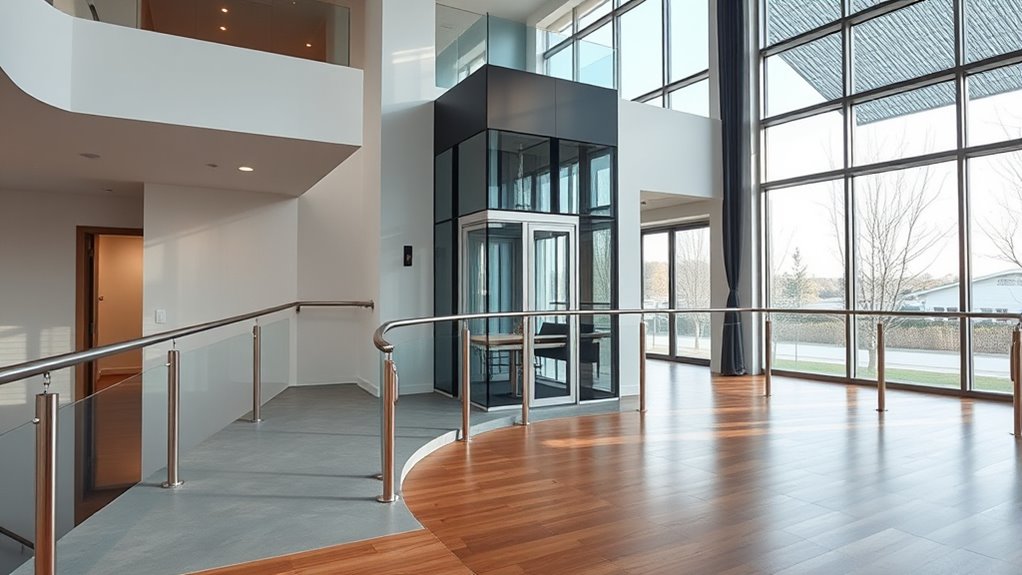

To make your multi-level home accessible, consider installing ramps and elevators. You can opt for ground-level ramps with gentle slopes or explore residential elevators that suit your space and aesthetic. Widening doorways and redesigning stairs help accommodate lifts and chair lifts more easily. Working with professionals guarantees your upgrades comply with safety standards and remain structurally sound. Continue exploring your options to discover how these modifications can best fit your needs.
Key Takeaways
- Ramps and elevators improve accessibility, safety, and independence in multi-level homes for individuals with mobility challenges.
- Staircase redesign may be necessary to accommodate lifts or elevators and ensure safe installation.
- Widening doorways enhances clearance for wheelchair access and supports installation of accessibility features.
- Integrating energy-efficient designs reduces long-term costs and environmental impact of accessibility modifications.
- Professional evaluation ensures structural support, safety compliance, and seamless integration of ramps and elevators.
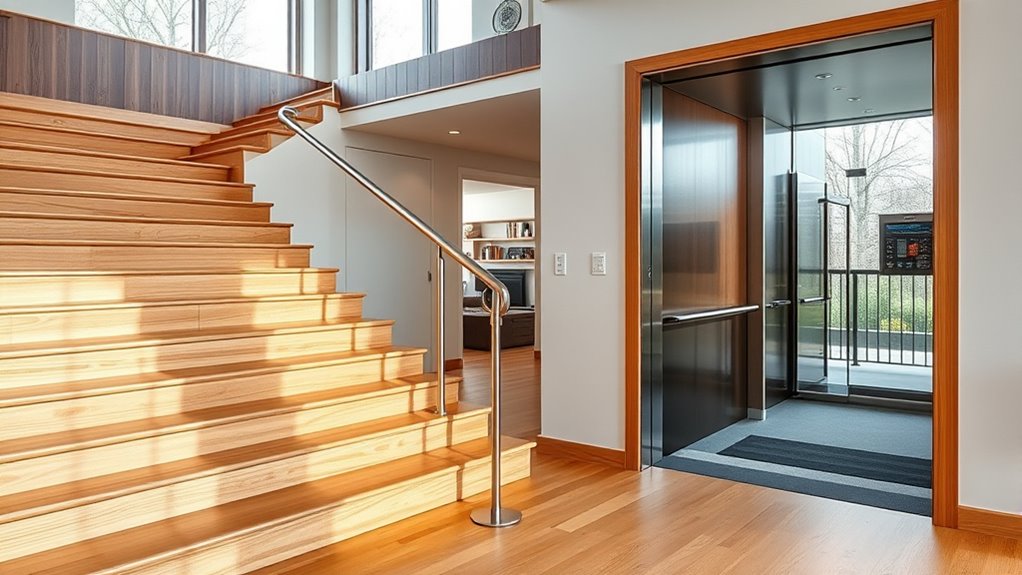
Installing ramps and elevators is essential for making buildings accessible to everyone, regardless of mobility challenges. When planning these modifications for a multi-level home, you need to consider how to integrate them seamlessly into your existing layout. One effective way to do this is through staircase redesign. If your current staircase is narrow or awkwardly shaped, redesigning it can create space for a more accessible solution, such as installing a chair lift or a compact residential elevator. This process might involve widening the staircase opening or reconfiguring the stairs to ensure there’s enough room for safe movement and easy installation. Widening the doorway to your staircase or adjacent rooms can also facilitate the installation of these accessibility features, making navigation smoother and safer.
If you’re opting for a stairlift, a staircase redesign might be necessary to accommodate the lift’s rails and motor, particularly if your stairs are tight or have turns. Widening doorways can be equally important when installing an elevator or wheelchair lift, as it ensures there’s enough clearance for easy access. It’s not just about adding the equipment; you want to make sure it fits comfortably within your space without compromising safety or aesthetics. Widened doorways also help prevent congestion during daily activities, making the entire home more functional for everyone.
Additionally, incorporating energy-efficient design principles into these modifications can help reduce long-term costs and environmental impact. When considering staircase redesign and doorway widening, it’s vital to work with professionals who understand building codes and safety standards. They can evaluate your current layout and suggest modifications that won’t just improve accessibility but also maintain the structural integrity and visual appeal of your home. These upgrades often include reinforcing floors and walls to support the weight of elevators or lifts, which is crucial for long-term safety and durability.

FACHNUO 2 Feet Portable Wheelchair Ramp, Non-Skid Aluminum Handicap Ramps with Handle, Folding Threshold Wheel Chair Ramp for Home Steps, Stairs, Entry, Threshold, Doorways, Scooter, 800LBS Capacity
⚠【2FT WHEELCHAIR RAMP】 (Unfolded Size: 24" x 29.2" x 2", Folded Size: 24" x 13.2" x 3.2", Weighs…
As an affiliate, we earn on qualifying purchases.
As an affiliate, we earn on qualifying purchases.
Frequently Asked Questions
What Are the Cost Differences Between Ramps and Elevators?
You’ll find that ramps generally have lower upfront costs and installation expenses compared to elevators. Ramps are simpler to install, making them more budget-friendly, especially for short or moderate height changes. Elevators, however, involve higher initial costs, including equipment and structural modifications, but they offer more convenience and accessibility for long-term use. When comparing costs, consider both installation expenses and ongoing maintenance to determine the best fit for your home.
How Long Does It Take to Install a Home Elevator?
Installing a home elevator can feel like waiting forever, but it usually takes between four to eight weeks, depending on the installation process. The timeline varies with factors like model complexity and home layout. During the installation process, you’ll need to prepare your space and coordinate with professionals. While it might seem lengthy, this timeframe guarantees a safe, reliable lift tailored to your needs.
Are There Maintenance Requirements for Residential Elevators?
Yes, you need to follow maintenance schedules for your residential elevator to keep it running smoothly. Regular inspections, lubrication, and safety checks are essential, and you should also familiarize yourself with emergency protocols in case of malfunctions. Scheduling routine maintenance with a professional helps prevent breakdowns, ensuring safety and longevity. Staying proactive with maintenance and emergency preparedness keeps your home elevator reliable and safe for everyone using it.
Can Existing Stairs Be Converted Into Ramps?
Think of your staircase as a riverbed waiting to flow smoothly again. You can indeed convert existing stairs into a ramp through staircase remodeling, creating a gentle incline for easier access. Explore ramp material options like concrete, wood, or aluminum to match your home’s style. This transformation not only enhances mobility but also preserves your home’s aesthetic, turning a challenging climb into a gentle, accessible journey.
What Are the Safety Standards for Home Elevators?
You need to guarantee your home elevator meets safety standards for safety compliance and accident prevention. Check that it adheres to local building codes, includes safety features like emergency stop buttons, door sensors, and proper lighting. Regular maintenance and inspections are vital to prevent accidents. By following these standards, you protect yourself and your loved ones while ensuring reliable operation of your home elevator.
home elevator for multi-level house
As an affiliate, we earn on qualifying purchases.
As an affiliate, we earn on qualifying purchases.
Conclusion
Imagine stepping into your multi-level home, seamlessly moving between floors with ease. Whether you choose a sleek ramp or a discreet elevator, the right option transforms your space—and your life. But which will fit best? The decision isn’t just about accessibility; it’s about opening new possibilities and comfort you never knew possible. So, as you weigh your choices, envision the future where every step and lift brings you closer to home. The answer awaits your next move.

LVYOUIF 3 Pack Remote Control Holder Wall Mount Holders Hole-Free Phone Charging Organizer Pen Storage Containers For Home Office School Supply Storage (Grey)
What You Received: 3 PCS grey remote wall holders with 6 Pcs self-adhesive traceless tape for installation. About…
As an affiliate, we earn on qualifying purchases.
As an affiliate, we earn on qualifying purchases.

Handicap Brass Expandable Door Hinges – Offset Hinges for Doors – 3 Pack
Installs easily and ADDS 2 INCHES to most any doorway allowing barrier access for most wheelchairs, walkers and…
As an affiliate, we earn on qualifying purchases.
As an affiliate, we earn on qualifying purchases.