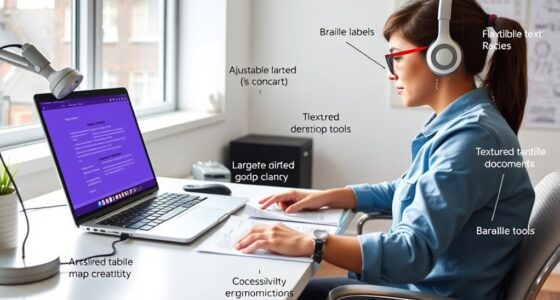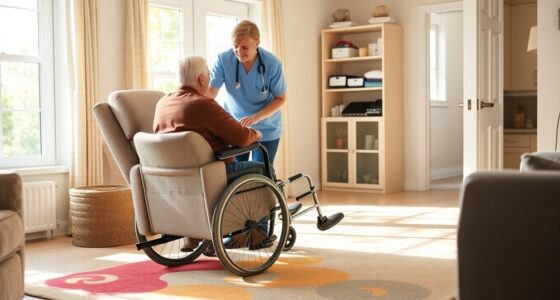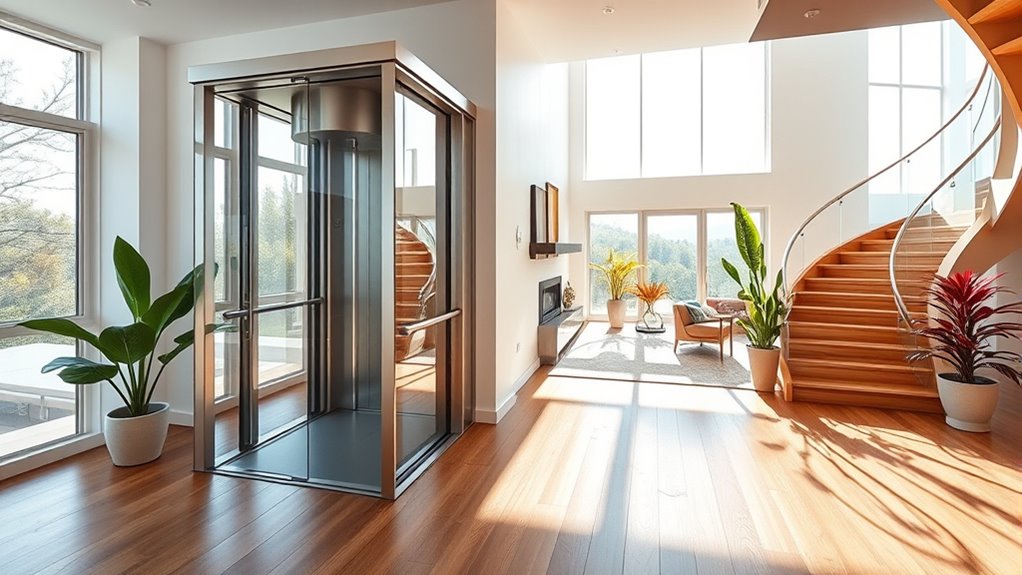

You can improve your home’s accessibility by integrating smart technology, lifts, and ramps that make navigation easier for everyone. Modern lifts are sleek and space-efficient, while ramps with gentle inclines blend seamlessly into your landscape. Smart home devices allow you to control lighting, doors, and appliances effortlessly, increasing independence. Incorporating universal design principles guarantees your home is usable by all ages and abilities. To discover innovative ways to make your home more inclusive, explore the options that fit your needs.
Key Takeaways
- Modern lifts and ramps provide sleek, space-efficient solutions that seamlessly blend with home aesthetics for improved mobility.
- Smart technology enables remote control and automation of doors, lighting, and lifts, enhancing independence and convenience.
- Universal design features like low-threshold entrances and lever handles make navigation easier for all users.
- Integration of smart tech with universal design ensures accessible features are intuitive and effortless to operate.
- Innovative accessibility solutions foster inclusive, safe, and functional living environments for people of all abilities.
Have you ever wondered how technology can become more inclusive? As homes evolve, so do the ways we make them accessible to everyone. Smart technology plays a vital role in this transformation, offering innovative solutions that seamlessly blend into daily life. With smart devices, you can control lighting, doors, and even appliances with a simple voice command or through your smartphone. These advancements eliminate barriers that traditional setups often create, making navigation easier for individuals with mobility challenges or sensory impairments.
Universal design principles are at the core of these improvements, guaranteeing that your home is built or modified to accommodate a wide range of abilities. This approach focuses on creating spaces that are usable by all people, regardless of age or physical ability. For example, installing lever handles instead of knobs, or low-threshold entrances, can make a tremendous difference. It’s about thinking ahead and designing your environment to be intuitive and accessible for everyone. When combined with smart technology, universal design becomes even more powerful. Imagine doors that automatically open when you approach or lighting that adjusts based on your presence. These features transform your home into a more inclusive space, reducing reliance on physical strength or dexterity.
Universal design creates accessible, intuitive homes that seamlessly integrate smart features for increased independence and inclusivity.
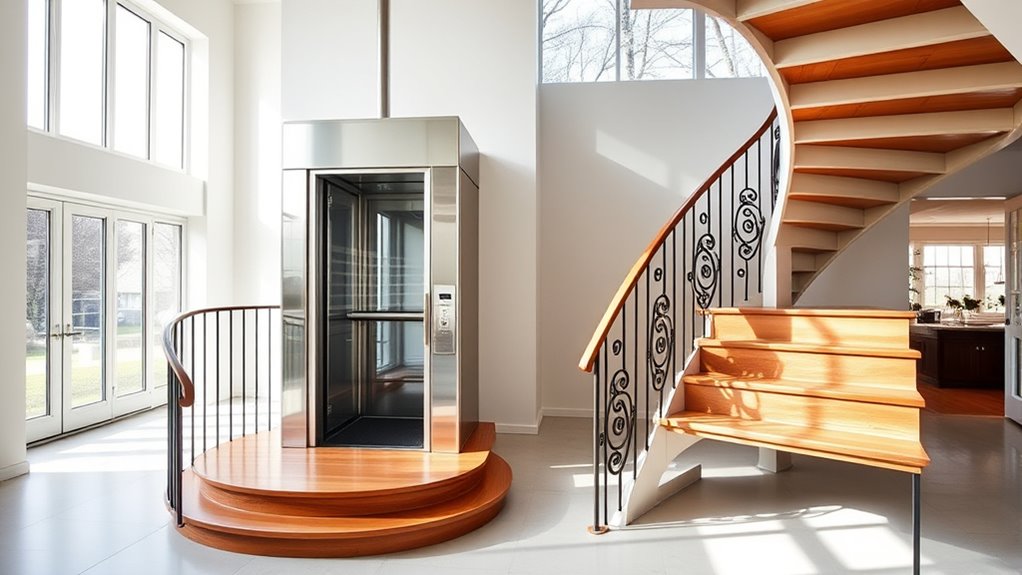
While traditional stairs can pose a challenge, innovative solutions like lifts and ramps are gaining popularity. Modern lifts are sleek, space-efficient, and easy to operate, providing a comfortable way to move between floors. Ramps with gentle inclines can be integrated seamlessly into the landscape, allowing wheelchair users or those with limited mobility to navigate without difficulty. These solutions aren’t just functional—they’re thoughtfully designed to blend with your home’s aesthetic, guaranteeing that accessibility enhancements don’t compromise style.
The integration of smart technology with universal design also opens up possibilities for remote control and automation. You can program your smart home system to open doors, activate lifts, or adjust environmental controls, all with minimal effort. This level of automation helps create a more independent lifestyle, empowering you to move freely and confidently within your space. Whether you’re upgrading an existing home or designing a new one, these advancements guarantee that accessibility isn’t an afterthought but a fundamental feature.
Ultimately, accessibility enhancements driven by smart technology and universal design principles are about making your home a safe, welcoming, and functional environment for everyone. They break down barriers, foster independence, and help you enjoy your space to the fullest. As technology continues to advance, the possibilities for creating truly inclusive homes grow, guaranteeing that everyone can navigate their living spaces with ease and comfort.
Frequently Asked Questions
Are There Affordable Options for Home Accessibility Improvements?
You’re wondering if there are affordable options for home accessibility improvements. The good news is, there are cost-effective solutions and budget-friendly modifications you can implement without breaking the bank. Simple changes like installing grab bars, ramping entryways, or choosing portable lifts can markedly enhance safety and mobility. These options make home navigation easier while staying within your budget, ensuring comfort and independence without costly renovations.
How Long Does Installation of Lifts Typically Take?
The installation timeline for a lift varies depending on the type and complexity, but generally, the lift installation process takes about one to two days. Factors like home layout and customization can affect this schedule. You’ll want to coordinate with professionals to guarantee a smooth process. Once installed, you’ll soon benefit from increased mobility and convenience, making your home more accessible without long disruptions.
Can Retrofitting Be Done Without Major Structural Changes?
When considering retrofitting, you want to avoid major structural modifications, making it more manageable and cost-effective. You can often opt for innovative, non-invasive solutions that don’t require extensive structural changes. These approaches provide practical, painless options, saving you money and time. By choosing targeted, thoughtful transformations, you ensure your home remains stable and secure, while still stepping up accessibility with minimal disruption and maximum convenience.
What Maintenance Is Required for Home Lifts and Ramps?
You need to follow regular maintenance routines and safety inspections for your home lifts and ramps. Check the lift’s mechanical and electrical systems periodically, ensuring smooth operation and safety features function correctly. For ramps, inspect for any damage, loose fittings, or uneven surfaces. Keep all moving parts lubricated and clean, and schedule professional inspections annually to prevent issues and maintain safety for everyone using these accessibility features.
Are There Legal Requirements for Accessibility in Private Homes?
You might think there are no legal requirements for accessibility in private homes, but building codes and safety standards vary by location. Many regions now mandate basic accessibility features, especially if you’re making significant renovations or if your home is used for commercial purposes. It’s wise to verify local laws, as compliance ensures safety and avoids potential legal issues. Staying informed helps you create a safer, more inclusive living environment.
Conclusion
Imagine your home as a garden — with every step, a new path. When you install a lift or ramps, you’re transforming that garden into a lush, accessible oasis where everyone can wander freely. Just like adding bridges over streams makes a landscape more inviting, these enhancements open doors for independence and comfort. Embrace these innovations, and you’ll see your home become a welcoming sanctuary — where mobility no longer holds you back.