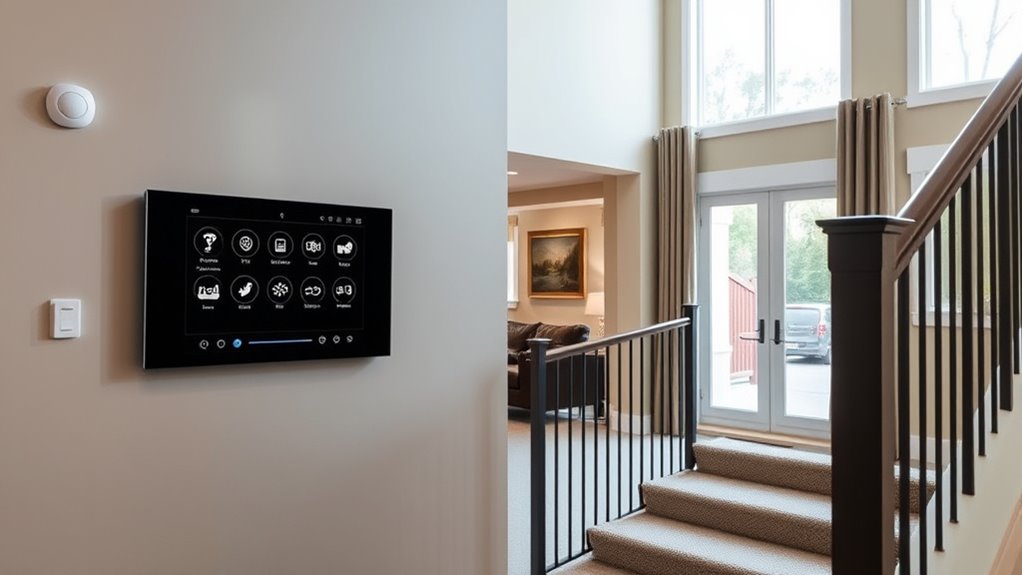

Integrating smart controls into your home boosts safety, convenience, and energy efficiency. By installing voice-activated systems, motion sensors, and automated lighting, you can easily manage devices and enhance security. Planning device placement guarantees seamless control and effective automation. Smart features reduce energy waste and provide quick access to emergency tools. If you want to discover how to seamlessly combine technology with your home upgrades, continue exploring smart solutions today.
Key Takeaways
- Plan device placement for optimal voice recognition and seamless control throughout the home.
- Automate lighting and appliances to enhance energy efficiency and safety with scheduled routines.
- Integrate security features like cameras and door locks for quick access and increased safety.
- Customize scenes and routines to create desired ambiances and streamline daily activities.
- Ensure compatibility of smart devices with existing infrastructure for smooth integration and reliable performance.
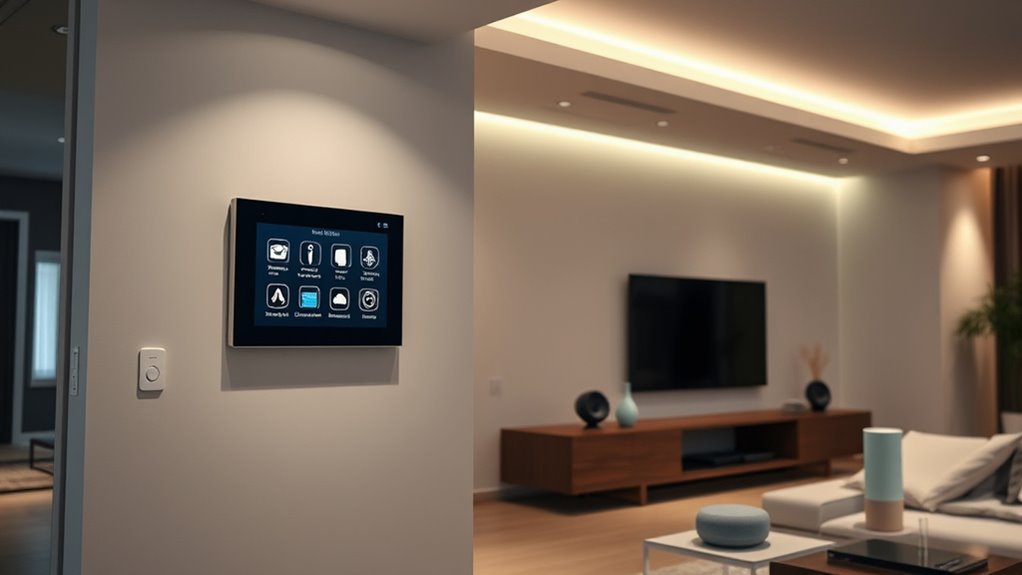
As technology continues to advance, integrating smart devices and automation into home modifications has become more accessible and beneficial. You can now easily enhance your living space with voice-activated systems that respond to simple commands, making everyday tasks more convenient and efficient. Imagine walking into a room and simply saying, “Turn on the lights,” and having automated lighting brighten your space instantly. These systems not only add a layer of comfort but also improve energy efficiency, as lights and appliances can be programmed to operate only when needed. Automated lighting, in particular, allows you to set schedules or trigger lights based on motion detection, reducing unnecessary energy consumption and creating a safer environment, especially during nighttime hours.
Incorporating voice-activated systems into your home means you no longer need to fumble with switches or remote controls. Instead, you can control multiple devices with just your voice, which is especially helpful for those with mobility challenges or busy lifestyles. These systems can be integrated with other smart home devices, allowing you to manage thermostats, security cameras, door locks, and more through a single interface. This level of automation simplifies daily routines, saves time, and adds an extra layer of safety by providing quick access to security features or emergency assistance.
When planning to integrate voice-activated systems and automated lighting, consider the layout of your home and the placement of sensors and speakers. Proper positioning guarantees reliable voice recognition and seamless control. You might also want to customize your system with routines and scenes—such as “Good morning” or “Movie night”—that automatically adjust multiple devices at once, creating the perfect ambiance or ensuring safety. For example, you can set automated lighting to turn on gradually in the morning, mimicking natural sunlight, or have all lights turn off when you leave the house. Additionally, exploring smart home technology options can help you identify the most compatible and effective solutions for your needs.
Frequently Asked Questions
What Are the Best Budget-Friendly Smart Home Devices for Safety?
You can find budget-friendly smart home safety devices like voice assistants, which help you control lights and alarms hands-free, and energy monitors that alert you to unusual energy use, indicating potential issues. These devices are affordable, easy to install, and enhance safety without breaking the bank. Plus, they integrate seamlessly with existing home systems, giving you peace of mind and better control over your home’s safety.
How Do I Ensure Compatibility Between Different Smart Home Systems?
Think of your smart home like a symphony—every device needs to play in harmony. To guarantee compatibility, choose devices that support common standards like Zigbee, Z-Wave, or Wi-Fi, reducing interoperability challenges. Check for compatibility with your existing hub or system, and read product reviews to identify potential device integration issues. Updating firmware regularly also helps keep everything working smoothly, so your smart home stays as cohesive as a well-conducted orchestra.
Can Existing Homes Be Easily Retrofitted With Advanced Smart Controls?
Yes, existing homes can be retrofitted with advanced smart controls, but you’ll face retrofit challenges like outdated wiring or limited access to wiring upgrades. You might need to upgrade your wiring to support new smart devices, which can involve some work and cost. Hiring a professional ensures proper integration and safety, making your home smarter without major disruptions. With careful planning, you can enjoy the benefits of modern technology in your current space.
What Privacy Concerns Should I Consider With Smart Home Technology?
Think of smart home tech as a delicate dance where privacy is your partner. You’re responsible for safeguarding data encryption and ensuring user consent, so your personal rhythms stay private. Be mindful of who has access to your data and how it’s shared, because an unsecured system can open a window for unwanted intruders. Stay vigilant, set clear permissions, and regularly review privacy settings to keep your digital home secure and harmonious.
Are There Any Legal Regulations for Home Automation and Safety Systems?
You should know that legal regulations for home automation and safety systems focus on legal compliance and safety standards. These regulations vary by location but generally require systems to meet certain safety and privacy criteria. You need to guarantee your smart controls adhere to local building codes, electrical standards, and data protection laws. Staying informed about these rules helps protect your home and ensures your automation setup is legally compliant.
Conclusion
By integrating smart controls and safety features into your home, you’re taking a giant leap toward a safer, more convenient living space. These upgrades aren’t just bells and whistles—they’re investments in peace of mind and independence. Remember, when it comes to home safety, it’s better to be safe than sorry. Embrace technology to turn your house into a fortress, because sometimes, a stitch in time really does save nine.