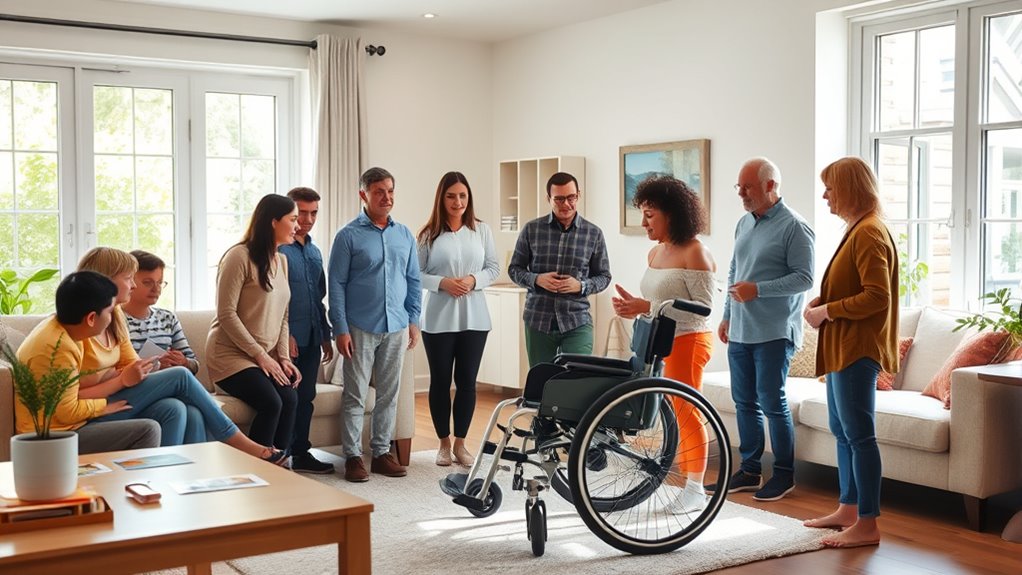

Training family members and caregivers on accessibility features is crucial for ensuring safety and promoting independence for individuals with disabilities. By learning how to operate assistive devices like wheelchairs, hearing aids, and emergency tools, you can prevent accidents and provide effective support. Understanding emergency planning and ongoing skill development further strengthens your ability to assist confidently. Keep exploring to uncover more ways to enhance safety and support in everyday life.
Key Takeaways
- Provide hands-on instruction on the operation and troubleshooting of assistive devices to ensure safe and confident use.
- Educate family and caregivers on emergency planning tailored to individuals’ specific accessibility needs.
- Offer ongoing training opportunities, including workshops and refresher courses, to keep caregivers updated on new assistive technologies.
- Demonstrate proper handling and maintenance of devices to prevent damage and promote longevity.
- Encourage open communication for caregivers to ask questions and share experiences, enhancing overall safety and effectiveness.
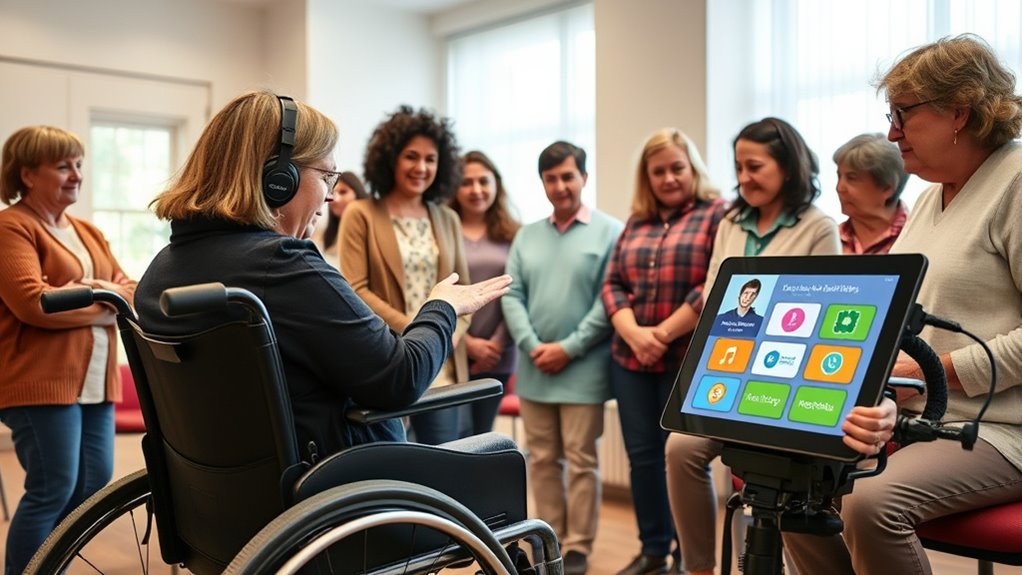
Training family members and caregivers on accessibility features is vital to make sure that individuals with disabilities can navigate their environments safely and independently. When you understand how to use assistive devices properly, you empower them to overcome obstacles that might otherwise limit their mobility or daily functioning. Whether it’s a wheelchair, hearing aids, or communication tools, knowing how these devices work and how to troubleshoot common issues guarantees that your loved ones can maintain their independence with confidence. Furthermore, thorough training on assistive devices minimizes the risk of accidents or misuse, which could compromise safety or damage expensive equipment.
Equally important is familiarizing yourself with emergency planning tailored to the needs of someone with disabilities. Emergencies, like fires, natural disasters, or medical crises, require swift and effective responses. When you’re trained in emergency planning, you learn to create personalized strategies that account for specific accessibility features and assistive devices. For example, knowing how to quickly operate a stairlift or how to evacuate someone using a wheelchair can make all the difference in a crisis situation. You’ll also learn to identify the safest routes, assemble emergency kits that include necessary assistive devices, and communicate effectively with emergency responders. This knowledge helps make certain that your loved one receives prompt, appropriate assistance without unnecessary delays or confusion.
Training shouldn’t be a one-time event but an ongoing process. As new assistive devices are introduced or existing ones are upgraded, staying informed and practicing their use keeps everyone prepared. You might start with basic instruction, but as you become more familiar with the features and functions, you’ll gain confidence in managing more complex scenarios. Remember, the goal is to foster independence while maintaining safety, so your proactive involvement is vital. You can attend workshops, consult with therapists or specialists, and review instructional materials together. These efforts not only build your competence but also reinforce a sense of security for your loved ones, knowing they’re supported by someone who understands their equipment and emergency procedures thoroughly.
Additionally, understanding the diverse designs and features of assistive devices can help you select the most suitable options for your loved ones’ specific needs, further enhancing their safety and independence. Ultimately, training family members and caregivers on accessibility features creates a safer, more supportive environment. It enhances the ability of individuals with disabilities to live more independently, knowing they’re backed by a knowledgeable and prepared team. Your commitment to understanding assistive devices and emergency planning directly impacts their well-being, confidence, and quality of life.
Frequently Asked Questions
How Often Should Family Members Receive Refresher Training?
You should schedule training refreshers for family members and caregivers every 6 to 12 months, depending on their familiarity and comfort with accessibility features. Regular caregiver education helps guarantee they stay updated on new tools and techniques, maintaining effective support. Consistent training refreshers also boost confidence and safety, making sure accessibility features are used correctly and efficiently. Keep communication open to address any questions or new needs as they arise.
Are There Specific Training Programs for Different Disabilities?
Yes, there are disability-specific training programs designed like a finely tailored suit, fitting each individual’s needs perfectly. You’ll find tailored instructions that address unique challenges and solutions for different disabilities. These programs act as a guiding light, helping you understand and support effectively. By choosing disability-specific training, you guarantee your caregiving skills are sharp and personalized, turning caregiving into a compassionate dance that respects and honors each person’s unique abilities.
How Can Caregivers Adapt Training for Cultural Differences?
You can adapt training for cultural differences by practicing cultural sensitivity and addressing language barriers. Use clear, simple language and provide translated materials or interpreters when needed. Respect cultural norms and beliefs, and incorporate culturally relevant examples. Engage families actively, ask for feedback, and be flexible to adjust your approach. This guarantees caregivers feel understood and supported, improving their ability to effectively assist individuals with diverse needs.
What Resources Are Available for Ongoing Support and Updates?
Think of ongoing support as a garden that needs regular tending. You can access community workshops and online modules that serve as your watering cans and fertilizers. These resources keep you up-to-date on accessibility features, offering practical tips and new developments. By engaging with these tools, you guarantee your knowledge stays fresh, helping you better support loved ones’ needs and adapt as technology and best practices evolve.
How to Handle Resistance or Reluctance From Family Members?
When facing emotional resistance from family members, you should use empathetic communication strategies to understand their concerns. Listen actively, validate their feelings, and calmly explain how accessibility features benefit everyone. Show patience and provide practical examples to ease their reluctance. By fostering open dialogue and addressing fears compassionately, you can gradually build trust and encourage their willingness to support accessibility efforts.
Conclusion
Now that you’ve learned how to train family and caregivers on accessibility features, imagine the difference it can make. You’re not just teaching; you’re enabling independence and confidence in someone you love. But there’s more to discover—advanced tools and hidden features that could transform their daily life even further. Are you ready to take the next step? The journey toward complete accessibility is just beginning, and your role is more essential than ever.