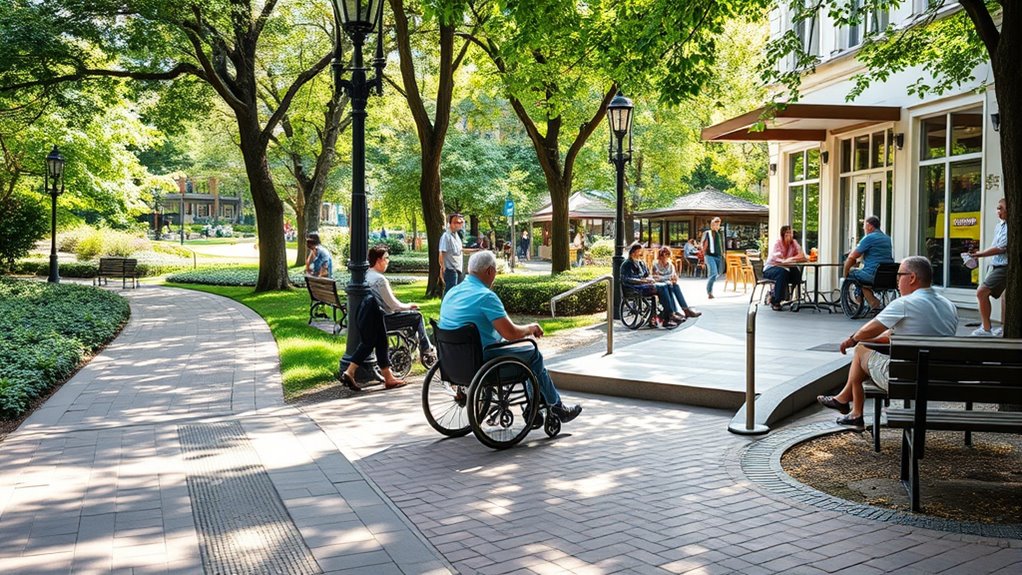

Universal design enhances both public spaces and personal environments by making them accessible and easy for everyone to use. It incorporates features like clear signage, high-contrast visuals, and assistive technologies that benefit people of all abilities. By creating welcoming, organized, and safe environments, everyone can navigate and participate more comfortably. The more you explore, the better you’ll understand how inclusive design positively impacts daily life for all individuals.
Key Takeaways
- Universal design creates accessible environments that accommodate diverse needs, benefiting both individuals with disabilities and the broader community.
- Inclusive signage and assistive technologies improve navigation and safety for all users, regardless of physical or sensory abilities.
- Accessible features in public and personal spaces promote independence, comfort, and equal participation for everyone.
- Designing with accessibility in mind reduces confusion, stigma, and barriers, fostering a respectful, welcoming environment.
- Universal design enhances overall usability, safety, and inclusivity, making spaces functional and comfortable for all users.
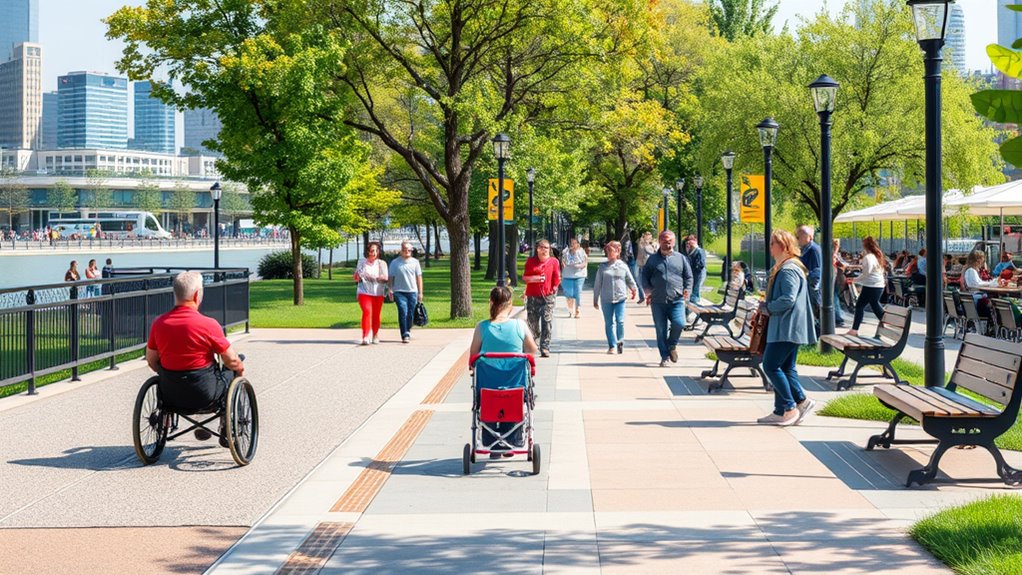
Accessibility enhancements are essential for making digital content more inclusive and easier to use for everyone. When it comes to physical spaces, these improvements also play a critical role in ensuring that all individuals can navigate and interact with their environment comfortably. One of the key tools in this effort is assistive technology, which includes devices and software designed to support people with disabilities. From screen readers to mobility aids, assistive technology removes barriers that might otherwise limit participation in daily activities. But technology alone isn’t enough; thoughtful design of signage and environment plays a significant role in creating accessible spaces. Inclusive signage, for example, uses clear, straightforward symbols, large fonts, high-contrast colors, and braille to communicate information effectively to everyone, regardless of sensory or cognitive differences. When signage is inclusive, it guides visitors intuitively, reducing confusion and frustration for those with visual or learning impairments.
Implementing assistive technology and inclusive signage benefits not only individuals with disabilities but also everyone else. Clear signage helps visitors find their way easily, whether they’re unfamiliar with a location, carrying heavy loads, or have limited mobility. For example, large, high-contrast signs with simple symbols can assist elderly visitors or non-native speakers, making navigation smoother for all. Assistive technology in public spaces, such as hearing loops or voice-activated systems, enhances accessibility for people with hearing or speech impairments, but those features often improve the experience for everyone. Quiet, well-marked areas or auditory signals help create a calm environment and improve overall safety and efficiency. Additionally, integrating home furnishings like heated mattress pads with safety features can contribute to comfort and well-being in private spaces.
Designing with inclusivity in mind encourages a culture of respect and understanding. When spaces are equipped with assistive technology and inclusive signage, you send a message that everyone matters. This approach reduces stigma and fosters independence and confidence for those who might otherwise feel excluded. You’ll notice that accessible environments tend to be more organized, safer, and welcoming overall. It’s not just about meeting legal requirements; it’s about creating spaces where everyone can thrive, regardless of their abilities. By integrating assistive technology and inclusive signage into public and personal spaces, you make a tangible difference. You help remove barriers, promote equality, and guarantee that all individuals have the opportunity to participate fully and comfortably in their communities and daily lives.
Frequently Asked Questions
How Does Universal Design Benefit People Without Disabilities?
You benefit from universal design because it creates environments that are easier to navigate and more enjoyable. By incorporating inclusive technology and aesthetic integration, spaces become more functional and visually appealing. These improvements lead to smoother everyday experiences, whether you’re using public transportation or working in an office. Ultimately, universal design makes life more convenient and comfortable for everyone, not just those with disabilities, by fostering more inclusive and thoughtfully designed spaces.
What Are the Cost Implications of Implementing Universal Design Features?
When you consider the cost implications of implementing universal design features, a thorough cost analysis reveals that initial investments may be higher, but the long-term benefits outweigh these costs. You’ll save money by reducing the need for future modifications and repairs. The investment benefits include increased usability for everyone, creating more inclusive spaces that serve diverse needs, ultimately fostering a more equitable environment for all users.
How Can Small Businesses Incorporate Accessible Design?
Ever thought about making your small business a magnet for everyone? You can start by blending accessible design into your interior aesthetics—think stylish ramps and wide pathways that don’t scream “accessibility upgrade.” Clear signage isn’t just for airports; it guides all customers effortlessly. By embracing universal design, you boost your appeal, show you care, and create a welcoming space for everyone—no fancy budget required, just smart choices.
What Are Common Misconceptions About Accessibility Improvements?
When you consider accessibility improvements, you might encounter myth busting around design misconceptions. Many believe these upgrades are costly or only benefit certain groups, but that’s not true. Accessibility features often enhance overall usability for everyone, not just people with disabilities. By addressing these misconceptions, you can foster inclusive spaces that serve all users better. Clear information and thoughtful design help break down these myths and promote universal benefits.
How Do Cultural Differences Influence Universal Design Standards?
Cultural perceptions act as the compass guiding universal design standards, shaping how adaptable spaces are to diverse needs. You might find that what’s considered accessible in one culture feels intrusive in another. This highlights the importance of design adaptability, ensuring spaces respect cultural nuances while remaining inclusive. By embracing these differences, you create environments that truly serve everyone, turning diversity into a strength rather than a barrier.
Conclusion
By embracing universal design, you create spaces where everyone feels welcomed and valued. These thoughtful enhancements gently open doors, inviting all to experience the world comfortably and confidently. As you weave accessibility into every corner, you craft environments that softly whisper inclusivity and kindness. Ultimately, your efforts transform ordinary places into warm, inviting havens—where connection and comfort flourish, and everyone can truly belong.