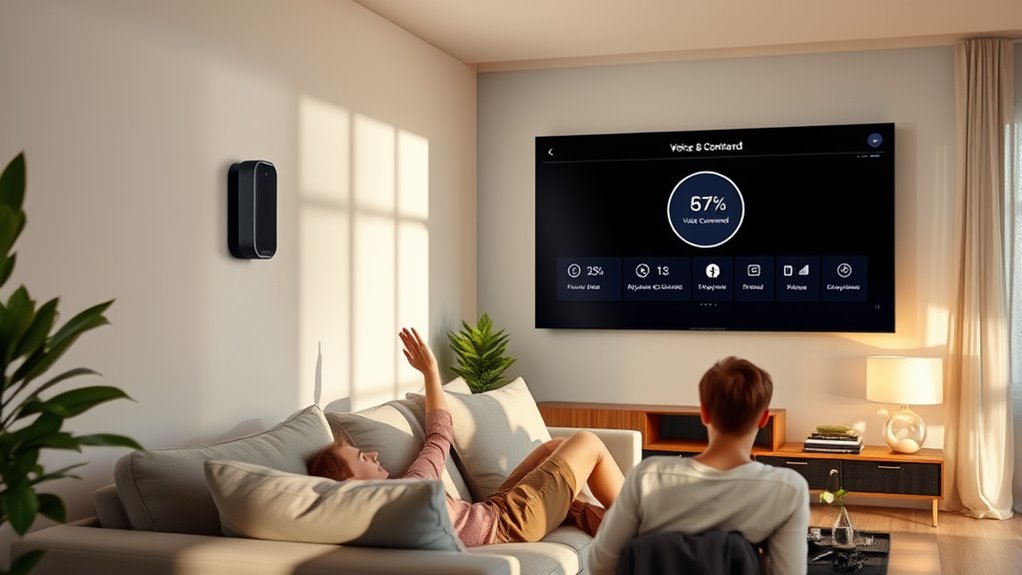

Voice-controlled technology in smart homes greatly enhances accessibility by enabling you to manage lights, locks, thermostats, and appliances hands-free. You can operate devices with simple speech, helping those with mobility or visual challenges gain independence and confidence. These systems are designed to be intuitive and compatible across devices, ensuring a seamless experience. By integrating AI security, your home remains safe and protected. Discover more ways voice control can transform your home environment and daily life.
Key Takeaways
- Voice-controlled smart homes enable hands-free operation of lights, locks, and appliances, increasing independence for users with mobility or visual impairments.
- Integration of voice assistants like Alexa or Google Assistant provides seamless, natural language control tailored to individual accessibility needs.
- Smart device compatibility allows for customized, accessible environments, reducing physical barriers and enhancing daily routine management.
- AI security features ensure safe, private use of voice-controlled systems, protecting user data and fostering trust in assistive technologies.
- Embedding voice control into smart home systems promotes inclusivity, offering enhanced safety, convenience, and autonomy for all users.

Have you ever wondered how technology can be made more inclusive for everyone? When it comes to creating a truly accessible smart home, voice-controlled everything plays a vital role. Voice command integration has revolutionized how people with diverse needs interact with their environment. Instead of fumbling with switches or struggling to find remote controls, you can simply speak to control lights, thermostats, locks, or even appliances. This seamless interaction makes daily routines smoother and more manageable. By embedding voice command integration into smart home devices, manufacturers open doors for individuals with mobility impairments, visual impairments, or other disabilities to participate fully in home management.
Assistive technology tools are at the core of this transformation. These tools include voice assistants like Alexa, Google Assistant, or Siri, which act as digital intermediaries that interpret your commands and execute actions instantly. You can say, “Turn on the living room lights,” or “Set the thermostat to 72 degrees,” and the system responds immediately. This hands-free approach not only provides independence but also enhances safety, as you can operate devices without needing to physically reach or see controls. Plus, many assistive tech tools can be customized to individual preferences, such as adjusting speech recognition sensitivity or enabling specific commands, further tailoring the experience to your needs.
Integrating voice commands into various smart devices creates a cohesive, accessible environment. For example, you can link your smart locks with voice control, allowing you to lock or unlock doors without physical keys or switches. This feature is especially helpful if you have limited mobility or find traditional keys cumbersome. Likewise, voice-controlled blinds or curtains give you the ability to adjust lighting and privacy without reaching high or difficult-to-access locations. These integrations foster a sense of autonomy and confidence, empowering you to manage your home comfortably.
The key to making this possible lies in thoughtful design and robust voice command integration. Developers focus on creating intuitive, natural language processing so that you don’t need to memorize complex commands. They also ensure compatibility across different devices and platforms, avoiding frustrating silos of technology. When assistive technology tools are seamlessly embedded into the smart home ecosystem, they work harmoniously to provide a truly inclusive experience. Additionally, ongoing advancements in AI security help protect user data and ensure safe operation of these systems. This way, everyone, regardless of physical ability, can enjoy the convenience, safety, and independence that modern smart homes offer. Ultimately, embracing voice-controlled technology in the home isn’t just about convenience; it’s about making everyday life accessible to all.
Frequently Asked Questions
How Secure Are Voice-Controlled Smart Home Devices Against Hacking?
Voice-controlled smart home devices can be vulnerable to hacking, but their security depends on several factors. You should guarantee they use strong encryption protocols to protect your data and regularly install firmware updates, which patch security flaws. By staying vigilant and keeping your devices up to date, you reduce the risk of unauthorized access. Remember, the more secure your devices are, the safer your smart home becomes.
Can Voice Commands Be Customized for Different Users’ Needs?
Did you know that 65% of smart home users want personalized experiences? You can customize voice commands for different users’ needs through user-specific customization and adaptive voice profiles. These features enable the system to recognize individual voices, ensuring commands are tailored and secure. By setting up adaptive voice profiles, you make your smart home more accessible and efficient, letting each person control devices effortlessly while maintaining privacy and security.
What Privacy Measures Protect Users’ Voice Data?
You’re concerned about your voice data privacy. Companies protect your voice data through voice data encryption, which secures your recordings from unauthorized access. They also implement user consent protocols, ensuring you control when and how your voice data is collected and used. By staying informed about these privacy measures, you can confidently use voice-controlled smart home devices, knowing your personal information remains protected and your privacy is prioritized.
Are Voice-Controlled Devices Compatible With All Smart Home Brands?
Imagine a universe where your voice commands effortlessly control every smart device—sounds incredible, right? While voice-controlled devices boast impressive brand compatibility and seamless device integration, not all brands work perfectly together. Some devices might refuse to play nicely, leaving you frustrated. Check compatibility before buying, because the perfect harmony of your smart home depends on matching the right brands and ensuring smooth device integration.
How Do Voice Assistants Handle Multiple Users and Personalized Settings?
Voice assistants handle multiple users by using user recognition features, often through voice profiles or voice recognition technology. You can set up personalized profiles so the system identifies each person and responds accordingly. This way, your preferences, settings, and routines stay tailored to you, even when others are using the device. It guarantees a seamless, personalized experience, making your smart home more intuitive and accessible for everyone.
Conclusion
By embracing voice-controlled technology in your smart home, you’re opening doors to greater independence and convenience. These accessibility enhancements empower you to manage your environment effortlessly, no matter your physical abilities. Isn’t it time you took control and made your home truly yours? With just a simple command, you can create a space that adapts to your needs, proving that technology can be a powerful tool for inclusion and empowerment.