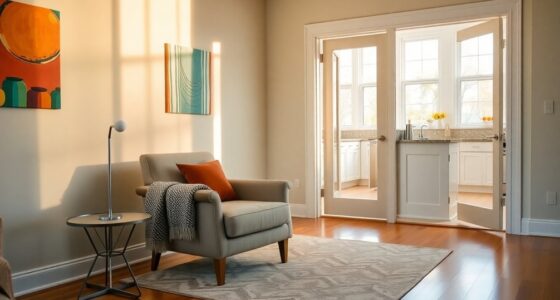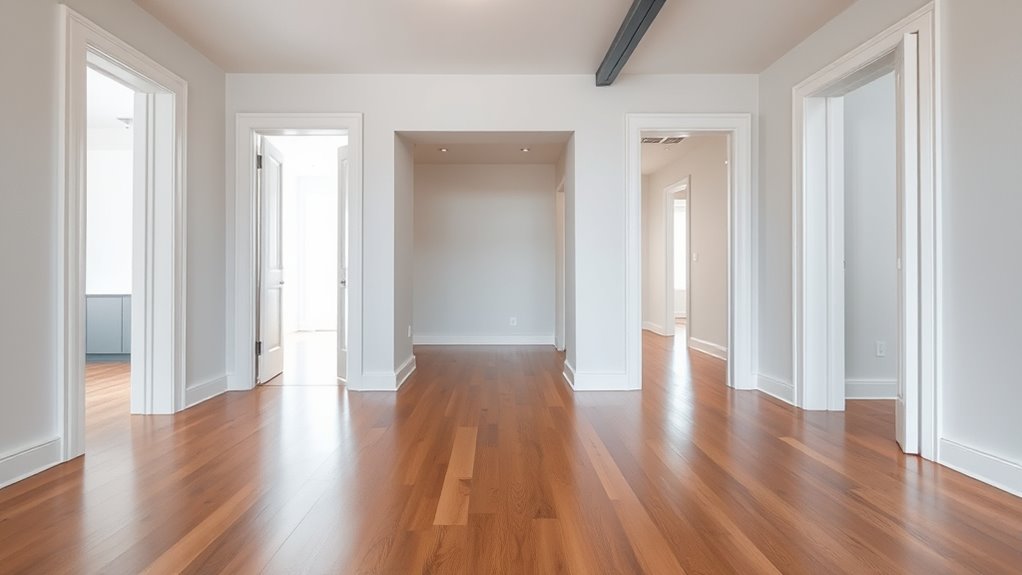

Widening doorways and hallways requires careful planning of structural changes to guarantee safety and stability. If walls are load-bearing, you’ll need to install headers, beams, or supports, which can add to your costs. The size of the opening influences material choices, with steel or engineered wood being common options. Permits and inspections are typically necessary, potentially extending your timeline. Understanding these considerations helps you avoid costly mistakes, and exploring further will show how to manage these upgrades effectively.
Key Takeaways
- Widening doorways and hallways often involves removing or modifying load-bearing walls, requiring structural supports like headers or beams.
- The size of the opening directly affects material costs and complexity of reinforcement, with larger openings being more expensive.
- Steel or engineered wood beams are commonly used for structural support, with costs varying based on size and material choice.
- Permits and inspections are typically necessary to ensure safety and compliance during structural modifications.
- Proper planning and professional consultation help balance costs, safety, and aesthetic integration during widening projects.

Widening doorways and hallways can considerably improve the accessibility and functionality of your home. When planning this upgrade, you’ll want to consider how your home’s existing architecture styles influence the design and structural modifications. Different styles—ranch, Victorian, modern, or Craftsman—offer unique challenges and opportunities. For example, a modern home might feature open floor plans and minimal load-bearing walls, making widening easier, while traditional styles often incorporate thicker walls and intricate moldings that require more careful planning. Understanding your home’s architecture helps you determine the best approach for making doorways and hallways more accessible without compromising aesthetic integrity.
Considering your home’s architecture styles helps ensure accessible, stylish doorway and hallway upgrades.
Material choices play a vital role in the process, impacting both the structural integrity and the cost of your project. When enlarging openings, you’ll need to select appropriate materials for framing and reinforcement, such as steel or engineered wood beams, especially if you’re removing load-bearing walls. The choice of materials directly affects the stability and safety of the structural modification. For non-load-bearing walls, you might opt for lighter materials like drywall and lightweight framing, reducing costs and installation time. For load-bearing sections, stronger materials are essential to guarantee the wall’s support remains intact after widening. Additionally, matching the new materials with existing finishes—whether drywall, plaster, or decorative molding—helps maintain your home’s aesthetic consistency.
The size of the opening and the structural changes required determine the overall cost. Larger openings often necessitate more extensive reinforcement, increasing both material and labor expenses. If you’re removing a load-bearing wall, you’ll need to install a header or beam, which involves precise measurements and possibly steel supports. The cost of these structural elements varies based on size and material choice, with steel beams generally costing more but offering greater strength. To keep costs manageable, you might consider partial widenings or alternative solutions like installing pocket doors or sliding panels, which can improve accessibility without major structural work.
Keep in mind that permits and inspections are often required for structural modifications, especially when load-bearing walls are involved. These regulatory steps ensure safety but can add to your overall costs and timeline. Working with a professional who understands your home’s architecture styles and material options will help you navigate the process smoothly, ensuring your widened doorways and hallways are both functional and visually cohesive. Proper planning around structural considerations is essential to avoid costly mistakes and ensure safety. Ultimately, thoughtful planning around these considerations will result in a more accessible, attractive, and structurally sound home.

Simpson Strong-Tie S/HD8S S/HDS 11 in. Light Gauge Steel Holdown
Can be installed directly on the base track or raised above it and is suitable for back-to-back applications…
As an affiliate, we earn on qualifying purchases.
As an affiliate, we earn on qualifying purchases.
Frequently Asked Questions
How Do I Determine the Ideal Width for My Doorways?
You should determine the ideal doorway width based on your needs and architectural style. For most homes, a 32-inch wide doorway suits general access, but if you want to accommodate mobility devices or furniture, consider widening to 36 inches or more. Think about your doorway materials and how they match your home’s style. Measure doorways carefully, and consult with a professional to guarantee your new width complements your home’s architectural features.
Are There Specific Building Codes for Widening Hallways?
Yes, there are specific building codes for widening hallways. You need to guarantee your modifications meet ADA compliance, which typically requires hallways to be at least 36 inches wide, and adhere to fire safety regulations that may specify minimum widths for emergency egress. Check your local building authority’s codes and consult with a professional to ensure your widened hallways are safe, accessible, and legally compliant.
Can I Widen Doorways Without Removing Interior Walls?
You can widen doorways without removing interior walls, but you’ll need to reinforce the doorway frame to maintain stability. This process involves installing proper doorway reinforcement, ensuring the new opening is secure and meets building codes. You should also consider doorway aesthetics, choosing trim and finishes that match your space. Always consult a professional to assess structural needs and make sure your project complies with local regulations.
What Are the Long-Term Maintenance Costs of Wider Doorways?
Wider doorways generally lead to slightly higher long-term maintenance costs due to increased exposure to wear and tear, especially in high-traffic areas. When you do a thorough cost estimation during renovation planning, consider potential issues like door frame damage or door operation problems. Regular inspections and timely repairs help keep maintenance manageable, ensuring your investment in wider doorways remains beneficial over time.
How Does Widening Doorways Affect Home Resale Value?
Widening your doorways can boost your home’s resale value, like opening a window to new opportunities. It enhances doorway aesthetics and home accessibility, appealing to a broader range of buyers, especially those with mobility needs. This upgrade signals modernity and inclusivity, making your home more attractive. While it may involve upfront costs, the increased appeal often outweighs these expenses, potentially leading to a quicker sale at a higher price.

Building with Engineered Lumber
As an affiliate, we earn on qualifying purchases.
As an affiliate, we earn on qualifying purchases.
Conclusion
Widening doorways and hallways isn’t just about space—it’s about creating a home that truly welcomes everyone. While the costs and structural changes might seem intimidating, consider the emotional freedom and accessibility you gain. Some believe that these modifications can transform lives, breaking down barriers and fostering independence. If you’re torn between cost and compassion, remember: investing in accessibility isn’t just structural; it’s about opening your heart and home to everyone who walks through.

Nuk3y Heavy Duty Adjustable Shelf Rod Support Bracket (White)
Projection: 12-1/4" from Mounting Surface
As an affiliate, we earn on qualifying purchases.
As an affiliate, we earn on qualifying purchases.

EaseLife 12FT/144in Bypass Double Sliding Pocket Door Hardware Kit,Commercial Grade,Aluminum,Bypassing Wardrobe Closet Door Track for 4 Door System,Slide Smoothly Quietly,Easy Install,Black,No Door
Commercial Grade: High precision aluminum box bypass track for double pocket door,concealed sliding ensures beauty and durable.Track can…
As an affiliate, we earn on qualifying purchases.
As an affiliate, we earn on qualifying purchases.