
Accessible bathrooms feature curbless showers and adjustable fixtures to make your space safer and easier to use. Curbless showers remove the high step, so you can roll in with a wheelchair or walker comfortably. Adjustable fixtures like grab bars and handheld showerheads provide personalized support and convenience. Proper lighting and thoughtful fixture placement further improve safety and independence. If you keep exploring, you’ll discover how these upgrades and smart design choices combine for a more functional bathroom experience.
Key Takeaways
- Curbless showers eliminate barriers, allowing easy wheelchair or walker access and reducing tripping hazards.
- Adjustable fixtures, such as height or angle-changing sinks and showerheads, support diverse user needs.
- Proper lighting enhances safety by providing bright, even illumination and motion-sensor options for convenience.
- Strategic fixture placement ensures accessibility, enabling users to operate fixtures comfortably without fine motor skills.
- Incorporating these features promotes independence, safety, and comfort in accessible bathroom designs.

Accessible bathrooms are essential spaces that guarantee everyone can use the facilities comfortably and safely. Whether you’re designing a new bathroom or upgrading an existing one, focusing on features like curbless showers and adjustable fixtures can make a significant difference in accessibility. These modifications not only improve safety but also promote independence for individuals with mobility challenges. When considering bathroom renovations, you might also want to explore options like bathtub replacements that accommodate easier entry or exit, further enhancing usability. Additionally, integrating effective lighting solutions ensures the space is well-lit, reducing hazards and increasing comfort.
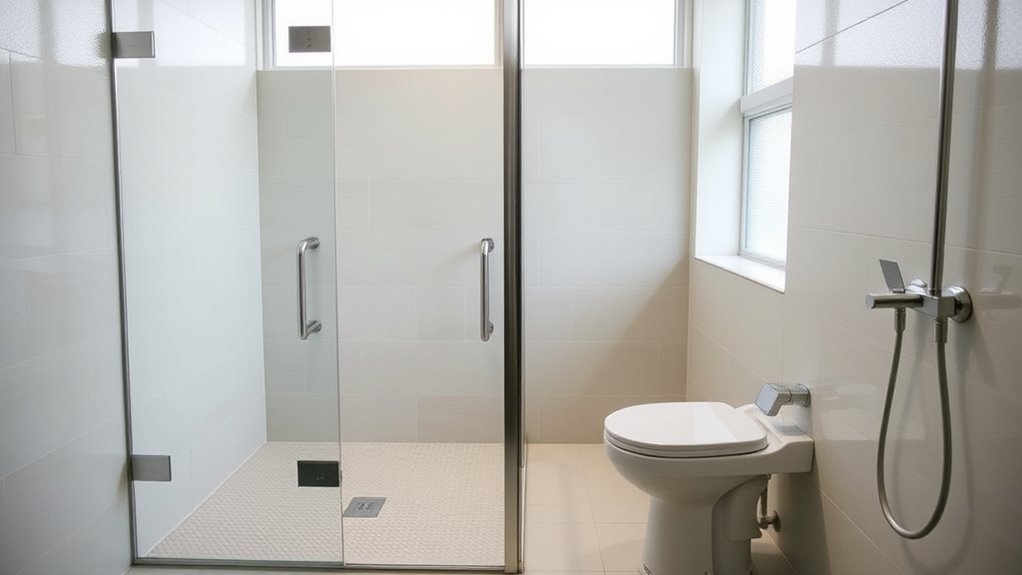
Curbless showers are a game-changer for accessible bathrooms. They eliminate the traditional barrier of a raised lip, making it easier for anyone using a wheelchair, walker, or cane to enter and exit without difficulty. Installing a flush threshold creates a seamless transition from the bathroom floor to the shower, reducing tripping hazards and making cleaning simpler. These showers can be designed with slip-resistant flooring and strategically placed grab bars for added safety. If you’re replacing a bathtub, opting for a walk-in or barrier-free model can provide similar benefits, allowing for easier access without compromising comfort or style.
Curbless showers with slip-resistant floors and grab bars enhance safety and accessibility.
Lighting solutions also play a vital role in creating a safe and welcoming environment. Bright, evenly distributed lighting minimizes shadows and highlights potential hazards, making it easier for everyone to navigate the space confidently. Consider installing adjustable lighting fixtures that can be dimmed or brightened as needed, especially if you have users with visual impairments. Motion-sensor lights are another excellent addition, providing illumination immediately when someone enters the room. Proper lighting not only enhances safety but also adds to the overall ambiance of the bathroom, making it a more inviting space.
When implementing these features, think about the placement and height of fixtures like grab bars and adjustable showerheads. These should be within easy reach and operable without requiring fine motor skills. For bathtub replacements, focus on options with built-in seats or lower thresholds, which make bathing safer and more comfortable. Combining accessible design elements like curbless showers, well-planned lighting, and adaptable fixtures ensures that your bathroom meets the diverse needs of all users. Ultimately, thoughtful planning and quality upgrades create a space that’s not only functional but also empowering, promoting independence and dignity for everyone who uses it.
Furthermore, incorporating organic and natural juices into daily routines can promote overall well-being, which complements the health benefits of accessible bathroom features.
Frequently Asked Questions
What Are the Cost Differences for Installing Curbless Showers?
You’ll find that installation costs for curbless showers are generally higher than traditional ones, mainly due to the need for specialized materials and precise waterproofing. Material expenses also tend to be higher because of custom flooring, drainage systems, and seamless glass enclosures. Expect to pay a premium for these features, but keep in mind that the increased accessibility and modern look can make it worthwhile in the long run.
How Do Adjustable Fixtures Prevent Water Spillage?
Adjustable fixtures help prevent water spillage by allowing you to control water flow and spray direction precisely, ensuring water stays within the shower area. They enhance water containment by adapting to your needs, reducing splashes outside the shower. Plus, their fixture durability means they withstand frequent adjustments without wear, maintaining effective water control over time. This combination creates a safer, cleaner bathroom environment, preventing water damage and promoting accessibility.
Are There Specific Materials Recommended for Accessible Bathroom Floors?
You need to choose the most reliable materials for your bathroom floor, like non-slip tiles and waterproof membranes, to prevent accidents. Non-slip tiles offer incredible grip, making slips nearly impossible, even when wet. Waterproof membranes keep water from seeping through, protecting your space from damage. These materials work together to create a safe, durable, and accessible bathroom, ensuring you can move confidently without worry.
Can Existing Bathrooms Be Retrofitted With Curbless Designs?
Yes, you can retrofit your existing bathroom with a curbless design to improve ADA compliance. During bathroom remodeling, professionals can remove the existing shower curb, level the floor, and install a sloped, non-slip surface to guarantee safety and accessibility. This upgrade creates a seamless progression, making it easier for everyone to use. Just make sure the renovation meets ADA standards for slope, clearance, and fixtures to maximize accessibility.
What Maintenance Is Required for Adjustable Fixtures Over Time?
You’ll need to perform regular maintenance on your adjustable fixtures to guarantee fixture durability. Check for leaks, loose parts, and corrosion every few months, and clean the fixtures with gentle, non-abrasive cleaners. Maintenance frequency depends on usage, but staying proactive helps prevent issues. Keep the adjusting mechanisms smooth by lubricating moving parts periodically, and replace any worn components promptly to extend the lifespan of your fixtures.
Conclusion
By choosing curbless showers and adjustable fixtures, you’re transforming your bathroom into a sanctuary that welcomes everyone with open arms. Imagine a space so accessible, it feels like it’s designed just for you—no barriers, no frustrations, just pure freedom. You deserve a bathroom that breaks down every obstacle, turning everyday routines into moments of comfort and confidence. Don’t settle for less—create a bathroom that truly lifts you up and makes you feel unstoppable!