Innovative kitchen designs that leverage universal and smart features create a space that’s both functional and accessible for everyone. By integrating connected appliances, you can control devices remotely, making tasks easier and more efficient. Ergonomic layouts reduce physical strain, while seamless design ensures a clutter-free environment. These smart, inclusive features enhance safety and usability, making your kitchen adaptable for changing needs. Keep exploring to discover how these innovative elements can transform your cooking space effortlessly.
Key Takeaways
- Integrate smart appliances for seamless control and automation, enhancing convenience and efficiency.
- Design ergonomic layouts that promote accessibility and reduce physical strain for all users.
- Incorporate universal features ensuring usability for diverse age groups and abilities.
- Blend aesthetics with functionality by embedding appliances into the overall kitchen design.
- Future-proof kitchens with adaptable, smart technology that evolves with changing needs.
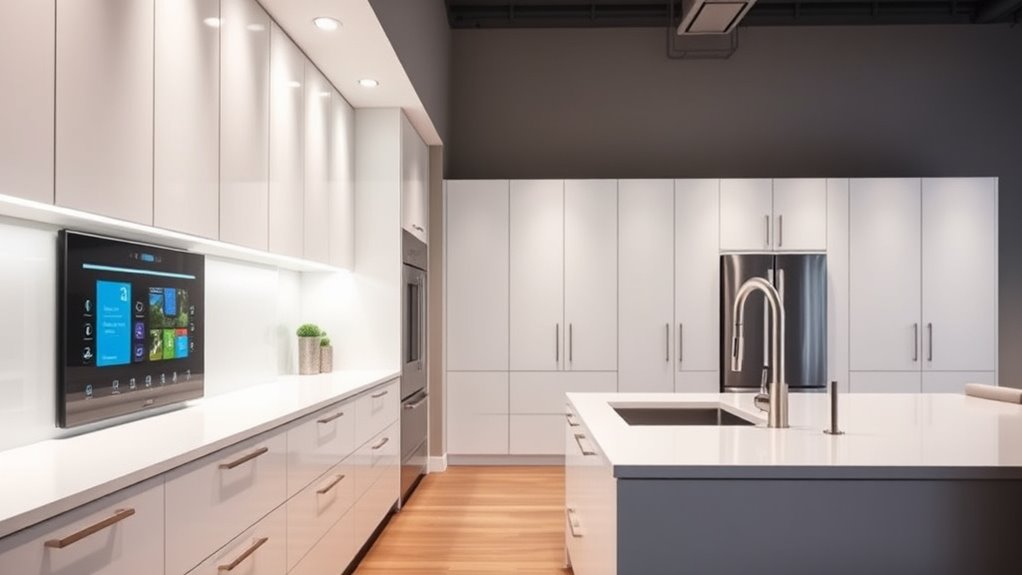
A well-designed kitchen combines universal features that accommodate everyone’s needs with smart innovations that enhance convenience and efficiency. When you focus on appliance integration, you create a seamless environment where all your devices work together smoothly. Modern appliances can be connected through smart technology, allowing you to control your oven, refrigerator, or coffee maker from a single app or voice command. This level of integration minimizes clutter and streamlines your workflow, so you spend less time searching for controls or adjusting settings. By choosing appliances that are compatible and easy to operate, you ensure your kitchen remains accessible and user-friendly for everyone, regardless of age or physical ability.
Smart appliance integration creates a seamless, accessible kitchen that enhances convenience for everyone.
Ergonomic layouts are essential in making your kitchen comfortable and safe to use. When you design with ergonomics in mind, you position key elements—such as sinks, cooktops, and prep areas—within easy reach, reducing unnecessary movement and strain. For example, placing frequently used items at waist height minimizes bending or stretching, which can be especially beneficial if you or someone in your household has mobility challenges. Clear pathways and sufficient space between countertops and appliances also contribute to a safer, more efficient environment. An ergonomic layout encourages natural flow, allowing you to move effortlessly from one task to the next without feeling cramped or fatigued. This thoughtful arrangement not only enhances daily routines but also promotes longevity by reducing physical stress on your body. Additionally, incorporating ergonomic features inspired by universal design principles can further improve usability for a diverse range of users.
Incorporating appliance integration and ergonomic layouts into your kitchen design transforms it into a highly functional space that adapts to your needs. When appliances are integrated thoughtfully, they become part of the overall aesthetic rather than standalone gadgets cluttering your countertops. This creates a clean, organized look while maintaining practicality. Meanwhile, ergonomic considerations ensure that your kitchen supports comfortable use, whether you’re chopping vegetables, washing dishes, or entertaining guests. Combining these features means you’re optimizing both form and function, making your kitchen a place where convenience and efficiency are second nature.
Ultimately, these elements work together to create a kitchen that’s not only visually appealing but also highly accessible and easy to use. You’ll find that cooking and cleaning become less of a chore and more of an enjoyable experience. By prioritizing appliance integration and ergonomic layouts, you’re investing in a space that adapts to your lifestyle, promotes safety, and simplifies daily tasks. This approach guarantees your kitchen remains a welcoming, efficient hub—ready to meet your needs today and well into the future.
Frequently Asked Questions
How Do Universal Kitchen Features Improve Accessibility for All Users?
Universal kitchen features improve accessibility for all users by incorporating universal design principles and accessibility features that cater to diverse needs. You’ll find adjustable countertops, lever handles, and pull-out shelves that make cooking easier regardless of age or ability. These thoughtful design elements guarantee everyone can use the space comfortably, promoting independence and safety. By prioritizing accessibility features, your kitchen becomes more inclusive, functional, and enjoyable for everyone.
What Are the Latest Trends in Smart Kitchen Technology Integration?
You’re riding the wave of smart kitchen tech, and it’s exciting! The latest trends include voice control to manage appliances effortlessly and augmented reality to visualize recipes or layout ideas right in your space. These innovations make cooking more intuitive, giving you a leg up in the kitchen. As technology advances, expect even more seamless integration, turning your kitchen into a smart hub that simplifies your daily routines.
How Can Eco-Friendly Materials Enhance Innovative Kitchen Designs?
Using sustainable materials like eco-friendly countertops, you can make your kitchen more eco-conscious and stylish. These materials reduce environmental impact, promote durability, and add a natural aesthetic that complements innovative design. By choosing eco-friendly countertops and other sustainable options, you enhance your space’s functionality while supporting environmental responsibility. It’s a smart way to create a modern, eco-friendly kitchen that’s both beautiful and sustainable.
What Maintenance Is Required for Smart Kitchen Appliances?
Think of your smart kitchen appliances as the brain of your culinary universe. You need to keep their minds sharp with regular software updates, ensuring they run smoothly like a well-oiled machine. Additionally, appliance calibration is essential—like tuning a musical instrument—to maintain accuracy and efficiency. By staying on top of these tasks, you guarantee your smart appliances operate seamlessly, making cooking and cleaning effortless and more enjoyable.
Are There Cost-Effective Options for Implementing Universal Design Features?
Yes, you can find affordable solutions for universal design features that fit your budget. Look for budget-friendly options like adjustable-height countertops, lever handles, and wide doorways made with cost-effective materials. You might also consider DIY modifications or repurposing existing fixtures to improve accessibility without overspending. These strategies help you create an inclusive kitchen space without sacrificing style or breaking the bank.
Conclusion
So, there you have it—your dream kitchen packed with universal and smart features, ready to turn you into a culinary genius or just a really organized human. Who knew that a fridge that talks back or drawers that open on command could make your life so much easier? Just remember, the real magic happens when you stop obsessing over gadgets and start cooking. Or, you know, pretending to cook while admiring your high-tech palace.