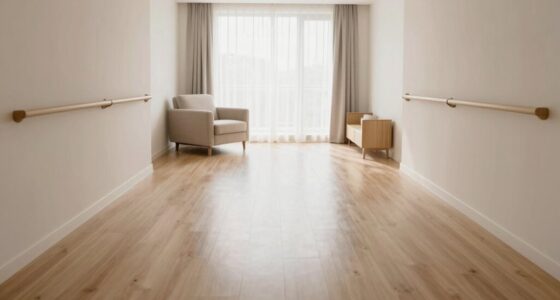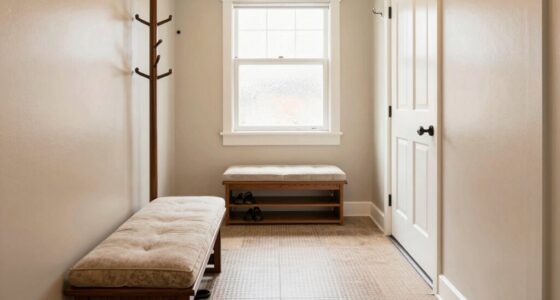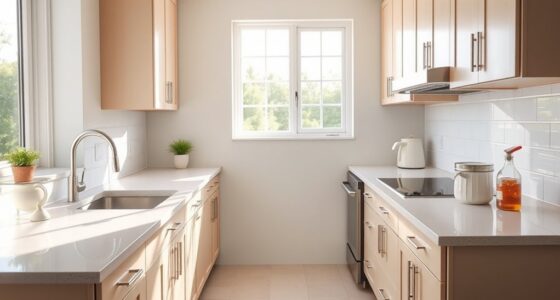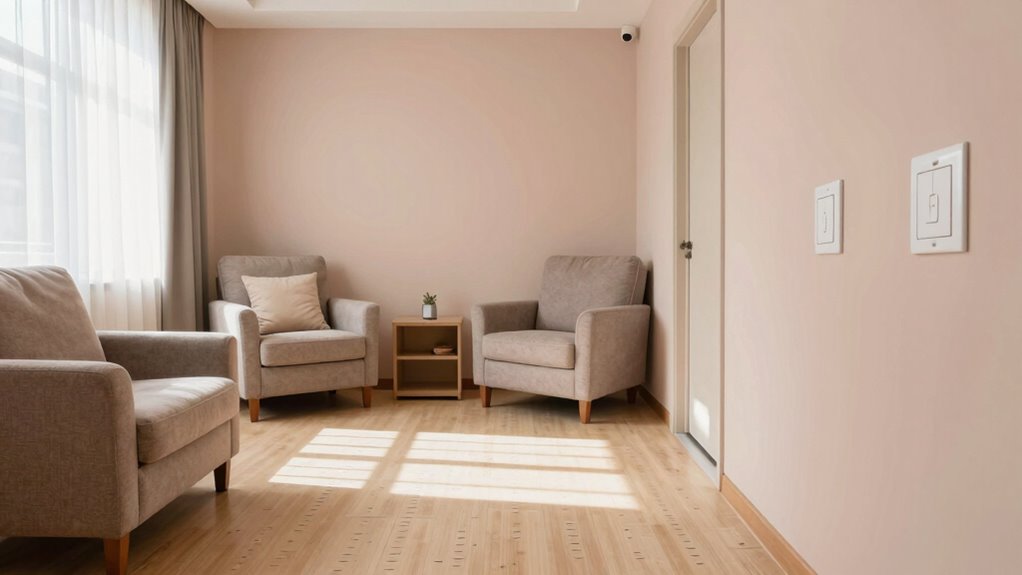

To make your home feel effortless for seniors, focus on simple design tweaks like installing lever-style door handles and easy-to-grasp fixtures, which reduce strain. Brighten spaces with natural light and add contrasting colors to key features like stairs and door frames for clear visibility. Incorporate slip-resistant flooring and keep pathways clutter-free to prevent falls. Smart technology can also support independence through voice commands and alerts. Keep exploring for more tips to create a safe, welcoming environment.

Get the little things that make your day delivered free with Prime
- Fast, free delivery on millions of items
- Prime Video, Amazon Music and more included
- Member-only deals all year
Key Takeaways
- Incorporate lever-style door handles and easy-to-grasp fixtures to simplify daily tasks.
- Brighten spaces with natural light and contrasting colors for improved visibility and safety.
- Install slip-resistant flooring and seamless rugs to prevent falls while maintaining style.
- Integrate smart home technology for effortless control of lighting, thermostats, and security systems.
- Use clear signage and visual cues to support independence and quick recognition of important areas.
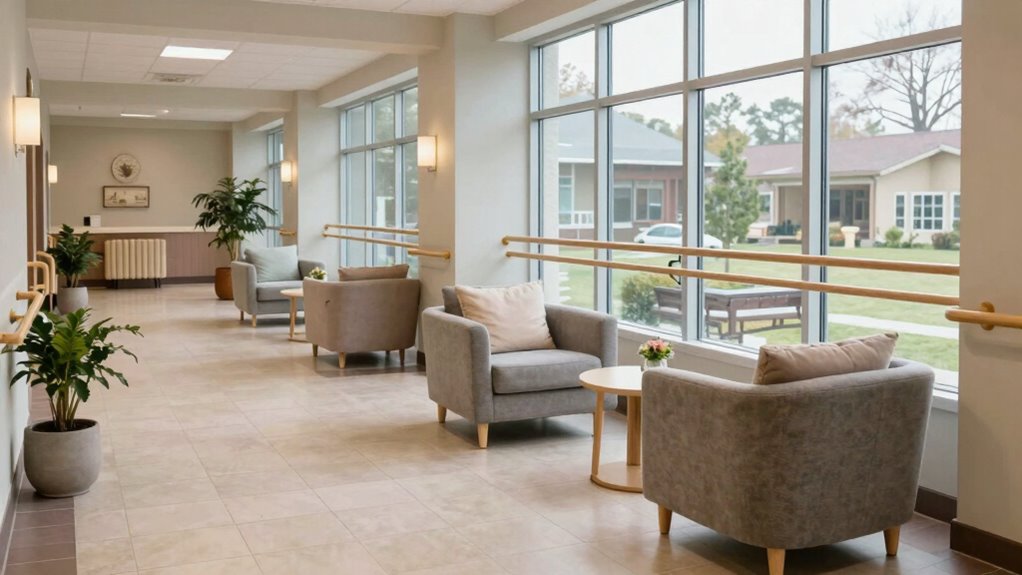
Design tweaks can substantially enhance safety and comfort in senior homes, making everyday living easier and more secure. When you incorporate assistive technology, you’re giving yourself tools that support independence and reduce the risk of accidents. For example, installing voice-activated lighting or smart home systems allows you to control lights, thermostats, and even door locks with simple commands. These devices cut down on the need to reach or bend, which can be difficult or unsafe. You might also consider sensor-based alerts that notify caregivers if something’s amiss, adding an extra layer of reassurance. These technological advancements blend seamlessly into your home, providing practical benefits without feeling intrusive. Exploring emerging trends in digital publishing can also inform you about the latest innovations and how they might be integrated into senior living environments.
Alongside assistive technology, aesthetic improvements can make a significant difference in how welcoming and functional your senior home feels. Simple updates like replacing dull or outdated fixtures with modern, easy-to-grasp handles and lever-style door knobs can make everyday tasks easier while maintaining a clean, stylish look. Brightening the space with natural light or well-placed lighting fixtures improves visibility, reducing the chance of trips or falls. You might also add color contrast to edges of stairs, handrails, or door frames, which helps your eyes distinguish important features quickly. Incorporating assistive technology into your home can also enhance safety and convenience, making it easier to manage daily routines. Additionally, using visual cues such as clear signage or contrasting colors can further support independence and safety in the home environment. These aesthetic enhancements don’t just boost safety—they also create a more cheerful and inviting atmosphere that encourages you to stay active and engaged. Incorporating home safety assessments from specialists can help identify specific areas for improvement tailored to your needs.
You’ll want to pay attention to the flooring, opting for slip-resistant surfaces that look good but also prevent falls. Replacing area rugs with seamless, low-pile carpets or mats can keep things stylish yet safe, especially in high-traffic zones. When it comes to furniture, choose pieces with rounded edges and sturdy construction that’s easy to get in and out of. Minimal clutter is also key, so keep pathways clear and organized, which not only looks tidy but reduces hazards. Incorporating aesthetic improvements in your decor, such as warm colors and personal touches, helps make your home feel more familiar and comforting, encouraging you to spend time comfortably in your space. Regular maintenance and inspections of home features can further ensure that safety measures remain effective over time. Furthermore, home technology can be integrated into your environment to monitor safety and alert you or caregivers to potential issues proactively.
Frequently Asked Questions
How Can Lighting Be Optimized for Senior Homes?
You can optimize lighting in senior homes by incorporating adaptive lighting systems that adjust brightness according to the time of day, helping with circadian rhythms. Additionally, focus on glare reduction by using diffused light fixtures and softer bulbs to minimize harsh shadows and eye strain. These tweaks create a comfortable, safe environment, making it easier for seniors to navigate spaces confidently and comfortably without feeling overwhelmed or disoriented.
What Materials Are Safest for Flooring in Senior Residences?
You should consider flooring materials that prioritize safety and comfort, like non-slip surfaces that reduce fall risks and hypoallergenic finishes for healthier indoor air. Materials such as vinyl, rubber, or cork are excellent choices, offering durability, ease of maintenance, and a gentle touch underfoot. These options create a secure, welcoming environment, helping residents feel confident and cared for without sacrificing style or practicality.
How to Personalize Senior Home Spaces Without Clutter?
You can personalize senior home spaces without clutter by adding meaningful decorative accents like framed photos, plants, or cherished keepsakes, keeping surfaces tidy. Use soothing color schemes to create a calm, welcoming atmosphere. Arrange items thoughtfully, prioritizing accessibility and simplicity. Incorporate a few statement pieces that reflect personality, ensuring the space feels uniquely theirs without overwhelming the room or compromising safety.
What Are Cost-Effective Design Upgrades for Senior Homes?
You can easily upgrade a senior home with budget-friendly renovations that emphasize aesthetic simplicity. Swapping out old fixtures for modern, easy-to-use options and adding slip-resistant mats improve safety without breaking the bank. Painting walls in soft, calming colors creates a welcoming atmosphere. Small touches like updated lighting and simple furniture arrangements can transform the space, proving that sometimes, less is more, and these upgrades make daily life smoother and more comfortable.
How to Incorporate Technology Seamlessly Into Senior Living Environments?
You can incorporate technology seamlessly by focusing on smart automation and voice control. Install smart devices that automatically adjust lighting, temperature, and security, making daily tasks easier. Use voice-controlled assistants to help with reminders, calls, or weather updates without extra effort. Guarantee devices are user-friendly, with simple interfaces and clear instructions, so seniors feel confident and comfortable using the technology, enhancing safety and independence effortlessly.
Conclusion
By making these simple design tweaks, you can turn a senior home into a space that feels effortless and welcoming. Small changes can make a big difference, creating an environment where seniors feel comfortable and independent. Remember, it’s often the little things that count the most. With a few thoughtful adjustments, you’ll have a home that truly feels like a breath of fresh air—making life easier and more enjoyable for everyone involved.
NFL season / tailgating Picks
team gear
As an affiliate, we earn on qualifying purchases.