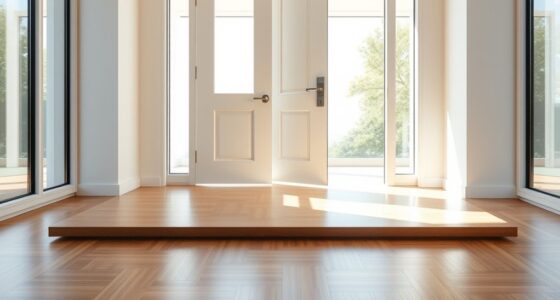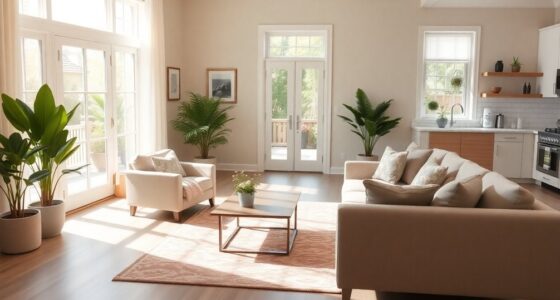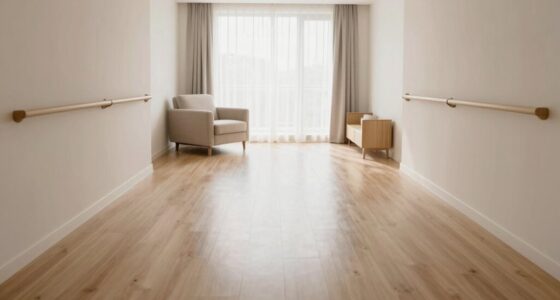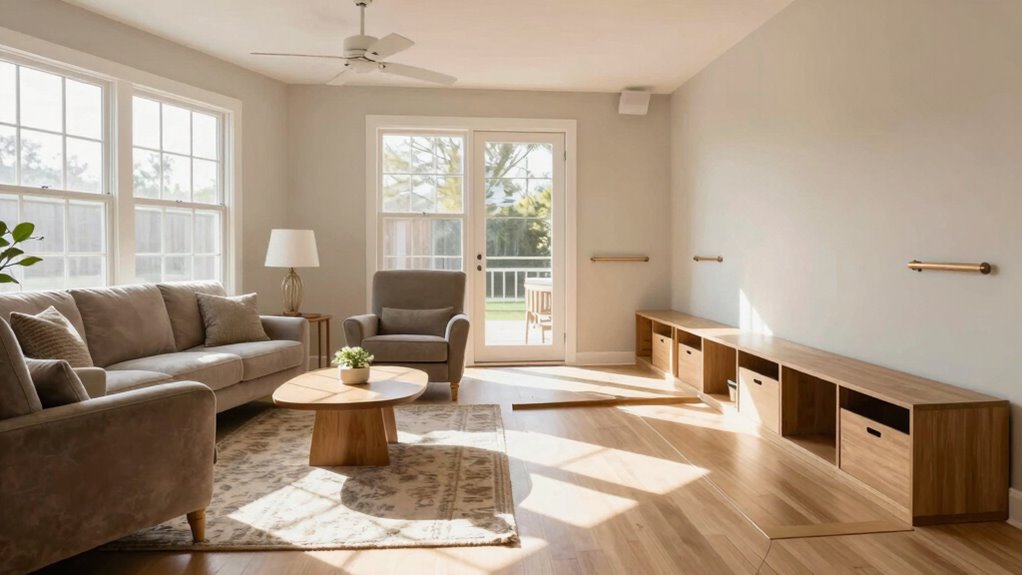

As you age, redesigning high-use areas like your kitchen, bathroom, and living room is key to maintaining safety, comfort, and independence. You’ll want to reconsider how spaces are arranged and what equipment you use, making modifications that support your changing needs. Incorporating smart technology, accessibility upgrades, and safety features helps prevent hazards and simplifies routines. Keep exploring to discover how thoughtful design can help you stay confident in your home for years to come.

Get the little things that make your day delivered free with Prime
- Fast, free delivery on millions of items
- Prime Video, Amazon Music and more included
- Member-only deals all year
Key Takeaways
- Aging can reduce mobility and strength, requiring safer and more accessible layouts in high-use areas.
- Increased risk of falls and accidents necessitates safety features like grab bars and non-slip flooring.
- Technology can support independence through automation and voice control, reducing physical effort.
- Modifications should accommodate changing needs, ensuring long-term usability and comfort.
- Designing adaptable, aesthetically pleasing spaces helps maintain independence and quality of life after 65.
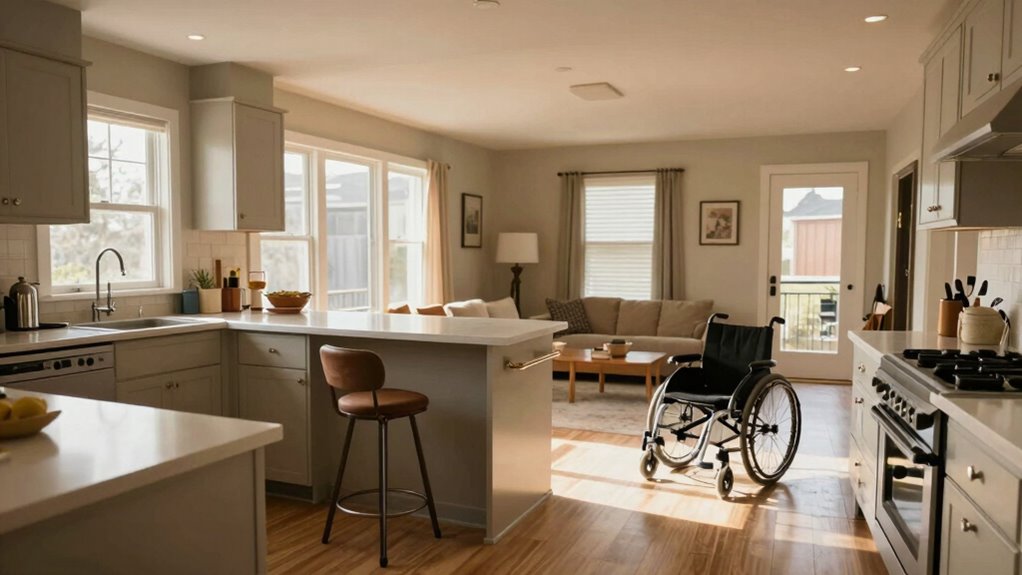
As you age past 65, making thoughtful design choices in your home can greatly enhance safety, comfort, and independence. High-use areas like the kitchen, bathroom, and living room become especially important because they’re where you spend much of your daily time. To support your changing needs, it’s essential to rethink how these spaces are arranged and equipped. Incorporating smart technology and accessibility upgrades can make a significant difference, ensuring you can move freely and confidently within your home.
Smart technology offers intuitive solutions that improve safety and convenience without adding complexity. Voice-activated assistants, for instance, allow you to control lighting, thermostats, and even appliances hands-free. Automated lighting systems can turn on as you enter a room and turn off when you leave, reducing the risk of trips and falls. Smart security cameras and doorbells give you peace of mind, letting you monitor your home remotely. These innovations help you stay connected and in control, making your home more adaptable to your needs. By integrating smart technology into high-use areas, you can streamline daily routines and reduce potential hazards. Additionally, technology integration can be customized to fit your specific lifestyle, making your home even more user-friendly.
Smart technology enhances safety and convenience, making your home more connected and easier to manage.
Accessibility upgrades are equally essential. Widening doorways and installing grab bars in bathrooms make moving through spaces safer and easier. Non-slip flooring reduces the chance of slips, especially in areas prone to moisture like the kitchen and bathroom. Adjusting countertop heights and sink placements can make tasks more manageable, reducing strain and discomfort. Simple modifications like lever-style door handles and pull-down shelves also improve usability. These accessibility upgrades aren’t just about safety—they also support your independence, enabling you to perform daily activities with less effort and risk. Furthermore, technological advancements can be tailored to enhance both safety and comfort, ensuring your home remains functional and welcoming. Incorporating smart sensors can further detect hazards like leaks or smoke early, adding an extra layer of safety. Being aware of the latest assistive devices can also provide additional support tailored to your needs.
Thinking about your high-use areas with a focus on these upgrades means more than just safety; it’s about creating a space that adapts to your lifestyle. Smart technology can be programmed to suit your routines, making daily tasks more efficient. Accessibility features can be seamlessly integrated so they don’t detract from your home’s aesthetic. The goal is to design with intention, ensuring that your home remains a sanctuary where you can live comfortably and securely as you age. Incorporating color accuracy and other technological advancements can further enhance your home environment, making it more enjoyable and visually pleasing. Making these strategic changes now can help you maintain your independence longer, empowering you to enjoy your space fully and confidently.
As an affiliate, we earn on qualifying purchases.
Frequently Asked Questions
How Can I Identify Which Home Areas Are Used Most Frequently?
You can identify your most used home areas by observing room usage and traffic patterns throughout the day. Notice which spaces you frequent, how often you move between rooms, and where you spend the most time. Pay attention to high-traffic zones that see consistent activity, like the kitchen or living room. This insight will help you understand your habits and guide you in designing spaces that better suit your needs.
What Specific Safety Features Should Be Prioritized in High-Use Areas?
Think of safety features as your home’s invisible shield. Prioritize slip-resistant flooring to prevent falls and install fire-resistant materials around stoves and electrical outlets for added protection. These features are essential in high-use areas, where activity levels are higher. By focusing on slip resistance and fire safety, you create a secure environment, reducing risks and ensuring peace of mind. Always choose durable, reliable options to keep your home safe as you age.
How Do Design Needs Change With Different Mobility Levels?
As your mobility levels change, you should focus on creating adaptive layouts and choosing ergonomic furniture that support ease of movement and comfort. You might need wider pathways, lower counters, or adjustable furniture to accommodate different mobility needs. By designing flexible spaces, you guarantee safety and accessibility, allowing you to move freely and comfortably regardless of mobility changes, ultimately promoting independence and reducing fall risks.
Are There Affordable Modifications for High-Traffic Spaces?
Did you know that simple, affordable upgrades can notably improve high-traffic spaces for those over 65? Budget-friendly solutions like slip-resistant rugs, lever handles, and increased lighting make daily use safer and easier. You don’t need to spend a lot—small, strategic modifications can transform your home’s functionality, reduce hazards, and boost comfort without breaking the bank. These affordable upgrades are perfect for creating a safer, more accessible environment.
How Can Technology Enhance Functionality in These Areas?
You can enhance functionality in high-use areas by integrating smart automation and tech solutions. Installing voice-activated controls and smart lighting makes daily tasks easier, while automated appliances reduce effort and improve safety. Tech integration, such as motion sensors and smart thermostats, optimizes comfort and energy efficiency. These upgrades create a more accessible, convenient environment that adapts to your needs, making your home safer and more manageable as you age.
Conclusion
As you age beyond 65, adapting your home’s high-use areas isn’t just smart—it’s essential. Think about how your needs change and prioritize safety, accessibility, and comfort in your design choices. Why settle for a space that doesn’t support your lifestyle anymore? By rethinking your home’s layout now, you guarantee it remains a welcoming, functional haven for years to come. Isn’t your comfort worth the effort to create a space that truly works for you?
NFL season / tailgating Picks
team gear
As an affiliate, we earn on qualifying purchases.