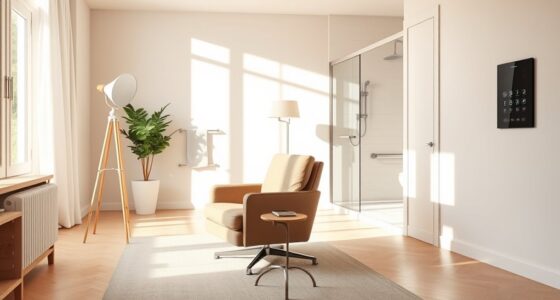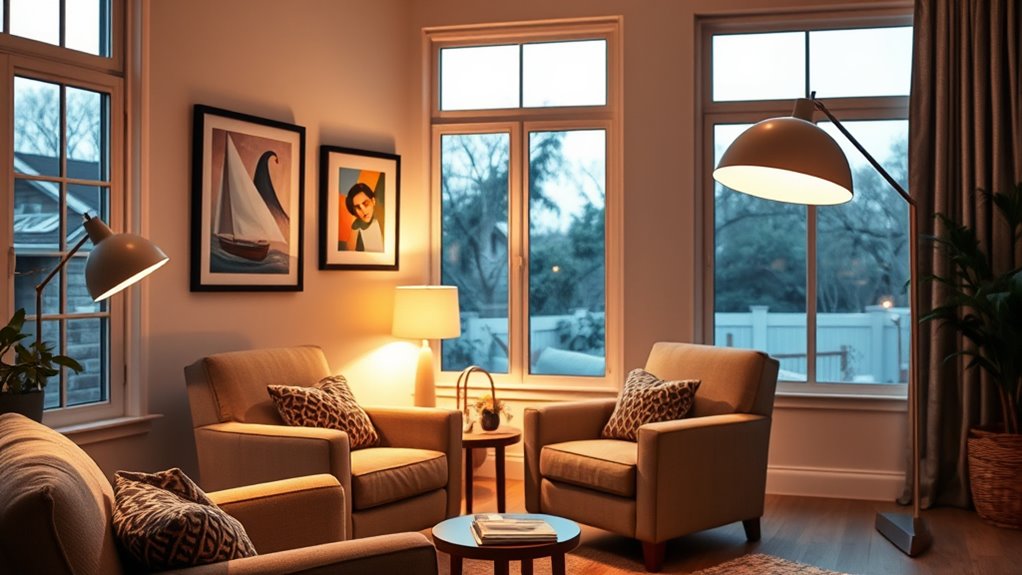

To create an age-friendly home, focus on adjustable lighting that minimizes glare and enhances visibility. Use dimmable fixtures and indirect light sources to avoid harsh reflections and provide flexibility for different tasks. Position lights carefully to eliminate shadows and ensure key areas are well-lit. Warmer bulbs reduce glare and comfort aging eyes. These smart choices improve safety and comfort—continue exploring tips to light up your home effectively and make your space more inviting.
Key Takeaways
- Use adjustable, dimmable lighting fixtures to customize brightness levels for different activities and times of day.
- Incorporate fixtures with diffusers or shades to soften light and minimize glare on reflective surfaces.
- Position task lighting near reading and work areas to improve visibility without causing eye strain.
- Opt for indirect lighting that bounces light off ceilings or walls for a gentle, even illumination.
- Prioritize warm-colored bulbs and strategic fixture placement to reduce glare and enhance comfort for aging eyes.
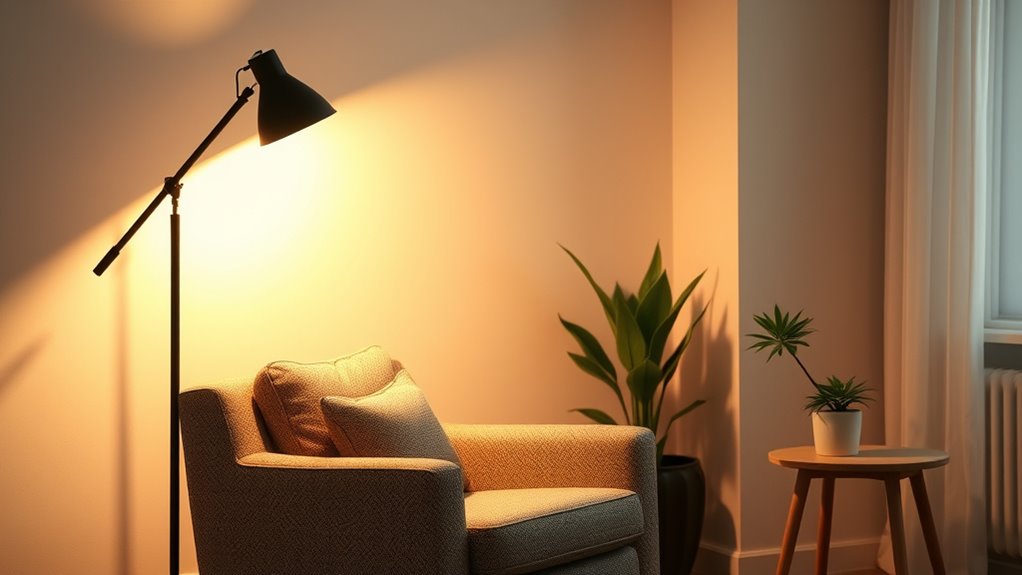
As your eyes age, they become less sensitive to light and more prone to glare, making proper lighting essential for maintaining visibility and safety. You’ll need to pay close attention to brightness levels throughout your space to verify everything remains clear and comfortable. Too little light can cause difficulty seeing details, while excessive brightness can lead to discomfort or even temporary blindness when shifting from dark to bright areas. The goal is to strike a balance where the lighting is bright enough for safe navigation but not overwhelming. Using adjustable fixtures or dimmable lights can give you control over brightness levels, allowing you to customize lighting based on activity and time of day. This flexibility is especially helpful in common areas like kitchens, bathrooms, and hallways, where varying tasks require different lighting intensities.
Glare reduction becomes a critical factor as your eyes become more sensitive to bright, direct light. Harsh, unshielded bulbs or overly reflective surfaces can cause discomfort and impair your vision. To minimize glare, opt for fixtures with diffusers or shades that soften the light, reducing harsh reflections. Position lights carefully so they don’t shine directly into your eyes or create distracting reflections on glossy surfaces. Consider using indirect lighting, where the light bounces off ceilings or walls, providing a more diffuse and comfortable glow. This approach helps prevent sudden flashes or bright spots that can cause discomfort or disorientation. When selecting light bulbs, choose those with warmer color temperatures, which tend to be gentler on aging eyes and reduce the likelihood of glare worsening. Additionally, incorporating lighting controls such as timers or smart switches can further enhance your ability to adjust lighting to your needs throughout the day.
In addition to adjusting brightness and reducing glare, it’s important to think about the placement of your lighting fixtures. Make sure your fixtures are strategically positioned to illuminate key areas without casting shadows or creating uneven lighting. For example, placing task lights near reading areas or work surfaces helps you see clearly without straining your eyes. Wall-mounted lights or sconces can provide balanced illumination without cluttering your space. You should also consider the quality of the light source—LEDs are a good choice because they offer bright, consistent light with minimal glare and are energy-efficient. By combining these strategies—controlling brightness levels, reducing glare, and thoughtful fixture placement—you create an environment that’s safer, more comfortable, and better suited for your changing eyesight.
Ultimately, lighting shouldn’t be an afterthought but an integral part of your home design. When you prioritize adjustable brightness, glare reduction, and proper fixture placement, you help preserve your independence and guarantee a safer, more enjoyable living space as your eyes age.
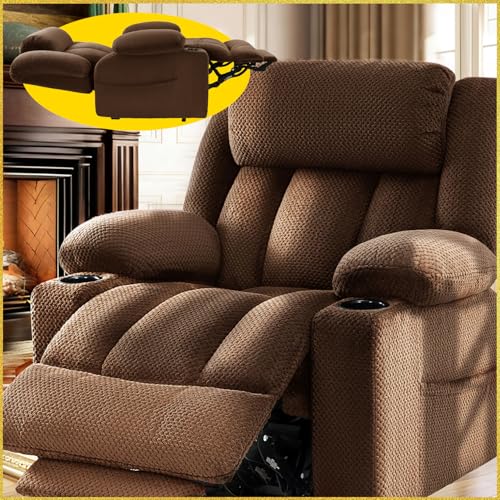
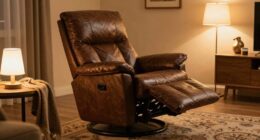
Neioml 3 Motor Large-Wide Lift Chair, Infinite Position, 180° Lay Flat, Power Lift Chairs Recliners for Elderly Big and Tall, Massage & Heat, Extended Footrest (Dark Brown, Large Wide)
3 Motor 180° Lay Flat Infinite Position: power lift recliner chair can independently adjust the headrest, backrest, and...
As an affiliate, we earn on qualifying purchases.
Frequently Asked Questions
How Can I Reduce Glare in My Home Lighting?
To reduce glare in your home lighting, you should focus on effective lighting control. Use dimmers to adjust brightness levels easily and avoid harsh, direct lights. Incorporate indirect lighting, like lamps with shades or diffusers, to soften the light and minimize glare. Position lights carefully, avoiding direct lines of sight into bright bulbs. These steps help create a comfortable environment, making it easier for your eyes to adapt and reducing eye strain caused by glare.
What Are the Best Color Temperatures for Aging Eyes?
Think of your eyes as a lighthouse, guiding you safely through the night. For aging eyes, choose warm tones around 2700K to 3000K, which reduce strain and create a cozy atmosphere. Avoid harsh, cool whites that can cause glare. Prioritize lighting with good color contrast to enhance clarity. These choices help you see better, feel more comfortable, and enjoy your space without unnecessary eye fatigue.
How Does Lighting Affect Sleep Quality in Seniors?
Lighting considerably impacts your sleep quality by influencing your circadian rhythms and melatonin production. Exposure to bright, blue-enriched light during the day helps keep your internal clock on schedule, promoting alertness. Conversely, dimmer, warmer lighting in the evening signals your body to produce melatonin, aiding restful sleep. By adjusting your lighting habits, you support healthy sleep patterns and overall well-being as you age.
Are There Specific Fixtures Recommended for Older Adults?
Imagine a cozy room where your eyes find comfort in gentle, well-placed light. For older adults, appropriate fixtures like soft, glare-free lamps and adjustable LED lights are recommended. These fixtures reduce eye strain and enhance visibility, making daily tasks easier. Look for recommended lighting that offers warm hues and dimming options, creating a welcoming atmosphere. Your goal is to illuminate thoughtfully, ensuring safety and comfort at every turn.
How Can I Improve Outdoor Lighting Safety for Seniors?
To improve outdoor lighting safety for seniors, focus on landscape illumination and pathway lighting. You should install bright, evenly distributed lights along walkways and around key outdoor areas to prevent trips and falls. Use motion sensors for added security and avoid harsh glare. Regularly maintain and adjust the lighting to make sure it stays effective. Proper outdoor lighting creates a safer environment, helping seniors navigate confidently and comfortably at night.

MCombo Large Triple Motor Power Lift Recliner Chair with Massage and Dual Heating, Adjustable Headrest for Tall Elderly People, Faux Leather 7634 (Light Grey, Large)
Infinite Position: With the built-in triple motor, you can adjust the headrest, backrest, and footrest separately for infinite...
As an affiliate, we earn on qualifying purchases.
Conclusion
By implementing these lighting tips, you can truly enhance your comfort and safety as you age. Notably, some studies suggest that well-designed lighting not only improves visibility but may also boost mood and cognitive function. So, don’t underestimate the power of good lighting—it’s more than just illumination; it’s a way to light up your life and keep you feeling confident and independent. Start making small changes today and see the difference for yourself.

MEROUS Dual Motor Power Lift Recliner Chair for Elderly, Infinite Position Lay Flat Lift Chair with Massage and Heat, USB Ports, Leather (Silver Grey)
【Power Lift Assistance】Powered by Germany OKIN dual motors, this power lift recliner allows independent and infinite adjustment of...
As an affiliate, we earn on qualifying purchases.

Dual Motor Power Lift Recliner Chair for Adult & Elderly, Infinite Position Lay Flat Lift Chair with Heat & Massage, Cup Holder, Lumbar Pillow, Wireless Charger, USB Ports, Leather (Beige)
【Dual Motor Infinite Position Lift Recliner Chair】Powered by two silent motors, this power lift recliner chair offers smooth,...
As an affiliate, we earn on qualifying purchases.