
Smart homes designed with age-friendly technology put your safety and comfort first. You’ll benefit from adaptive lighting that adjusts automatically, reducing glare and shadows that can cause confusion. Voice controls and motion-activated lights help you move safely and independently. Smart sensors monitor activity and alert you to hazards or falls, offering peace of mind. If you want to discover how these innovative features create safer, more inclusive living spaces tailored to your needs, keep exploring.
Key Takeaways
- Integrates smart technology like adaptive lighting and voice controls to enhance safety and independence for seniors.
- Utilizes automated lighting and sensors to prevent falls and improve navigation in key home areas.
- Focuses on inclusive design that reduces hazards, glare, and shadows for safer, more comfortable living environments.
- Employs user-friendly automation systems that simplify daily routines and promote aging in place.
- Combines thoughtful architectural design with innovative tech to create adaptable, senior-centered homes.
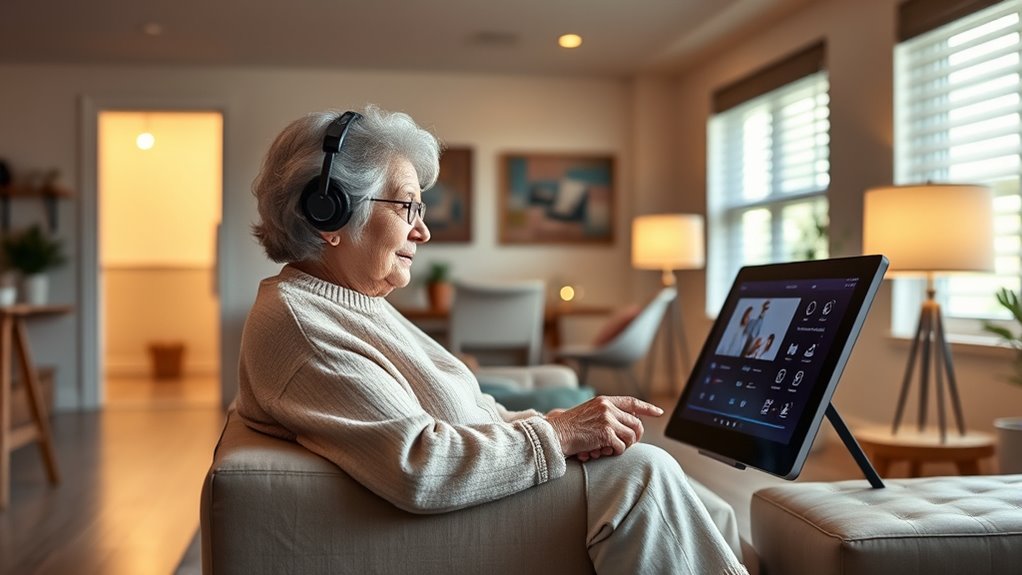
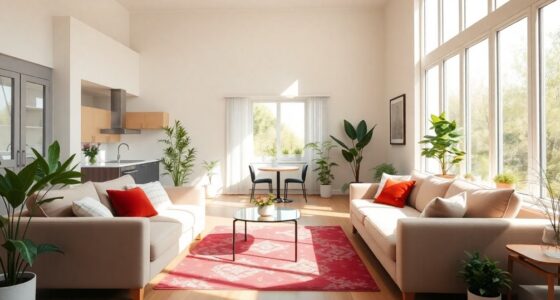
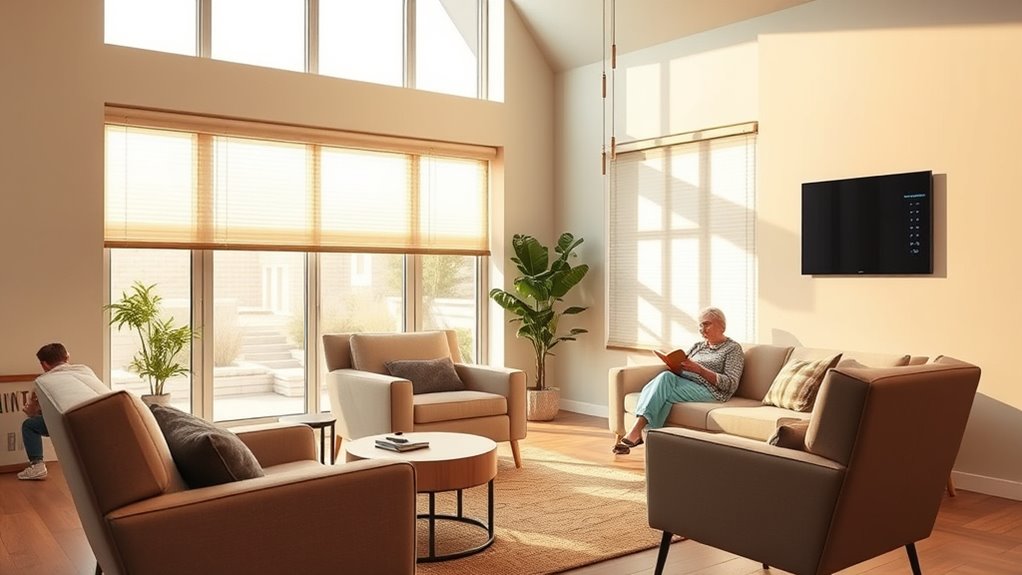
Have you ever considered how well your environment supports people of all ages? If you’re aiming to create a space that’s truly inclusive, embracing age-friendly design is essential. One of the most impactful ways to achieve this is by integrating smart technology into your home, especially smart lighting. With smart lighting, you can automatically adjust brightness levels based on the time of day or activity, reducing glare and shadows that could cause confusion or accidents. For older adults, these subtle improvements make a significant difference, helping them navigate their space safely and comfortably. Plus, smart lighting can be voice-activated, allowing seniors with mobility issues to control their environment effortlessly, without needing to reach for switches or remote controls. This seamless integration of technology not only boosts safety but also enhances independence, making daily routines easier and more intuitive.
Fall prevention is a critical aspect of age-friendly design, and smart homes offer innovative solutions here as well. Falls are a leading cause of injury among seniors, often triggered by poor lighting, cluttered pathways, or uneven flooring. By incorporating smart sensors and automated lighting systems, you can create a home that responds dynamically to movement. For example, motion-activated lights can illuminate hallways and staircases as soon as someone enters the room, reducing the risk of tripping or stumbling in low-light conditions. Smart sensors can also monitor foot traffic and alert you to potential hazards, such as obstacles left in walkways or uneven flooring that might cause a fall. These systems work silently in the background, providing a layer of safety without requiring constant oversight. Additionally, smart home devices can be programmed to send alerts if they detect unusual activity, like a fall or extended period of inactivity, prompting immediate assistance. Incorporating home automation technology can further streamline safety features and enhance overall home management.
Implementing smart lighting and fall prevention technologies transforms your home into a safer, more adaptable environment. It’s about understanding the needs of aging residents and proactively addressing them with intelligent solutions. These smart systems are designed to be user-friendly, ensuring that seniors can operate them with minimal effort or confusion. By focusing on these aspects of age-friendly design, you’re not just making your home safer—you’re fostering an environment that promotes independence, confidence, and peace of mind. Ultimately, blending technology with thoughtful design creates a space where everyone, regardless of age, can feel secure and comfortable, making aging in place a realistic and rewarding goal.
Frequently Asked Questions
How Do Smart Homes Adapt to Changing Senior Needs Over Time?
Smart homes adapt to your changing needs through innovative adaptive features and future proofing. As your requirements evolve, these systems can be reprogrammed or upgraded to guarantee continued comfort and safety. You can easily adjust lighting, temperature, or security settings, and the technology can learn your habits over time. This flexibility guarantees your home remains supportive and convenient, no matter how your needs change, making your living space truly future-proof.
What Are the Privacy Concerns With Integrated Home Monitoring Systems?
Your smart home’s integrated monitoring systems could feel like an all-seeing eye, raising serious privacy concerns. You worry about data security and how your information is protected. Consent management becomes essential, ensuring you’re in control of what’s shared. It’s important to understand who accesses your data and for what purpose, so you can enjoy the benefits of tech without feeling like your privacy is invaded by an omnipresent digital watchdog.
How Affordable Are Age-Friendly Smart Home Technologies for Seniors?
When considering the affordability of age-friendly smart home technologies, you need to think about cost considerations and technology accessibility. These systems are becoming more budget-friendly as innovations advance, but upfront costs and ongoing expenses can still be a concern. Luckily, many companies offer affordable options or financial assistance programs, making it easier for you to access these helpful devices and enhance safety and comfort at home.
Can These Designs Be Customized for Different Cultural Preferences?
Oh, of course, you can customize smart homes for every culture’s quirks! Who wouldn’t want cultural customization and personalization options tailored to their traditions? These designs are surprisingly flexible, allowing you to incorporate specific language preferences, lighting, and even music. So, yes, you absolutely can make smart homes feel like a true reflection of your cultural background, ensuring comfort and familiarity for every senior.
What Training Is Available for Seniors to Operate New Smart Home Devices?
You can find various training options to improve user friendliness and help seniors operate new smart home devices. Many providers offer user education programs, including in-person tutorials, online courses, and step-by-step guides tailored for seniors. These resources focus on simple instructions and hands-on practice, ensuring that seniors feel confident and comfortable using their smart home technology. Proper training makes it easier for seniors to enjoy the benefits of modern, user-friendly smart home solutions.
Conclusion
As you explore these thoughtful, age-friendly designs, you’ll find that technology gently supports independence, making everyday moments more comfortable and secure. Embracing these innovations means creating a space where comfort and ease flow effortlessly, allowing you to enjoy each day with dignity and grace. By blending smart solutions with thoughtful design, you’re opening the door to a future where aging gracefully feels natural and welcoming, turning everyday living into a truly enriching experience.