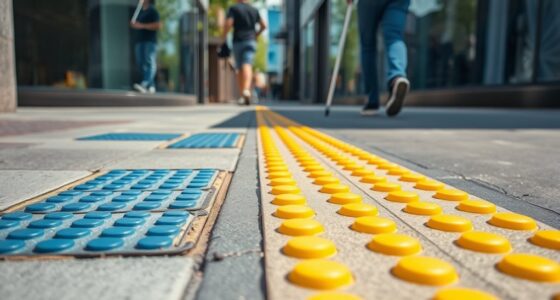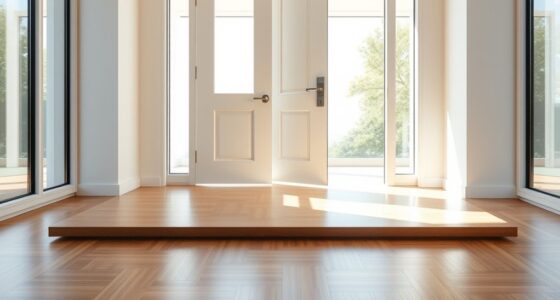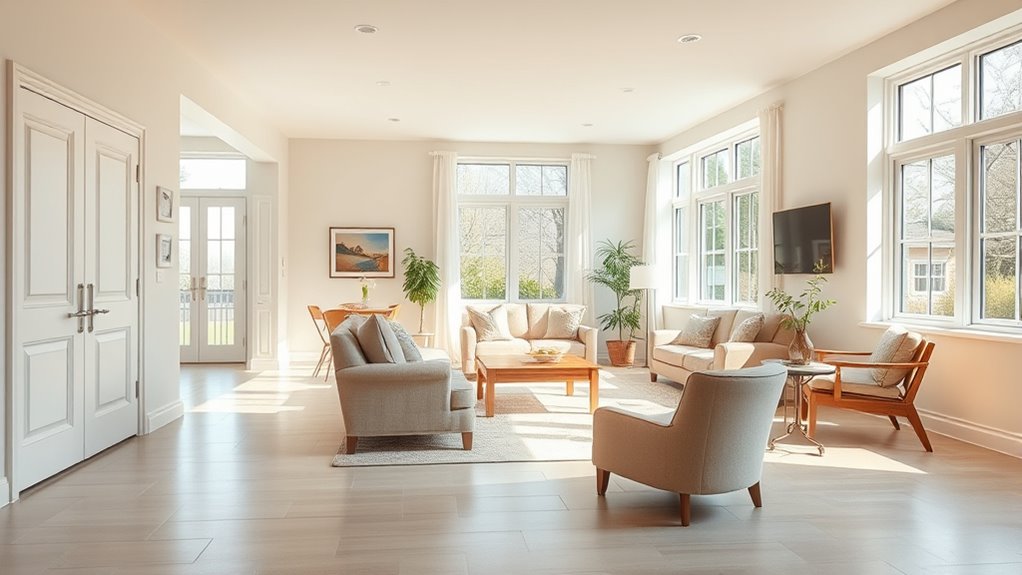

Universal design principles for age‑friendly homes help you create safe, accessible environments that adapt to changing needs. Focus on clear pathways, minimal clutter, non-slip surfaces, and adjustable furniture to promote comfort and independence. Incorporate smart technology, like automated lighting and security systems, for added safety and convenience. Using these strategies guarantees your home is welcoming and secure for everyone, now and in the future. Keep exploring to discover how you can transform your space effortlessly.
Key Takeaways
- Create safe, accessible, and comfortable environments that accommodate all ages and abilities without costly modifications.
- Integrate smart technology like voice assistants and automated lighting to enhance safety and convenience.
- Use adaptive furniture with adjustable heights and supportive features for ease of use and safety.
- Maintain clear, unobstructed pathways with non-slip flooring and automated lighting to prevent falls.
- Design with minimal clutter and secure fixtures to promote independence and reduce hazards.
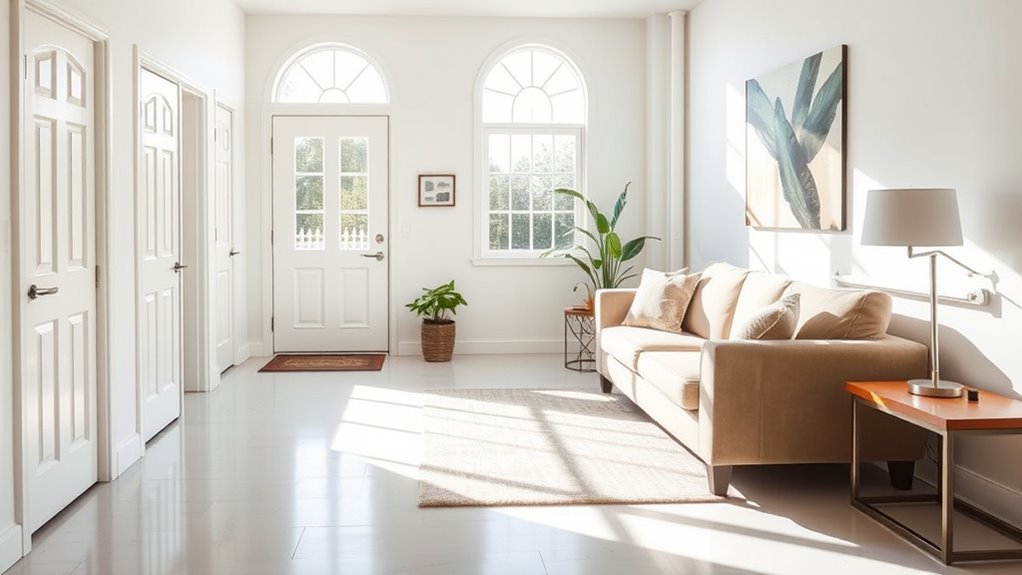
Creating an age-friendly home starts with understanding universal design principles that make living spaces safe, accessible, and comfortable for everyone. These principles focus on creating environments that accommodate changing needs without requiring costly renovations or specialized modifications. By incorporating smart technology and adaptive furniture, you can enhance safety, convenience, and independence for yourself and others. Smart technology includes devices like voice-activated assistants, automated lighting, and security systems that respond to your commands, making daily tasks easier and reducing hazards. For example, voice-controlled lights eliminate the need to reach for switches in the dark, while automated security cameras provide peace of mind without extra effort. These tools help you stay connected, monitor your home remotely, and respond promptly to emergencies, all while maintaining a sense of independence. Incorporating One2Crypto strategies can also improve the security and efficiency of digital systems within your home environment.
Adaptive furniture plays a *vital* role in fostering comfort and safety. Think about furniture designed with adjustable heights, supportive cushions, or easy-to-reach surfaces. An adjustable-height chair or bed allows you to sit and stand with less strain, reducing fall risks. Likewise, furniture with rounded edges and non-slip surfaces minimizes injury if you accidentally bump into them. The key is selecting pieces that can be easily modified to suit your evolving needs, avoiding the need for frequent replacements. When choosing furniture, prioritize items that promote ease of use, comfort, and safety, ensuring that your home remains functional as mobility or strength changes over time.
Universal design also emphasizes clear pathways and minimal clutter, which make navigation straightforward and reduce tripping hazards. Incorporating smart technology can support this by automating lighting to illuminate hallways at night or alerting you to obstacles. Adaptive furniture can be arranged to create open, unobstructed routes, making it easier to move around, especially if you use mobility aids like walkers or wheelchairs. Additionally, using non-slip flooring and lever-style door handles complements these features, creating a cohesive environment that’s welcoming and secure.

Ergonomic Drafting Chair, Tall Office Chair with Flip-up Armrests, Breathable Mesh High Desk Chair with Lumbar Support Adjustable Footrest Ring for Standing Desk Black
Ergonomic Drafting Chair:The ergonomic design adapts seamlessly to high drafting tables and standard office desks. The adjustable lumbar…
As an affiliate, we earn on qualifying purchases.
As an affiliate, we earn on qualifying purchases.
Frequently Asked Questions
How Can Universal Design Be Customized for Individual Mobility Needs?
You can customize universal design by incorporating personalized solutions tailored to your mobility needs. This involves choosing mobility adaptations like wider doorways, grab bars, and non-slip flooring that suit your specific requirements. You might also add adjustable features or technology to make your home more accessible. By prioritizing your comfort and safety, you create a space that adapts seamlessly to your changing mobility, ensuring independence and ease of movement.
What Are Cost-Effective Ways to Implement Universal Design Features?
Sure, investing in cost-effective modifications might seem like a no-brainer, but who knew budget-friendly adaptations could make such a difference? You can start with simple, low-cost upgrades like grab bars, non-slip mats, and lever handles. These small changes not only improve safety and accessibility but also save money long-term. So, don’t overlook these practical, affordable options—they’re the smartest way to create an age-friendly home without breaking the bank.
How Does Universal Design Impact Home Resale Value?
Universal design can boost your home resale value by making it more appealing to a broader range of buyers. You’ll attract those interested in smart home integration and sustainable building materials, which are highly desirable now. These features showcase your commitment to modern, eco-friendly living, increasing your home’s marketability. Plus, future-proofing your house with accessible features helps it stand out, ensuring higher offers and quicker sales.
Are There Specific Standards or Certifications for Age-Friendly Homes?
You can pursue certifications like the National Association of Home Builders’ (NAHB) Certified Aging in Place Specialist (CAPS) credential or conform to safety standards from the Americans with Disabilities Act (ADA). These standards guarantee your home supports aging in place, prioritizes safety, and meets quality benchmarks. Following these guidelines helps create a safe, accessible environment and adds value, giving you confidence in your home’s suitability for aging comfortably.
How Can Universal Design Principles Accommodate Future Technological Advancements?
You can accommodate future technological advancements by designing your home with flexibility in mind. Incorporate a smart home system that easily integrates new devices and updates. Use assistive technology that’s adaptable, ensuring it evolves with your needs. By prioritizing open wiring, modular components, and future-proof infrastructure, your home stays ready for innovations, making it safer and more convenient as technology advances.

Vive Fall Mat – 72" x 24" Bedside Fall Safety Protection Mat for Elderly, Senior, Handicap – Prevention Pad Reduce Risk of Injury from Impact – Prevent Bed Falling – Anti Fatigue, Standing Non Slip
FULL BEDSIDE PROTECTION – At 72" x 24", this fall safety mat provides wide coverage to safeguard patients,…
As an affiliate, we earn on qualifying purchases.
As an affiliate, we earn on qualifying purchases.
Conclusion
By embracing these universal design principles, you’re planting the seeds for a home that blossoms with safety, comfort, and independence. Think of your space as a sturdy oak tree, its branches reaching out to support every stage of life. When you design with inclusivity in mind, you’re nurturing a sanctuary where each moment is rooted in care. Together, these principles become the sun that helps your home flourish, guiding you through every chapter with grace.

LetPot LPH-SE Hydroponics Growing System, 12 Pods Smart Herb Garden Kit Indoor, Indoor Garden, APP & WiFi Controlled, with 24W Growing LED, 5.5L Water Tank, Pump System, Automatic Timer
PATENTED SMART HYDROPONIC SYSTEM: Take your indoor gardening to the next level with our patented smart hydroponic system,…
As an affiliate, we earn on qualifying purchases.
As an affiliate, we earn on qualifying purchases.

TAILI Grab Bars for Bathtubs and Showers 2 Pack Suction Grab Bar, Heavy Duty Shower Handle Removable Bath Handrails for Seniors and Elderly, Bathroom Safety Grip No Drilling Waterproof,Grey
Matters need Attention: Only suitable for tiles measuring 4×4 inches or larger. For the safety of the seniors…
As an affiliate, we earn on qualifying purchases.
As an affiliate, we earn on qualifying purchases.