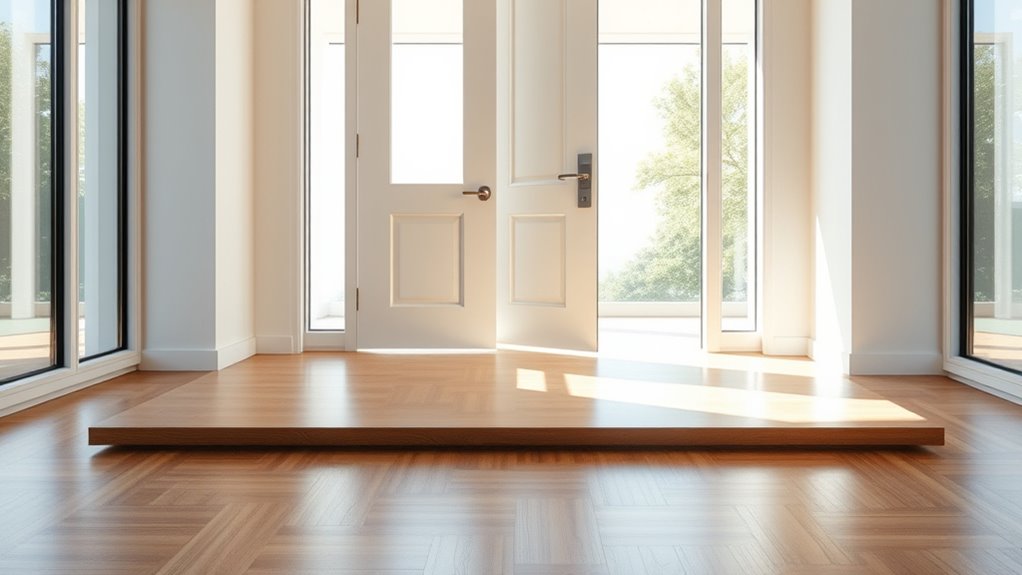

To create accessible entrances, focus on installing zero-step entries and wide doorways that meet at least 32 inches of clear width. Incorporate ramps with proper slopes and non-slip surfaces to facilitate smooth, safe movements from outside to inside. Modifying door frames or replacing doors can improve maneuverability, making spaces safer and more welcoming. By implementing these features, you promote independence and inclusivity for all users, and discovering more tips can help you create truly accessible environments.
Key Takeaways
- Install ramps with a 1:12 slope ratio and non-slip surfaces for smooth, safe transitions at entryways.
- Ensure doorways have a minimum clear width of 32 inches when open at 90 degrees for easy access.
- Modify existing door frames or replace standard doors with wider models to accommodate mobility devices.
- Incorporate zero-step entries into new or existing structures to enhance safety and independence.
- Design accessible entrances that seamlessly integrate into overall architecture to promote inclusivity and comfort.
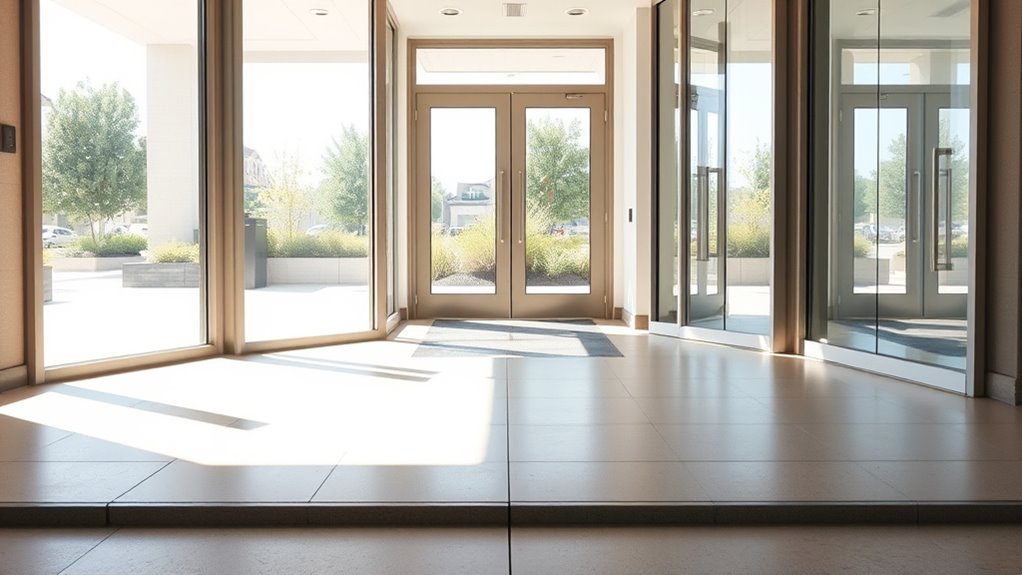
Creating zero-step entries and wide doorways is indispensable for improving accessibility in homes and public spaces. When you design with these features in mind, you make it easier for everyone, especially those with mobility challenges, to move freely and safely. One of the most effective ways to achieve this is through ramp installation. Ramps provide a smooth transition from the outside to the inside, eliminating steps that can be difficult or impossible to navigate for wheelchair users, seniors, or anyone with limited mobility. When installing ramps, it’s important to consider proper slope ratios to ensure safety and comfort. The Americans with Disabilities Act (ADA) recommends a slope ratio of 1:12, meaning for every inch of height, you need at least one foot of ramp length. This standard helps prevent accidents and reduces strain on users. Additionally, choosing the right ramp material—such as non-slip surfaces—is crucial to maintain safety in various weather conditions.
Alongside ramp installation, paying close attention to door width standards is fundamental. You want your doorways to be wide enough to accommodate wheelchairs, walkers, or other mobility aids comfortably. The general door width standard for accessibility is at least 32 inches clear opening when the door is open at 90 degrees. To achieve this, you might need to replace standard doors with wider models or modify existing frames. Ensuring consistent width throughout your home or public space minimizes obstacles, making navigation straightforward and less stressful. It’s also wise to consider the space needed for turning and maneuvering; a 5-foot diameter turning radius is often recommended for wheelchair access. Moreover, understanding potential pitfalls in adopting new payment technologies can help ensure that accessibility features are integrated seamlessly without compromising security or compliance.
Incorporating these features might require some upfront investment, but the benefits are well worth it. Creating zero-step entries invites inclusivity, allowing everyone to access your space without barriers. By installing ramps that meet proper standards and ensuring doorways adhere to width guidelines, you’re fostering independence and safety. Keep in mind that these modifications can be integrated seamlessly into your existing architecture or new builds, making accessibility a natural part of the design. Remember, the goal isn’t just compliance but creating an environment where everyone feels welcome and comfortable. Small adjustments, like a properly installed ramp and wider doorways, can dramatically improve quality of life for those who need it most. Ultimately, these efforts contribute to a more inclusive society where accessibility isn’t an afterthought but a fundamental principle.
Frequently Asked Questions
What Are the Cost Implications of Installing Zero-Step Entries?
Installing zero-step entries can increase your initial costs compared to traditional doors, but the overall investment varies based on your home’s layout and materials. You should consider the cost comparison with potential renovation challenges, like modifying existing structures. While the upfront expense might be higher, these features improve accessibility and may reduce future adaptation costs, making them a smart investment for homeowners prioritizing convenience and inclusivity.
How Do I Measure Doorways for Proper Width?
To tackle doorway measurements, take the total width from wall to wall, ensuring you include the doorway clearance, which should be at least 32 inches for standard accessibility. Measure the threshold height, ideally less than 1/2 inch, to prevent tripping. Use a tape measure, and double-check your figures for accuracy. Precise measurements promote perfect, practical, and accessible doorways, ensuring everyone can comfortably pass through.
Are There Specific Building Codes for Accessible Entrances?
Yes, building codes require accessible entrances to include features like ramp installation and sufficient signage visibility. You need to guarantee doorways are wide enough—at least 32 inches clear—to accommodate wheelchairs. Also, check local regulations for specific standards on slopes, handrails, and signage to make sure your entrance meets all accessibility requirements, making it easier and safer for everyone to access your building.
Can Existing Doors Be Modified to Become Wider?
Did you know that over 50% of commercial doors could benefit from widening? Yes, existing doors can often be modified for accessibility through doorway expansion and threshold modification. You can work with a contractor to carefully widen the door frame and lower thresholds, making entry smoother for everyone. These modifications may require permits but are generally feasible, improving access without complete door replacement.
What Materials Are Best for Durable, Accessible Doorways?
You should choose durable materials like aluminum, steel, or fiberglass for accessible doorways, ensuring they withstand frequent use. For thresholds, consider low-profile options made of rubber or vinyl, which help create smooth progressions and improve handle accessibility. These materials are easy to maintain, long-lasting, and promote safe, accessible entryways, making your space more welcoming and functional for everyone.
Conclusion
Think of your home as a welcoming garden gate, open and inviting to all visitors. By creating zero-step entries and wide doorways, you’re planting seeds of accessibility that blossom into inclusivity. Just as a garden flourishes with open pathways, your space becomes a sanctuary where everyone can enter with ease and comfort. Embrace these changes, and watch your home transform into a vibrant, accessible haven—where every step welcomes someone home.