

To safeguard loved ones, start by creating a clear communication plan, assigning roles for calling emergency services, and keeping crucial contacts accessible. Prepare essential supplies and medical documents, including medications, medical histories, and ID info. Regularly review and update your plan to reflect changes in health or contacts. Practice emergency drills with everyone involved to ensure confidence during crises. Keep learning more to refine your strategy for quick, effective responses in any emergency situation.
Key Takeaways
- Develop clear communication strategies, assign roles, and keep emergency contacts accessible for quick response.
- Customize the plan to address loved ones’ specific health needs and include detailed medical instructions.
- Prepare and organize essential supplies, medications, and important documents for immediate access.
- Train family members in basic first aid, CPR, and emergency procedures through regular drills.
- Regularly review and update the emergency plan to reflect changes in health, contacts, and safety measures.
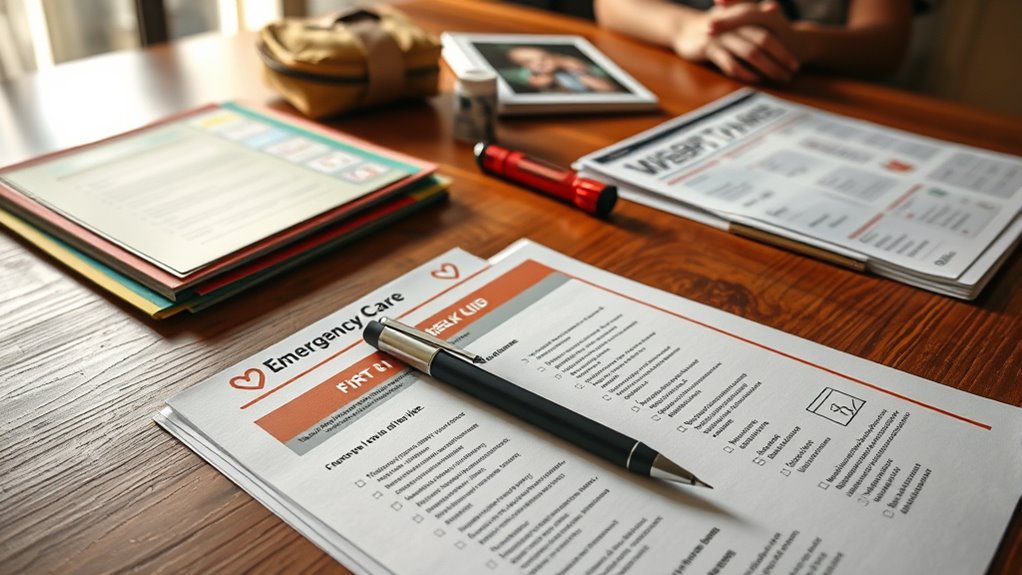
Creating an emergency care plan is vital to guarantee you’re prepared for unexpected situations. When a medical emergency occurs, every second counts, and having a solid plan in place can make all the difference. It’s essential to know how to respond quickly and effectively, which starts with understanding the importance of clear communication strategies. During a crisis, confusion and panic can hinder your ability to help your loved ones, so establishing how you’ll communicate is crucial. Decide who will be responsible for contacting emergency services, and ensure everyone involved knows the steps. Keep a list of emergency contacts readily accessible, including neighbors, family members, and healthcare providers. Use multiple channels if possible—phone calls, texts, or even dedicated emergency apps—to make certain messages get through when it matters most.
Preparedness starts with clear communication and accessible emergency contacts. Stay ready for any situation.
Another key aspect of preparing for medical emergencies is understanding the specific needs of your loved ones. For example, if someone has a chronic condition or allergies, include detailed instructions in your plan, along with any medications they might need. Make sure emergency responders can easily access this critical information, perhaps by keeping a medical ID bracelet or a written note in a visible spot. Practicing communication strategies regularly is also essential. Conduct drills where everyone practices calling emergency services, sharing pertinent health information, and following your established protocol. These exercises help reduce panic and make sure everyone knows their role, making the response more efficient when it’s real.
In addition, you should create a list of essential supplies and make certain they’re always accessible. This might include first aid kits, medications, or other necessary medical equipment. Keep copies of important documents—such as insurance cards, medical histories, and emergency contacts—in both physical and digital formats, secured in a safe but accessible place. Training your family members or loved ones on basic first aid and CPR can also be a lifesaver during medical emergencies. The more prepared everyone is, the quicker and more confidently you’ll all be able to respond.
Furthermore, being aware of security zone information can help you better prepare your home environment and emergency responses, ensuring you utilize the most reliable and suitable security measures for your needs.
Finally, review and update your emergency care plan regularly. Changes in health status, contact information, or family dynamics mean your plan needs to stay current. Regularly revisiting your communication strategies and making certain everyone understands their responsibilities can help prevent chaos and confusion during a real crisis. Remember, the goal of your plan isn’t just to respond but to do so calmly and effectively, protecting your loved ones and reducing the impact of unforeseen emergencies.

4 Pack Medical Alert Emergency Contact Information Id Card for Wallet and 2 Pcs Medical Alert See Card in Wallet Keychain
Package Totally 10 pcs : 4 Pcs Medical Alert Emergency Information Id Wallet Card + 4 Pcs Card…
As an affiliate, we earn on qualifying purchases.
As an affiliate, we earn on qualifying purchases.
Frequently Asked Questions
How Often Should I Review and Update the Emergency Care Plan?
You should review and update your emergency care plan at least once a year to make certain it stays current. Regular updates are vital, especially after significant changes in your loved ones’ health, contact information, or home environment. Schedule plan reviews periodically, such as every six months, to address any new risks or needs. Staying proactive with regular updates helps you respond effectively when emergencies happen, keeping everyone protected.
What Legal Considerations Should I Be Aware of When Creating a Plan?
When creating your emergency care plan, you should be aware of legal considerations like legal documentation and privacy laws. Make sure you have legally recognized documents such as power of attorney and healthcare directives in place. Respect privacy laws by securely handling sensitive information and obtaining necessary consents. Consulting a legal professional can help guarantee your plan complies with local regulations and protects your loved ones’ rights during emergencies.
How Can I Coordinate With Healthcare Providers Effectively?
Imagine Sarah, who quickly shares her loved one’s medical records with her healthcare team. You can do the same by establishing clear communication channels with providers, guaranteeing you understand how to access and share medical record sharing securely. Coordinate emergency contacts by providing updated information and confirming their roles. Regularly check in with healthcare providers to stay informed about your loved one’s health status and ensure seamless emergency response.
What Resources Are Available for Emergency Preparedness Training?
You can access a variety of resources for emergency preparedness training, including local first aid courses offered by organizations like the Red Cross. Additionally, online simulations provide convenient, interactive ways to learn crucial skills. These resources help you become confident in handling emergencies, ensuring you’re ready to protect your loved ones. Enrolling in both in-person and online training options allows you to gain practical knowledge and stay prepared for unexpected situations.
How Do I Handle Communication With Family Members During an Emergency?
Think of family communication during an emergency like the Morse code of old—clear, concise, and reliable. You should establish a designated emergency messaging plan, including a primary contact and alternate methods like texts or social media. Keep everyone updated with regular check-ins, and make certain all family members know how to reach each other swiftly. Staying calm and organized helps everyone stay safe and connected when it matters most.

GEVOKE Professional 500 Piece Emergency First Aid Kit for Home, Car, Travel, Camping, Truck, Hiking, Sports, Office, Vehicle & Outdoor Emergencies – Emergency Medical Kit, Large First Aid Kit Survival
【Perfect For Home Or Business】GEVOKE large first aid kit contains a total of 500 pieces of professional first…
As an affiliate, we earn on qualifying purchases.
As an affiliate, we earn on qualifying purchases.
Conclusion
By now, you’re ready to safeguard your loved ones with a solid emergency care plan—think of it as your personal Bat-Signal in times of need. Remember, just like assembling a Swiss Army knife, preparing now guarantees you’re equipped for any unforeseen event. Don’t wait for the apocalypse to strike; act today. With these steps, you’ll be the hero your family can count on—channeling a little bit of 21st-century heroism into everyday life.

PRESTAN CPR Manikin and One Infant CPR Manikin Training Kit w/AED Trainers and Accessories, Medium Tone, MCR Medical
Dual-Age Training Bundle: A comprehensive starter kit featuring one professional adult manikin and one infant manikin in a…
As an affiliate, we earn on qualifying purchases.
As an affiliate, we earn on qualifying purchases.

Theluckytag Medical Bracelets for Men Women with QR Code Medical Alert ID Bracelets – Silicone Waterproof Wristband Fits Wrists Up to 8'' – More Space Custom Emergency Info
【ALL-IN-ONE INFORMATION】Get all the necessary information in one place with our medical bracelet tags. Unlike traditional engraved tags,…
As an affiliate, we earn on qualifying purchases.
As an affiliate, we earn on qualifying purchases.