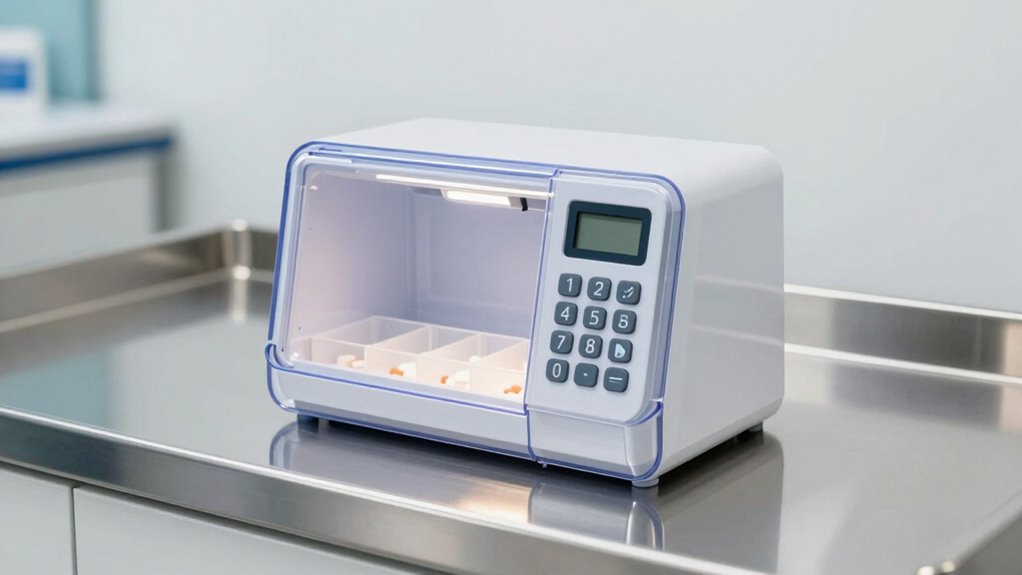

Locked medication dispensers are designed to prevent unauthorized access, theft, and misuse of medications. They limit access to approved individuals, helping you keep medications secure and reduce accidental ingestion, especially by children. These devices also support quick emergency access, ensuring lifesaving interventions are possible when needed. Plus, they help you track and monitor medication use for accountability and safety. If you want to know more about how these features work together, keep exploring the options available.

Get the little things that make your day delivered free with Prime
- Fast, free delivery on millions of items
- Prime Video, Amazon Music and more included
- Member-only deals all year
Key Takeaways
- Unauthorized access and theft of medications by unapproved individuals or children.
- Accidental ingestion or misuse of medications by vulnerable persons or children.
- Medication errors such as double dosing, missed doses, or wrong medication administration.
- Unauthorized or illicit diversion of controlled substances or high-value medications.
- Tampering or unauthorized removal of medications, ensuring secure storage and handling.
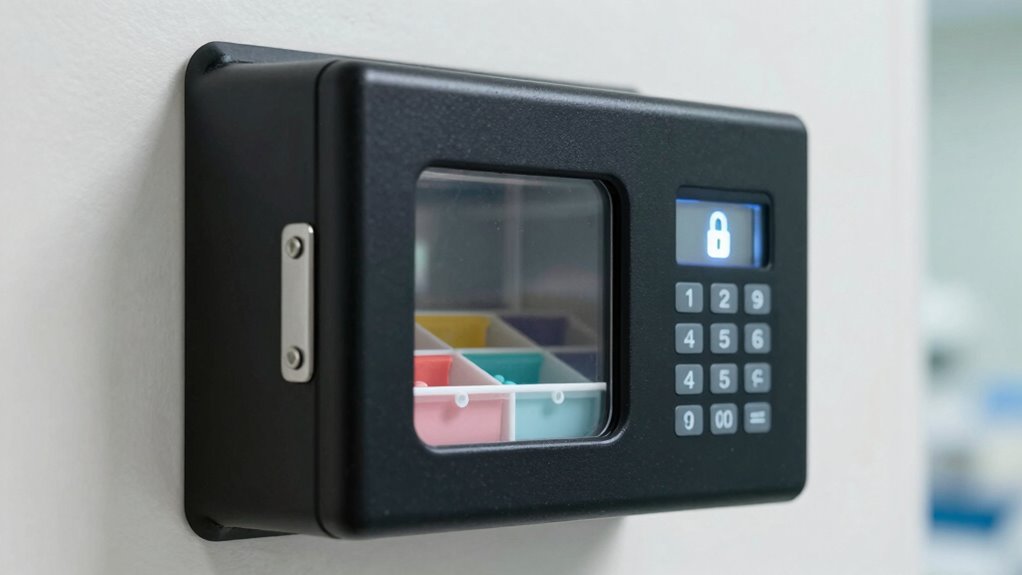
At the same time, locked medication dispensers are built with emergency access in mind. In urgent situations, caregivers or emergency responders need quick, reliable access to medication without compromising security. These dispensers typically feature an emergency override mechanism that allows authorized personnel to access medications swiftly when necessary, such as in cases of allergic reactions, adverse events, or other medical emergencies. This balance between security and accessibility is essential, especially in settings like homes with elderly patients or in healthcare facilities where rapid intervention can save lives. Additionally, incorporating calibration features can ensure that the dispenser remains accurate and reliable over time. These dispensers also aim to prevent medication errors caused by human mistakes or confusion. By limiting access to only the correct medication at the right time, they help reduce incidents of double dosing, missed doses, or wrong medication administration. The controlled environment ensures that only authorized individuals can open the dispenser, which minimizes the chances of children or unauthorized persons accessing potentially dangerous drugs. This feature is especially critical in households with kids or in environments where medication safety is a top priority. Furthermore, locked medication dispensers serve as a deterrent against theft or misuse, especially for high-value or controlled substances. They provide peace of mind for caregivers, family members, and healthcare providers that medications are stored securely and used responsibly. Incorporating audit trails or usage logs can also facilitate compliance monitoring and improve accountability within medication management. Proper design considerations, including security features, are vital to maintaining both safety and ease of use for authorized users. Additionally, usability enhancements can help ensure that even those unfamiliar with the device can operate it effectively, reducing the risk of errors or frustration.
locked medication dispenser with emergency override
As an affiliate, we earn on qualifying purchases.
As an affiliate, we earn on qualifying purchases.
Frequently Asked Questions
Are Locked Medication Dispensers Suitable for Home Use?
Yes, locked medication dispensers are suitable for home use, especially if you want to manage medication scheduling and guarantee only authorized users access the medications. They typically feature user authentication, like PINs or biometric scans, making sure that only you or trusted family members can open them. This helps prevent accidental overdoses or misuse, providing peace of mind while maintaining control over medication routines in your home.
How Do Locked Dispensers Alert Caregivers About Medication Access?
You’ll love how locked dispensers alert you—no more sneaky pill hiding! They often use medication reminders, flashing lights, or beeps to catch your attention. Plus, access logs keep you in the loop, showing exactly when someone opens the box. This way, caregivers stay informed about medication access, ensuring no doses are missed, and you get to keep your peace of mind while everyone stays happily medicated.
Can Locked Dispensers Be Customized for Individual Patient Needs?
Yes, locked medication dispensers can be customized for individual patient needs. You can choose from various personalization options, such as adjustable access levels, specific medication schedules, and tailored notifications. Accessibility adaptations like larger buttons, voice prompts, or touchscreens help users with different abilities. This customization guarantees safe, convenient medication management, catering to each patient’s unique requirements and promoting compliance and independence.
What Are the Common Security Features of These Dispensers?
Imagine a vault with multiple locks—this is how locked medication dispensers secure medication. Their common security features include access control systems, such as PIN codes, biometric scans, or RFID cards, ensuring only authorized staff can access medications. These features enhance medication safety by preventing unauthorized access, tampering, or theft, and help maintain strict control over medication distribution, reducing errors and ensuring patient safety.
How Do Locked Dispensers Handle Emergency Medication Access?
In emergencies, locked medication dispensers use emergency override features to grant quick access to essential medications. You activate quick access protocols by following specific procedures, such as entering a code or using a biometric scan, ensuring rapid response while maintaining security. These protocols balance safety with urgency, allowing healthcare providers to access necessary medications swiftly during critical situations without compromising the dispenser’s overall security system.
Conclusion
Locked medication dispensers are designed to keep medications secure and prevent unauthorized access, especially by children or visitors. They give you peace of mind knowing that only those with proper authorization can retrieve medication. But imagine the relief of avoiding accidental overdoses or misuse—doesn’t that make safety worth it? By choosing these dispensers, you’re taking a proactive step toward protecting yourself and your loved ones every day. Isn’t safety always worth the extra effort?
Halloween Picks
halloween
As an affiliate, we earn on qualifying purchases.