

To care for yourself, incorporate relaxation exercises like deep breathing, body scans, or guided meditation into your daily routine. Taking regular breaks helps you manage stress and avoid burnout, while mindfulness practices keep you present and reduce anxiety. Don’t hesitate to seek emotional support from friends, family, or support groups. Making self-care a priority boosts your resilience and effectiveness. Keep exploring ways to nurture your well-being—you’ll find strategies that fit your needs and help you stay strong.
Key Takeaways
- Incorporate short mindfulness exercises like deep breathing and body scans into daily routines for stress relief.
- Schedule regular breaks and ask for help to prevent burnout and maintain emotional well-being.
- Practice relaxation techniques such as guided meditation to reset your nervous system during busy caregiving days.
- Prioritize self-care as a non-negotiable part of caregiving to sustain emotional resilience and effectiveness.
- Utilize resources like home entertainment or community programs to provide mental breaks and emotional support.
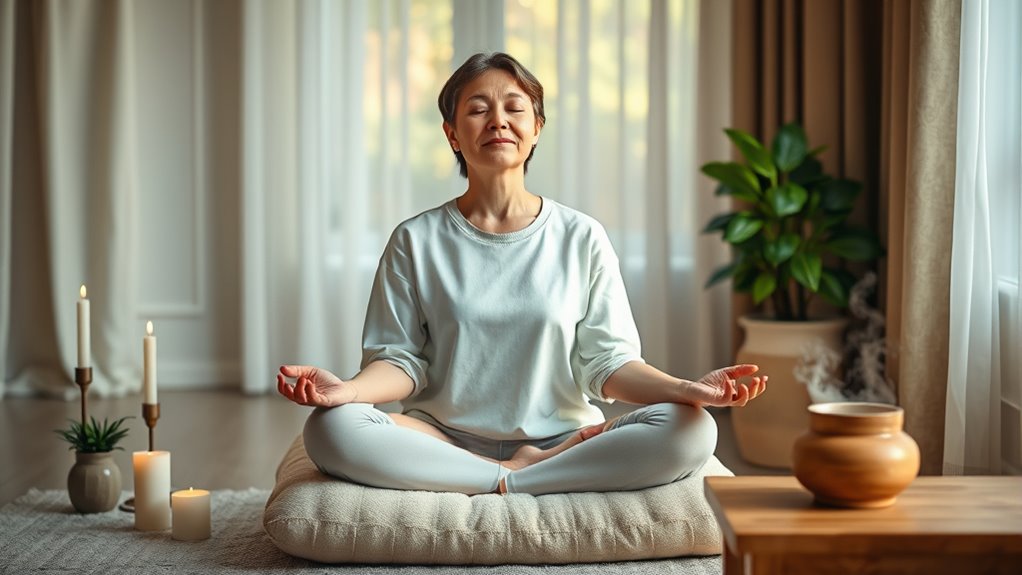
Have you ever felt overwhelmed by the demands of caring for someone else? It’s common to experience stress and exhaustion when you’re constantly juggling responsibilities, but neglecting your own needs can lead to burnout. That’s where self-care comes into play, and adopting effective relaxation exercises and emotional support strategies can make a significant difference. One of the most practical ways to recharge is by exploring respite strategies. These are methods that allow you to take short breaks or find temporary relief from your caregiving duties. Whether it’s asking a trusted friend to step in for a few hours, enrolling your loved one in a day program, or scheduling regular time for yourself, respite strategies give you the breathing space you need to regain your energy and clarity. Remember, you don’t have to do everything alone; reaching out for help is a crucial part of maintaining your well-being.
In addition to taking breaks, mindfulness techniques can be powerful tools to manage stress and stay grounded. Practicing mindfulness involves paying deliberate attention to your thoughts, feelings, and bodily sensations without judgment. Simple exercises like deep breathing, body scans, or guided meditation can help you cultivate a sense of calm amidst chaos. Even just a few minutes each day can make a noticeable difference in your emotional resilience. When you focus on the present moment, you reduce anxiety about the future and release tension built up from constant caregiving demands. Incorporating mindfulness into your daily routine doesn’t require any special equipment or extensive time; it’s about being present with whatever you’re doing, whether it’s washing dishes or sitting quietly for a few moments. Additionally, understanding home theatre projectors and their features can serve as a relaxing activity, providing entertainment and escape from daily stress.
Combining respite strategies with mindfulness techniques creates a powerful approach to self-care. For example, during a brief break, you might practice deep breathing exercises to reset your nervous system. Or, before starting your day, spend a few minutes in meditation to set a calm tone. These practices not only improve your emotional stability but also enhance your ability to respond thoughtfully to caregiving challenges. Remember, taking care of yourself isn’t selfish—it’s essential. When you prioritize your well-being, you’re better equipped to provide compassionate, effective care for your loved one. So, embrace respite strategies and mindfulness techniques as everyday tools, and make your self-care routine a non-negotiable part of your caregiving journey.

Breathing Lamp Guided Visual Meditation Tool for Mindfulness,Anxiety Relief&Calm Your Mind for Stress&Visual Relaxation and Restful Sleep,478 Seconds Breathing Rate Change 3 Colors,Gift for Kids
Breathing Lamp Function: A mindful breathing lamp is a powerful and effective tool that can help you reduce…
As an affiliate, we earn on qualifying purchases.
As an affiliate, we earn on qualifying purchases.
Frequently Asked Questions
How Can Caregivers Find Time for Self-Care Daily?
To find time for self-care daily, prioritize stress management and practice effective time management. Schedule brief relaxation exercises during small breaks, like deep breathing or stretching, to recharge. Set boundaries to protect your personal time, and delegate tasks when possible. By organizing your day and recognizing self-care as essential, you guarantee regular moments to relax, helping you maintain emotional well-being and resilience amidst caregiving responsibilities.
What Are Quick Relaxation Exercises for Busy Caregivers?
To quickly reduce stress, try simple breathing techniques like deep diaphragmatic breathing—inhale slowly for four seconds, hold, then exhale for four seconds. You can do this anytime, even during short breaks. Focus on your breath to promote relaxation and stress reduction. These quick exercises help you reset, stay centered, and better handle your caregiving responsibilities with calm and clarity.
How Do I Handle Feelings of Guilt When Taking Breaks?
You might think guilt is unavoidable, but guilt management is essential for your well-being. Remind yourself that taking breaks isn’t selfish—it’s necessary to recharge and better support your loved ones. Set emotional boundaries by acknowledging your feelings without judgment, and understand that caring for yourself makes you a more effective caregiver. Practice positive self-talk and remember, healthy boundaries keep you balanced and resilient.
Are There Support Groups Specifically for Caregiver Emotional Support?
Yes, there are support groups specifically for caregiver emotional support. Joining these groups helps you build emotional resilience and combat caregiver burnout by sharing experiences and gaining encouragement. You’ll find understanding and practical advice, which makes handling stress easier. Participating regularly allows you to feel less isolated, strengthen your coping skills, and maintain your emotional well-being. These groups empower you to care for yourself while caring for others.
What Resources Are Available for Caregiver Mental Health?
Imagine your mental health as a fragile garden, needing care and attention. You can access respite services to give yourself a break and recharge. Online counseling offers flexible support tailored to your needs, helping you navigate emotional challenges. These resources empower you to prioritize your well-being, ensuring you stay resilient. Remember, nurturing yourself isn’t a luxury — it’s essential for sustaining your caregiving journey.

Mindfulness: A How-to Guide for Everyone (Sitting Meditation, Body Scans, Yoga, Mindful Eating and More!)
As an affiliate, we earn on qualifying purchases.
As an affiliate, we earn on qualifying purchases.
Conclusion
Taking time for self-care isn’t just a luxury — it’s essential. Regular relaxation exercises and seeking emotional support can reduce burnout and improve your well-being. Did you know that caregivers are 63% more likely to experience depression than non-caregivers? Prioritize your health to better care for others. Remember, taking care of yourself isn’t selfish; it’s necessary for sustaining your strength and compassion. Make self-care a daily habit and feel the positive difference it brings.

Portable Breathing Aid for Anxiety & Calm – Compact Hyperventilation Relief Device, Deep Breathing Exercise Tool for On-The-Go Stress Management, Discreet & Professional Design
Portable Breathing Aid for Anxiety & Calm – Compact Hyperventilation Relief Device, Deep Breathing Exercise Tool for On-the-Go…
As an affiliate, we earn on qualifying purchases.
As an affiliate, we earn on qualifying purchases.

Sayglossy 4 Pcs Thank You Gifts for Women Men Employee Appreciation Notebook Inspirational Coffee Mug Scented Candle Ballpoint Pen for Teacher Coworker Volunteer Caregiver Medical Nurse, Puple
Motivational Thank You Gift set: you will receive a ceramic mug, A6 notebook, scented candle & ballpoint pen;…
As an affiliate, we earn on qualifying purchases.
As an affiliate, we earn on qualifying purchases.