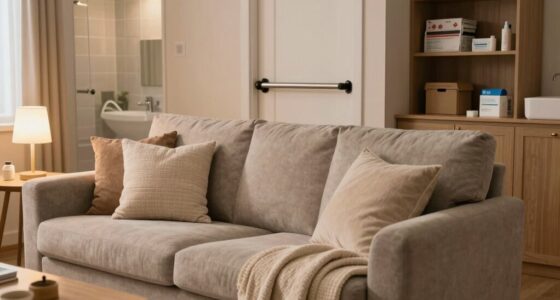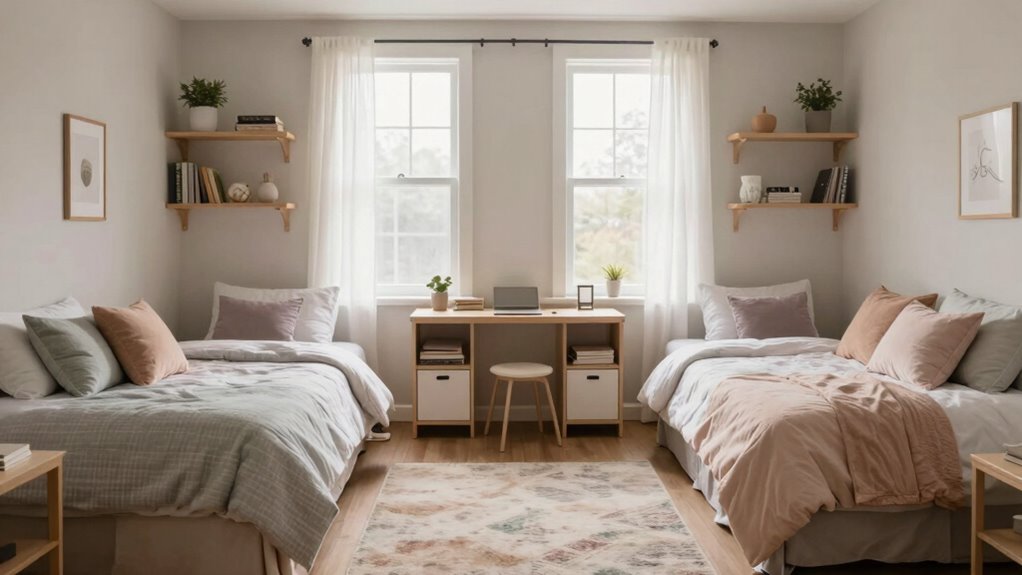

To optimize shared bedrooms in care situations, focus on creating personal zones with privacy options like curtains or portable screens. Arrange beds to define distinct areas while keeping walkways clear for safety. Use multi-purpose furniture and organized storage to reduce clutter and promote independence. Adjustable lighting adds comfort and privacy, while flexible arrangements help adapt to changing needs. For more practical tips on designing functional, comfortable shared spaces, keep exploring this topic.

Get the little things that make your day delivered free with Prime
- Fast, free delivery on millions of items
- Prime Video, Amazon Music and more included
- Member-only deals all year
Key Takeaways
- Use room dividers, curtains, or lightweight partitions to create personal and private zones within shared bedrooms.
- Arrange beds and furniture along room perimeters to maximize space and define individual areas clearly.
- Incorporate accessible storage solutions near each occupant to promote independence and maintain organization.
- Install adjustable lighting options for personalized comfort and to support different activities like reading or relaxing.
- Design the layout to ensure clear pathways, balanced shared and personal spaces, and adaptable privacy solutions.

Sharing a bedroom in care situations can be challenging, but with thoughtful planning, it becomes a manageable and even comfortable experience. One of the key factors in creating a positive shared space is implementing effective privacy solutions. You want each person to feel secure and respected, so consider using room dividers, curtains, or canopy beds to create personal zones. These options give individuals a sense of autonomy while maintaining an overall shared environment. Additionally, adjustable screens or lightweight partitions can be moved easily, allowing flexibility as needs change. Incorporating privacy solutions thoughtfully helps reduce conflicts and promotes a sense of dignity. For example, choosing privacy solutions that are adaptable and non-intrusive can significantly improve the overall environment.
Creating personal zones with privacy solutions fosters dignity and reduces conflicts in shared care bedrooms.
Next, focus on furniture arrangement to maximize comfort and functionality. When designing a shared bedroom, you should aim to create clear boundaries without sacrificing space. Position beds or sleeping areas opposite each other or along the room’s perimeter to provide personal zones, and ensure enough space for movement and access. Placing essential furniture like wardrobes, dressers, or bedside tables strategically can enhance organization and minimize clutter. Keep frequently used items within reach for each occupant, fostering independence and reducing interruptions. You might also consider multi-purpose furniture, such as beds with built-in storage, to save space and keep the room tidy. Creating designated zones through thoughtful furniture placement can also help in maintaining boundaries and reducing potential conflicts. Including storage options that are easily accessible can further support independence and organization.
Lighting plays a significant role in making the room inviting and functional. Use adjustable lighting options, like bedside lamps or wall-mounted lights, so each person can customize their environment for reading or relaxing without disturbing the other. This not only enhances comfort but also supports privacy by allowing individuals to control their personal lighting. Additionally, maintaining clear pathways and uncluttered surfaces helps prevent accidents and creates a calm, accessible atmosphere. Incorporating lighting solutions that are flexible and personalized further enhances the sense of individual control within shared spaces. Proper lighting can also help in creating a soothing environment that reduces stress and promotes restful sleep. Incorporating appropriate furniture that suits individual needs can further optimize the shared space for comfort and functionality.
room dividers for shared bedrooms
As an affiliate, we earn on qualifying purchases.
As an affiliate, we earn on qualifying purchases.
Frequently Asked Questions
How Can Privacy Be Maintained in Shared Care Bedrooms?
To maintain privacy in shared care bedrooms, you can implement privacy solutions like room dividers or curtains, giving everyone a personal space. Use noise management techniques such as soundproof panels or white noise machines to reduce disturbances. Encourage respectful communication and establish clear boundaries. These strategies guarantee residents feel secure and comfortable, allowing for personal privacy even in shared environments.
What Safety Features Are Essential for Shared Bedrooms?
You need to prioritize safety in shared bedrooms by carefully arranging furniture to prevent falls and accidents. Keep pathways clear and position beds away from windows or sharp edges. Use appropriate lighting solutions, like nightlights and adjustable lamps, to guarantee visibility without disturbing sleep. Secure cords and outlets, and choose sturdy, non-slip furniture. These measures create a safe environment, reducing risks and promoting comfort for everyone sharing the space.
How to Accommodate Different Age Groups Comfortably?
Think of the room as a stage, where each age group needs its spotlight. You can accommodate different ages comfortably by arranging furniture to create distinct zones—like cozy beds for children and accessible furniture for seniors. Use clever lighting solutions to highlight these areas and guarantee safety. Proper furniture arrangement and layered lighting make everyone feel welcome and secure, turning the shared space into a harmonious sanctuary.
What Are Cost-Effective Layout Options for Shared Spaces?
You can create a cost-effective shared space by choosing budget-friendly furniture that’s versatile and durable. Maximize space with space-saving storage solutions like under-bed drawers, wall-mounted shelves, and multi-purpose furniture. Rearranging furniture to optimize flow and privacy costs little but makes the space more functional. These strategies help you improve comfort and organization without overspending, making the shared bedroom both practical and cozy for everyone involved.
How to Personalize Shared Bedrooms Without Causing Disturbance?
Ever wondered how to make shared bedrooms feel personal without disturbing others? You can use decorative partitions to create distinct spaces, giving each person their own zone. Additionally, personalized lighting, like adjustable lamps or string lights, adds individual charm without disrupting the shared environment. These small touches foster comfort and identity while maintaining a peaceful atmosphere. Wouldn’t you agree that thoughtful personalization enhances everyone’s sense of belonging?
Conclusion
Thinking about the perfect layout for a shared bedroom in care situations might seem overwhelming, but with thoughtful planning, you can create a space that feels comfortable and respectful for everyone involved. Remember, a well-designed room promotes independence, privacy, and connection all at once. Isn’t it worth putting in the effort to make a shared space truly welcoming? By prioritizing these layout ideas, you’re taking a meaningful step toward better care and happier living environments.
NFL season / tailgating Picks
team gear
As an affiliate, we earn on qualifying purchases.