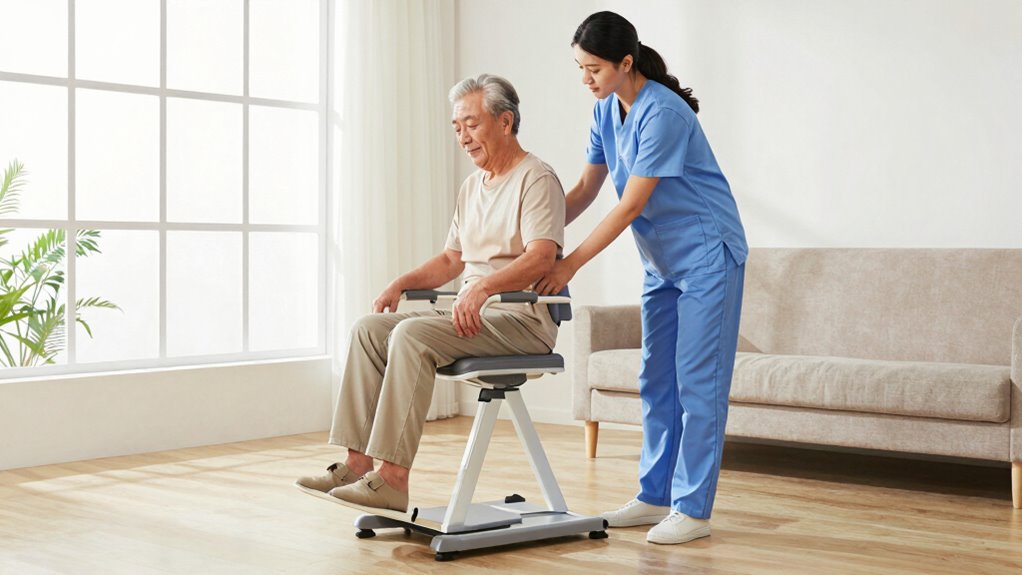

Sit to stand lifts make transfers safer and easier by helping you support seniors without overexerting yourself. They assist with mobility, reducing the physical effort needed during lifts, and help prevent falls or injuries. Proper use and safety protocols guarantee everyone stays secure and comfortable. By creating a well-organized environment and customizing the equipment, you minimize strain for both caregivers and seniors. Keep exploring to discover how these lifts can transform your caregiving approach even further.

Get the little things that make your day delivered free with Prime
- Fast, free delivery on millions of items
- Prime Video, Amazon Music and more included
- Member-only deals all year
Key Takeaways
- Sit-to-stand lifts minimize manual lifting, reducing physical strain for caregivers.
- They enhance safety, lowering fall risk for seniors during transfers.
- Proper device use supports independence for seniors, easing caregiver workload.
- Mechanical assistance decreases the effort needed, preventing caregiver muscle injury.
- Adjustable settings and ergonomic features promote comfort and reduce strain for both parties.
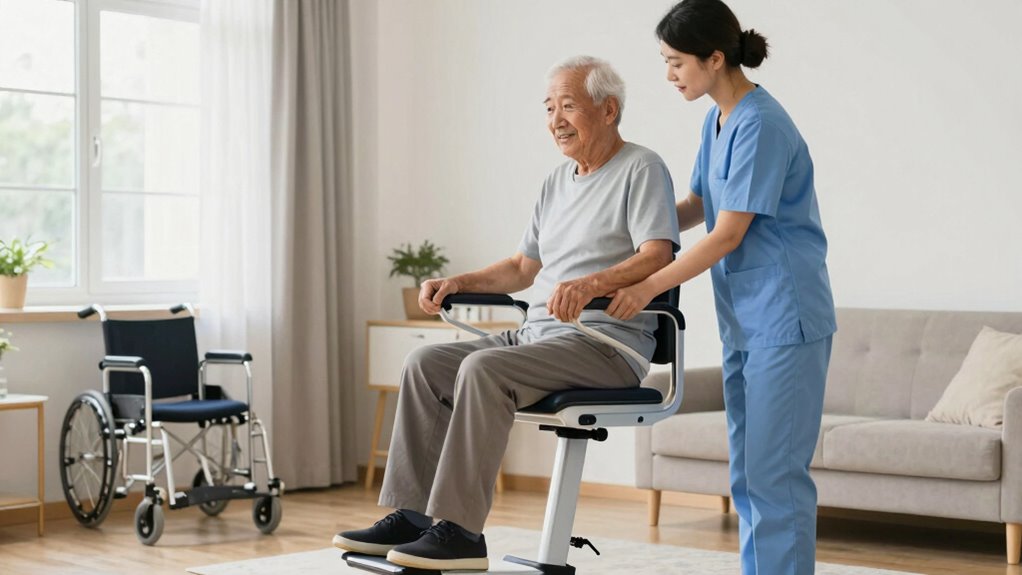
For caregivers and seniors alike, sit-to-stand lifts offer a practical solution to make transfers safer and easier. These devices are designed specifically to assist with mobility assistance, reducing the physical effort required during movements like standing up or sitting down. When used properly, they help prevent falls and injuries, creating a safer environment for everyone involved. You’ll find that sit-to-stand lifts support independence for seniors while easing the physical strain on caregivers. By minimizing the need for manual lifting, these lifts help you conserve energy and avoid the risk of muscle strain or back injuries.
Using a sit-to-stand lift also emphasizes the importance of following safety protocols. Proper training on how to operate the device is vital; it ensures that you understand how to position the lift correctly and secure the user safely. Before each transfer, checking the equipment for any damage or malfunction is essential, preventing accidents caused by equipment failure. You should always communicate clearly with the senior, explaining each step of the process to make them feel comfortable and secure. This ongoing communication reassures the person you’re assisting and helps maintain their dignity throughout the transfer.
Follow safety protocols with proper training, equipment checks, and clear communication to ensure secure, respectful transfers.
Implementing safety protocols also involves being attentive to the environment. Clear the area of obstacles, ensure the floor is dry and non-slip, and position the lift on a stable surface. When you’re ready to assist, lock the wheels of the lift if it has that feature, stabilizing the device before transferring. Proper body mechanics are equally important; keep your back straight, bend your knees, and use your leg muscles to lift. This reduces your own fatigue and risk of injury, especially during repetitive tasks. Additionally, understanding supportive equipment options can enhance safety and comfort during transfers. Staying informed about the latest safety protocols and equipment updates is crucial, as advancements in assistive technology continually improve transfer procedures. Recognizing the importance of natural pool design concepts can also help create a safer environment that complements assistive devices and promotes easier movement. Moreover, being aware of the contrast ratio in related equipment can help ensure visibility and safety during use in different lighting conditions.
Another key aspect of safety is understanding each user’s specific needs and limitations. Some seniors may require additional support, such as padding or customized straps, to ensure comfort and stability. Regularly assess the user’s mobility and adjust the lift’s settings accordingly. This personalized approach promotes safety and comfort, making each transfer smoother and less stressful. Being aware of ergonomic principles can help caregivers reduce their own risk of injury during lifting tasks. As a caregiver, staying informed about the latest safety protocols and equipment updates keeps you prepared for any situation. When used correctly, sit-to-stand lifts not only enhance safety but also foster a sense of confidence and independence for seniors, making daily movements less intimidating for everyone involved.
As an affiliate, we earn on qualifying purchases.
Frequently Asked Questions
Are Sit to Stand Lifts Suitable for All Mobility Levels?
Sit to stand lifts aren’t suitable for all mobility levels. You should start with a thorough mobility assessment to determine if the user can safely transfer using the lift. Consider user comfort and stability during transfers, as some individuals may need additional support or alternative methods. Consulting a healthcare professional guarantees the lift matches the person’s specific needs, making transfers safer and more comfortable for both caregiver and user.
How Do Sit to Stand Lifts Improve Safety During Transfers?
Imagine helping a senior with a manual transfer; it can be risky. A sit to stand lift improves safety by providing stable support, reducing the chance of falls. It minimizes manual effort, ensuring proper positioning and preventing accidents. With fall prevention features, it creates a secure environment, making transfers safer for both you and the senior. This technology helps avoid injuries and promotes confidence during mobility assistance.
What Maintenance Is Required for Sit to Stand Lifts?
You should follow regular maintenance routines and conduct equipment inspections to keep sit-to-stand lifts in ideal condition. Check for loose bolts, wear on straps, and battery charge levels frequently. Clean the lift according to the manufacturer’s instructions to prevent dirt buildup. By performing these tasks, you guarantee safety, extend the lift’s lifespan, and reduce the risk of malfunctions during transfers, making the process safer for both caregivers and seniors.
Can Sit to Stand Lifts Be Used in Small or Tight Spaces?
Think of a sit-to-stand lift as a nimble dancer in a crowded room—designed with a compact, space-efficient form. Yes, these lifts are built with space efficiency and a compact design, allowing them to glide smoothly into small or tight spaces. Their slim profile makes maneuvering through narrow hallways and tight corners effortless, helping you provide safe, effective transfers without sacrificing precious room.
Are Sit to Stand Lifts Covered by Insurance or Medicare?
Yes, sit-to-stand lifts may be covered by insurance and Medicare, depending on your eligibility. Insurance coverage varies, but Medicare often covers durable medical equipment like lifts if they’re medically necessary and prescribed by your doctor. To confirm your specific coverage and eligibility, you should contact your insurance provider or Medicare directly. They can provide detailed information about what’s included and any out-of-pocket costs you might incur.
Conclusion
Embracing sit-to-stand lifts is like revealing a smoother dance between you and your loved one, turning a challenging waltz into a coordinated glide. These lifts lift the weight from your shoulders and theirs, transforming struggle into grace. With this tool, you’re not just easing physical strain—you’re nurturing independence and trust. So, step into this new rhythm, and watch how it turns caregiving into a harmonious duet, filled with strength, dignity, and care.
Halloween Picks
halloween
As an affiliate, we earn on qualifying purchases.