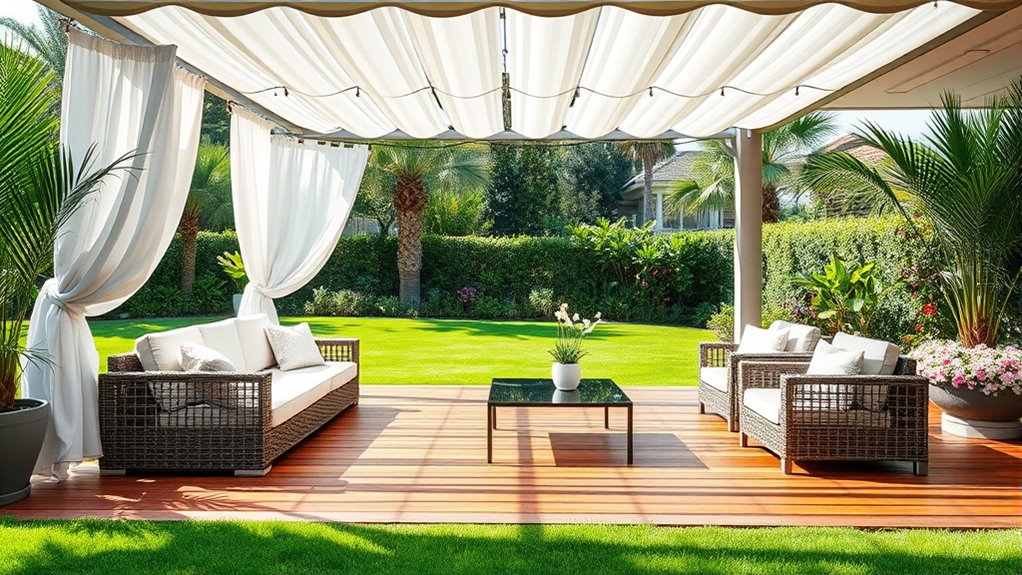

To create seamless indoor-outdoor living, choose fire-resistant materials like treated wood or metal for your outdoor spaces, ensuring safety and durability. Incorporate eco-friendly elements such as native plants and recycled materials, blending sustainability with style. Use large glass doors, outdoor rugs, and warm lighting to connect your patio and garden visually and atmospherically. Practical features like outdoor kitchens and flexible barriers enhance flow and function. Continue exploring to discover how to perfect this harmonious progression for your home.

Get the little things that make your day delivered free with Prime
- Fast, free delivery on millions of items
- Prime Video, Amazon Music and more included
- Member-only deals all year
Key Takeaways
- Use large glass doors or sliding screens to create visual and physical connections between indoor and outdoor spaces.
- Extend indoor flooring materials like natural stone or composite decking into outdoor areas for seamless transition.
- Incorporate warm, ambient lighting and eco-friendly fixtures to enhance ambiance and unify the spaces.
- Select fire-resistant, durable materials for outdoor fixtures to ensure safety and longevity.
- Design outdoor areas as functional extensions of indoor living rooms with cohesive furniture and decorative elements.
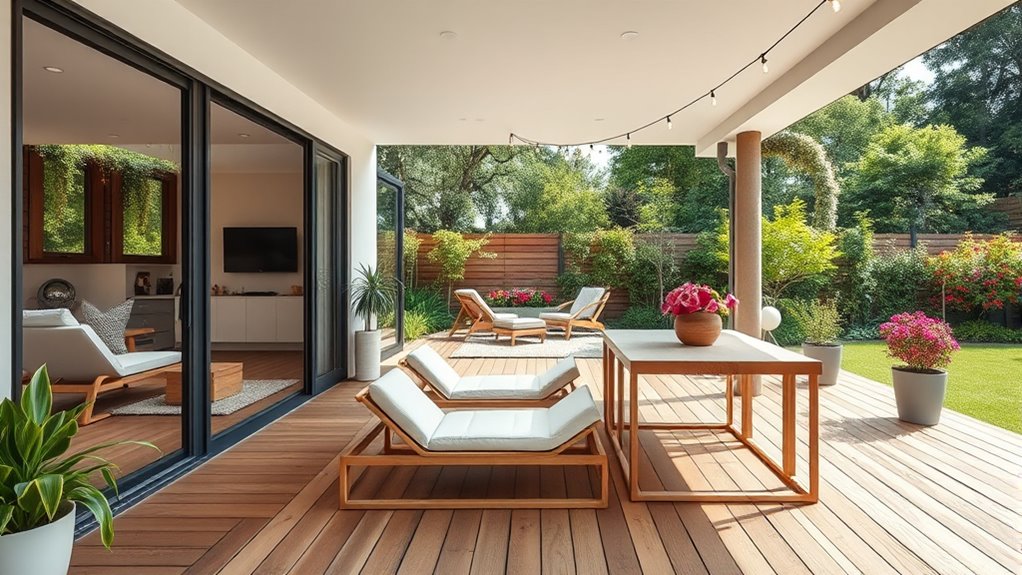
Have you ever wondered how to seamlessly blend your indoor and outdoor spaces? Achieving this look isn’t just about aesthetics; it’s about creating a functional, inviting environment that flows naturally from one area to another. Start by choosing fire resistant materials for outdoor furniture and fixtures. These materials not only enhance safety but also allow you to incorporate durable, stylish pieces that withstand the elements. Think of fire-resistant stone, metal, or treated wood that can handle sparks from grills or outdoor fireplaces. By selecting these materials, you can enjoy cozy evenings outside without worry, knowing your space remains safe and resilient. Incorporate fire-resistant materials thoughtfully to ensure long-term safety and durability in your outdoor design.
Choose fire-resistant outdoor materials for safety and durability, ensuring cozy, resilient evenings outside.
When designing your outdoor area, eco friendly design should be a top priority. Incorporate sustainable elements like reclaimed wood, recycled metal, and environmentally conscious plantings. These choices help reduce your carbon footprint while adding unique character to your space. Use native plants that thrive locally, requiring less water and maintenance, which aligns perfectly with eco-conscious principles. This approach not only benefits the environment but also creates a harmonious connection between your indoor and outdoor worlds. For example, a living green wall or a garden bed filled with native species can serve as a natural visual bridge, blurring the boundaries between inside and outside.
To enhance the seamless flow, consider incorporating outdoor flooring that complements your interior design. Materials like stamped concrete, natural stone, or composite decking can extend your indoor flooring outdoors, making the shift smooth and cohesive. Use rugs or outdoor carpets to add warmth and texture, tying the space together visually. Furthermore, large glass doors or sliding screens serve as practical barriers that can be opened wide, literally bringing your indoor living room outside. When these doors are open, the boundary between the two spaces disappears, inviting fresh air and natural light into your home while giving your garden or patio the feel of an extension of your living space.
Lighting is another essential element. Use warm, ambient lighting outside to mimic the cozy atmosphere of your interior. Solar-powered lanterns or LED fixtures with eco friendly design considerations can illuminate your outdoor areas efficiently and sustainably. This not only creates a welcoming ambiance but also aligns with your eco-conscious efforts. To further unify your indoor and outdoor spaces, consider adding elements like outdoor kitchens or bar areas that reflect your interior style, making the shift feel intentional and well-integrated.
fire-resistant outdoor furniture
As an affiliate, we earn on qualifying purchases.
As an affiliate, we earn on qualifying purchases.
Frequently Asked Questions
What Are the Best Materials for Weatherproof Outdoor Furniture?
You should choose weatherproof outdoor furniture made from corrosion resistant metals like aluminum or stainless steel, which resist rust and decay. Pair these with fire resistant fabrics for cushions and upholstery to guarantee safety and durability. These materials withstand harsh weather conditions, so your outdoor space stays stylish and functional year-round. Opting for such materials makes your patio or garden space both resilient and inviting, perfect for seamless indoor-outdoor living.
How Can I Create Privacy in Open Patio Areas?
You can create privacy in open patio areas by installing privacy screens or selecting fencing options that suit your style. While some might worry about blocking views, these solutions actually improve your space’s coziness. Use tall plants or trellises with climbing vines for a natural barrier. Combining these options ensures your patio feels private and inviting, allowing you to enjoy outdoor living without sacrificing aesthetic appeal or openness.
What Lighting Options Enhance Indoor-Outdoor Transitions?
You can enhance indoor-outdoor shift with solar lighting and string lights. Solar lights line pathways and highlight garden features, creating a warm, inviting glow that blends seamlessly with your indoor space. String lights drape across patios or pergolas, adding a cozy, magical ambiance perfect for relaxing or entertaining. These lighting options are energy-efficient and easy to install, making your outdoor areas feel more integrated and inviting after sunset.
How Do I Maintain Outdoor Plants Year-Round?
Imagine you’re caring for a potted lavender that blooms year-round. To maintain outdoor plants like this, you need seasonal plant care—pruning, fertilizing, and protecting them during winter. Use pest prevention measures to keep pests at bay and guarantee healthy growth. Bring plants indoors during harsh weather, or use cold frames and covers. Consistent care and preventive steps help you enjoy lush outdoor greenery all year.
What Are Cost-Effective Ways to Upgrade Outdoor Flooring?
You can upgrade outdoor flooring with budget-friendly landscaping ideas and DIY patio projects. Consider using gravel or mulch for an inexpensive, natural look, or lay down reclaimed wood pallets for a rustic feel. Concrete stamps or paint can give your existing surface a fresh, stylish touch without high costs. These options let you create a beautiful, functional outdoor space without breaking the bank.
Conclusion
So, go ahead, tear down that wall, install those fancy sliding doors, and pretend you’re living in a magazine. Who needs privacy or boundaries when you can have a giant, open-air party zone all year round? Just remember, when your outdoor furniture becomes your new indoor sofa, and your neighbor’s BBQ smells like your dinner, you’re officially living the dream—whether you wanted to or not. Cheers to endless indoor-outdoor chaos!
NFL season / tailgating Picks
team gear
As an affiliate, we earn on qualifying purchases.