AI and automation are revolutionizing elderly care by providing continuous health monitoring and more accurate diagnoses. They analyze real-time data from sensors, detect issues like irregular heart rhythms, and alert caregivers early, allowing for proactive interventions. These technologies help seniors stay independent longer by ensuring quick responses to health changes and reducing hospital visits. If you want to discover how these innovations are shaping the future of eldercare, there’s more to explore below.
Key Takeaways
- AI-driven sensors and algorithms enable early detection of health issues like falls and irregular heart rhythms.
- Continuous monitoring provides real-time health insights, facilitating proactive diagnosis and timely interventions.
- Automated alerts ensure rapid response to emergencies, improving safety and reducing risks for seniors living alone.
- Integration of AI enhances user-friendly interfaces and personalized care, increasing adherence and comfort.
- Data analytics support personalized treatment plans, improving overall health management and outcomes.
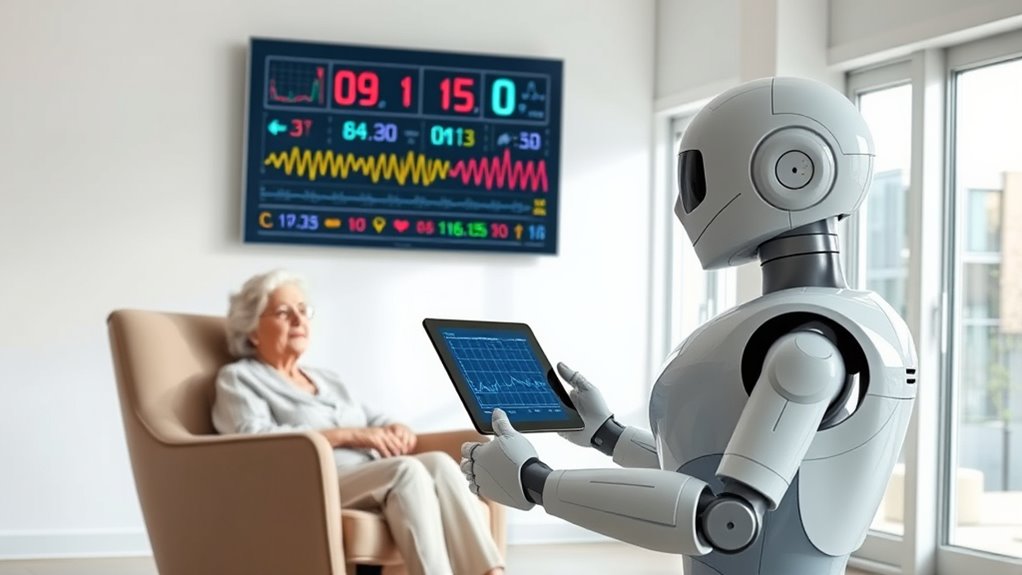
As the global population ages, AI and automation are transforming elderly care by offering innovative solutions to meet growing needs. You might find that these technologies are making a real difference in daily life, helping seniors maintain independence and safety. Robotic companionship, for instance, provides more than just conversation; it offers emotional support, reminders, and engagement that can lessen feelings of loneliness. These robots are designed to respond to natural language, recognize emotions, and even perform simple tasks, creating a sense of connection for seniors who may otherwise feel isolated. This kind of companionship reduces the emotional burden on caregivers and enhances the overall well-being of elderly individuals. Additionally, the integration of designer elements into robotic interfaces can improve user experience, making technology more approachable and comforting for seniors. Fall detection is another critical aspect where AI-driven automation makes a significant impact. Advanced sensors and machine learning algorithms constantly monitor movement patterns, instantly identifying when a fall occurs. Once detected, the system alerts caregivers or emergency services, enabling quick responses that can prevent serious injuries or complications. This technology is especially beneficial for seniors living alone, providing peace of mind to both the individuals and their loved ones. The accuracy of fall detection systems has improved dramatically, minimizing false alarms and ensuring help arrives only when needed. These innovations not only improve safety but also foster confidence among seniors, encouraging them to stay active without the constant worry of falling unnoticed. You may notice how these tools integrate seamlessly into daily routines, making elderly care more proactive than reactive. Instead of waiting for issues to arise, AI and automation continuously monitor health and safety, giving caregivers real-time insights. This means you can catch health concerns early, whether it’s spotting irregular heart rhythms, tracking medication schedules, or noticing changes in mobility patterns. Automated systems also ease the workload for healthcare providers, allowing them to focus more on personalized care rather than routine monitoring tasks. This shift leads to more timely interventions and better health outcomes. Furthermore, as these technologies advance, they become more user-friendly for seniors, with intuitive interfaces and adaptive features. You can expect future developments to include even smarter robotic companions capable of assisting with daily tasks, offering companionship tailored to individual preferences, and providing detailed health analytics. Overall, AI and automation are revolutionizing elderly care by making it safer, more engaging, and more efficient. They empower seniors to live more independently while ensuring that help is always just a moment away, creating a more compassionate and effective approach to aging in place.
Frequently Asked Questions
How Secure Is Elderly Patient Data in AI Systems?
Your elderly patient data’s security depends on the system’s data privacy protocols and cybersecurity measures. Reputable AI systems prioritize encryption, access controls, and regular security updates to protect sensitive information. While no system is completely invulnerable, implementing strong cybersecurity practices markedly reduces risks. Always make certain your provider follows best practices and stays compliant with data privacy regulations to keep your patients’ data safe and secure.
Can AI Replace Human Caregivers Entirely?
While robotic companionship and emotional support can enhance elderly care, AI can’t fully replace human caregivers. You might find machines offer comfort and assistance, but they lack genuine empathy and understanding. Human touch remains irreplaceable for emotional connection and nuanced care. AI should serve as a helpful tool, supplementing caregivers’ efforts, not substituting the warmth and personal attention that only humans can provide.
What Are the Costs Associated With Implementing AI in Eldercare?
You’ll face implementation expenses and technology investments when bringing AI into eldercare. These costs include purchasing equipment, software licenses, and ongoing maintenance. Training staff to use new systems also adds to expenses. While upfront costs can be significant, they may lead to long-term savings through improved efficiency and better health outcomes for seniors. Careful planning helps you balance initial investments with future benefits and quality of care.
How Do AI Systems Adapt to Individual Elderly Needs?
AI systems adapt to your needs through personalized care by using adaptive algorithms that learn from your health data and daily routines. These algorithms analyze your unique patterns, adjusting their responses to better support your specific conditions and preferences. As you provide more information, the system fine-tunes its approach, ensuring continuous, tailored assistance. This way, you receive more effective, individualized care that evolves with your changing needs.
Are There Ethical Concerns Regarding AI Decision-Making in Eldercare?
You should be aware that AI decision-making in eldercare raises ethical concerns like privacy concerns, where personal data might become vulnerable, and autonomy risks, where reliance on machines could limit seniors’ independence. Think of AI as a double-edged sword—offering support but potentially cutting into personal freedoms if not carefully managed. It’s essential to balance technological benefits with respect for elderly individuals’ rights and dignity.
Conclusion
As you embrace AI and automation in elderly care, think of them as guiding stars illuminating the night sky—brightening the path to better diagnosis and monitoring. These tools become your compass, steering you toward compassionate, efficient support for seniors. With each technological leap, you’re planting seeds of hope, nurturing independence and peace of mind. Together, you’re forging a future where care is a steady lighthouse, guiding elders safely through life’s most delicate moments.