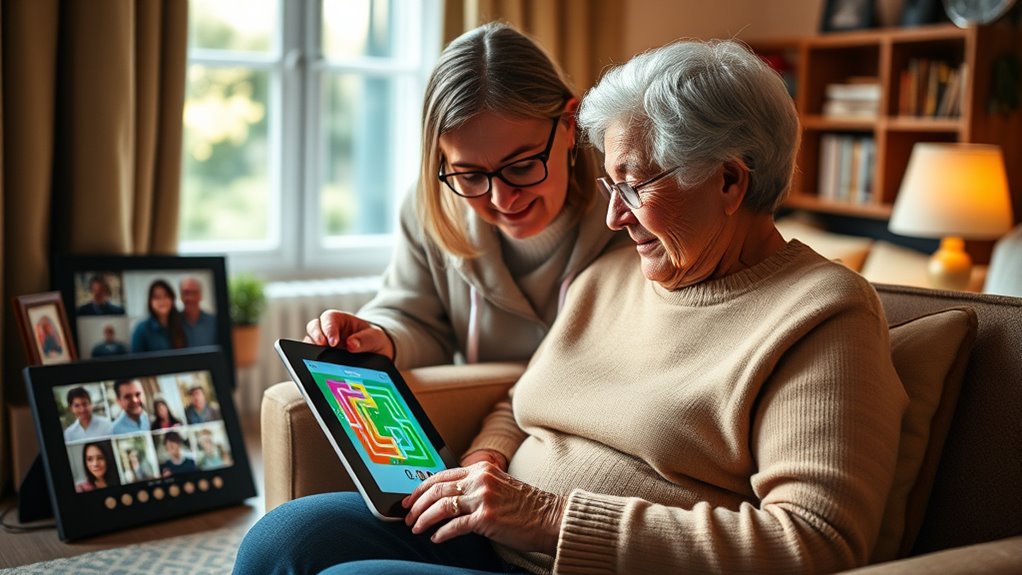

Innovations in dementia care include a variety of tools and programs designed to support cognition and safety. From GPS trackers and wearable devices that monitor essential signs to smart home systems that control lighting and doors, technology helps you maintain independence and reduce risks. Caregiver training is essential, covering device operation and communication strategies. By combining these advancements, you can create a more proactive, holistic approach—discover how these solutions can transform your caregiving journey.
Key Takeaways
- Advanced GPS trackers and wearable devices enhance safety and enable quick caregiver response to wandering and emergencies.
- Smart home systems facilitate remote control of lighting, doors, and appliances to support independence.
- Training programs for caregivers improve device operation, data interpretation, and communication strategies.
- Educational support and support groups assist caregivers in troubleshooting and customizing assistive tools.
- Integrating user-friendly technology with comprehensive training fosters proactive, holistic dementia care.
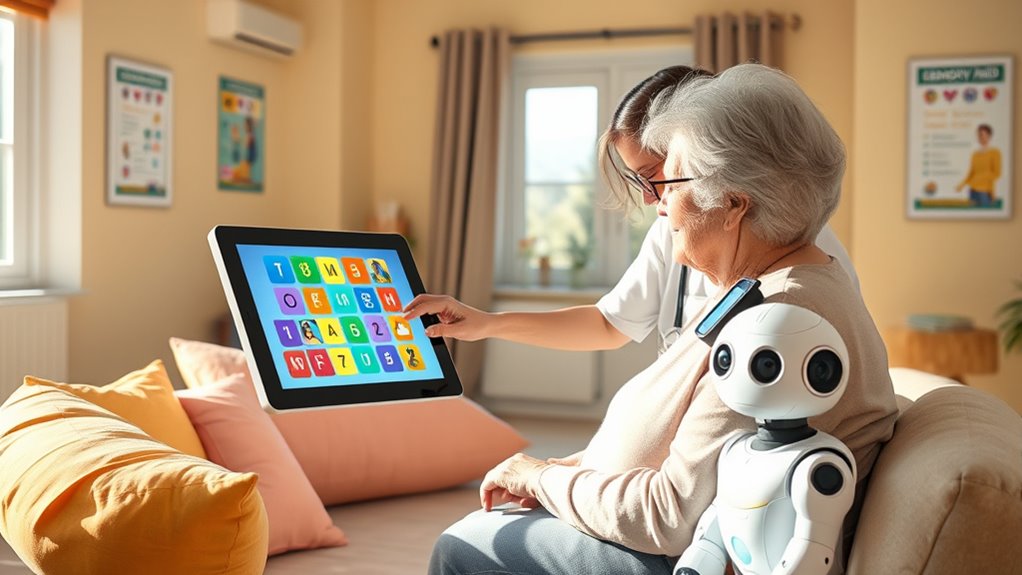
As advancements in technology and understanding of dementia continue to grow, innovative care solutions are transforming how we support those affected by the condition. One of the most significant developments has been the rise of assistive technology, which helps individuals with dementia maintain independence and safety. These tools range from simple devices like reminder alarms for medication times to sophisticated systems such as GPS trackers that alert caregivers if a person wanders. Wearable devices can monitor vital signs and detect falls, providing real-time data that enables prompt responses. Smart home systems are also becoming more prevalent, allowing you to control lighting, doors, and appliances remotely, making daily routines safer and more manageable. These technologies aim to reduce confusion, improve safety, and foster a sense of autonomy, even as cognitive abilities decline.
However, implementing these tools isn’t just about the technology itself; caregiver training plays a pivotal role. As a caregiver, you need to understand how to operate assistive devices effectively and interpret the data they provide. Proper training ensures you can troubleshoot issues quickly and customize settings to meet your loved one’s evolving needs. Educational programs often include hands-on workshops, online tutorials, and support groups that help you become confident in using these tools. Well-trained caregivers can maximize the benefits of assistive technology, making daily caregiving less stressful and more efficient. Furthermore, caregiver training emphasizes communication strategies that are essential when working with someone experiencing cognitive decline. Learning how to approach conversations gently and patiently reduces frustration on both sides and encourages cooperation.
The integration of assistive technology and caregiver training creates a more holistic approach to dementia care. It empowers you to anticipate challenges and respond proactively, rather than reactively. For instance, knowing how to set up and interpret alerts from GPS devices allows you to locate your loved one quickly if they wander. Understanding how to use reminder systems helps reinforce routines, reducing anxiety and confusion. Additionally, keeping in mind the importance of noise levels of modern heat pumps and their impact on comfort and safety, especially for sensitive individuals, can be relevant when designing a supportive environment. As technology becomes more user-friendly, you’ll find it easier to adopt these solutions into your daily routine. The ongoing development of these tools is driven by a desire to improve quality of life for both caregivers and those with dementia.
Frequently Asked Questions
How Do I Choose the Best Dementia Support Tools for My Loved One?
To choose the best dementia support tools for your loved one, consider their specific needs and daily routines. Look for options with personalization features that cater to their interests and abilities. Usability is key, so select tools that are easy to operate and understand. Test different options to see what fits best, ensuring the tools enhance independence and comfort without causing frustration. Your attentiveness makes a meaningful difference.
Are These Innovations Covered by Insurance or Government Programs?
Insurance coverage and government programs may cover some dementia care innovations, but it varies. You should check with your insurance provider to see if specific tools or programs qualify for coverage. Additionally, explore government programs like Medicaid or state assistance programs, which often offer support for cognitive support tools. Contact local agencies or a healthcare professional to get detailed information tailored to your loved one’s needs and eligibility.
Can These Tools Be Adapted for Different Stages of Dementia?
Yes, you can adapt these tools for different stages of dementia. While early-stage tools focus on maintaining independence, later stages require stage-specific adaptations to address evolving needs. Personalized care strategies guarantee each individual benefits from appropriate support, making daily activities more manageable. By customizing these innovations, you provide compassionate, effective care throughout the progression, helping your loved ones stay engaged and comfortable at every stage.
What Training Is Needed for Caregivers to Effectively Use These Programs?
You need to complete caregiver education through specialized training programs to effectively use these tools. These programs teach you how to operate the technology correctly, interpret responses, and adapt techniques for different dementia stages. By participating in ongoing training, you enhance your skills, stay updated on new innovations, and guarantee you’re providing the best cognitive support for your loved one. Proper training is essential for maximizing these tools’ benefits.
How Do These Innovations Ensure Privacy and Data Security?
Protect your patients’ privacy with powerful protocols. Data encryption shields sensitive information from prying eyes, ensuring secure storage and transfer. User authentication verifies that only authorized individuals access critical data, preventing breaches. These innovations actively prioritize privacy and data security by combining encryption and authentication, so you can confidently care for dementia patients while safeguarding their personal information. Staying diligent with these digital defenses keeps trust and confidentiality at the forefront of your care practices.
Conclusion
Discover delightful dementia care designs that deliver dignity and dynamism. By embracing innovative tools and programs, you can create compassionate, cognitive connections that comfort and clarify. Don’t delay—diligently explore diverse developments, daring to design a dazzling, supportive domain. Your dedication makes a difference, turning treatment into a tender, transformative journey. With wisdom and willingness, you’ll weave a world where wonder and wellness wonderfully coexist, creating comfort, care, and confidence every step of the way.