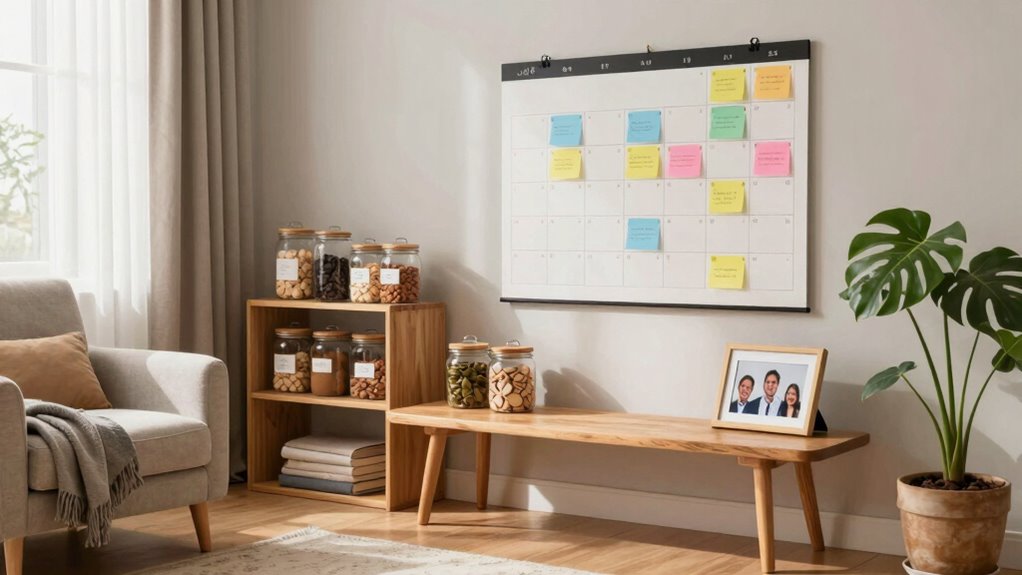

To plan a home update that supports your memory and routines, focus on creating an organized, intuitive layout with designated zones for key activities, like paying bills or relaxing. Use layered lighting, such as adjustable fixtures and natural light, to enhance mood and functionality. Incorporate visible storage solutions like labeled bins and furniture with built-in storage to reduce clutter. Carefully selecting calming colors and tactile textures can also promote focus and calmness. Continue exploring ways to optimize your space for better daily habits.

Get the little things that make your day delivered free with Prime
- Fast, free delivery on millions of items
- Prime Video, Amazon Music and more included
- Member-only deals all year
Key Takeaways
- Create designated zones for specific routines, like a reading nook or bill-paying area, to reinforce habitual behaviors.
- Incorporate visual cues such as color-coded storage or labels to support memory and task association.
- Use layered, adjustable lighting to enhance task focus and establish consistent daily routines.
- Optimize storage with dedicated, accessible zones to reduce clutter and streamline item retrieval.
- Design an open, intuitive layout that simplifies navigation and promotes a seamless daily flow.
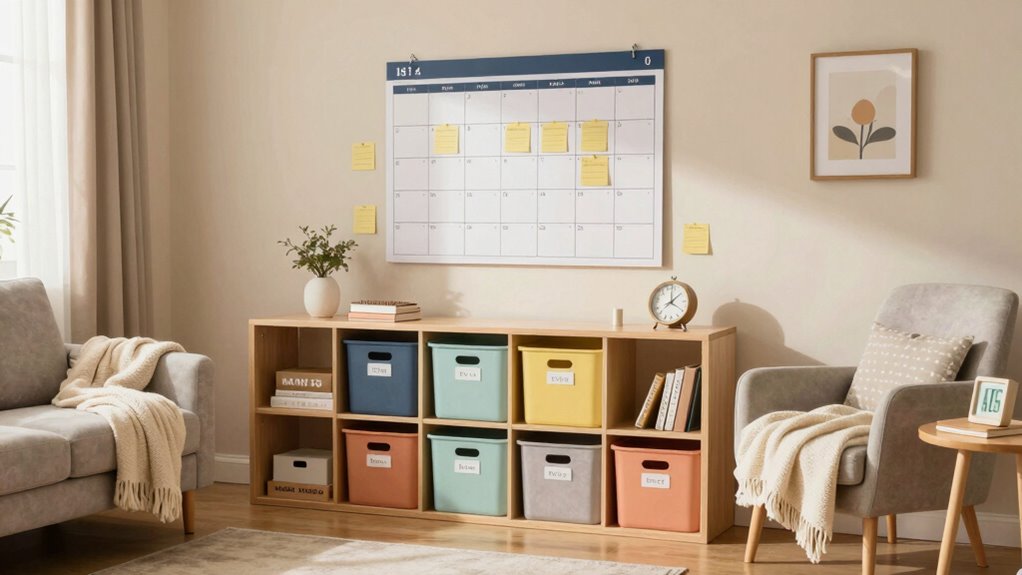
Planning a home update can feel overwhelming, but breaking the process into manageable steps makes it much easier. When aiming to improve your space for better memory and routines, start by focusing on how you move through your home daily. Think about areas where clutter or poor lighting disrupt your flow. One of the first things to consider is interior lighting. Proper lighting is crucial because it influences your mood, alertness, and ability to recall tasks. Bright, natural light during the day helps keep your circadian rhythm in sync, making mornings smoother. For evenings, layered lighting—such as task lights near work areas and softer ambient lights—can create a calming environment that signals your brain to wind down. Installing adjustable fixtures or smart lighting systems allows you to customize brightness, which can help reinforce routines like winding down before bed or starting your morning routine. Natural lighting can also enhance the aesthetic appeal of your space, making it more inviting and functional.
Effective home updates start with lighting—bright natural light boosts mood and focus, while layered, adjustable lighting promotes relaxation and routines.
Next, focus on storage solutions. Good storage isn’t just about hiding clutter; it enhances your ability to find things quickly, reducing frustration and mental strain. Consider dedicated zones for different items—like a well-organized pantry for groceries or labeled bins for medication and daily essentials. When planning storage, think about accessibility. For example, placing frequently used items at eye level or within easy reach minimizes confusion and saves time. Incorporate furniture with built-in storage, such as ottomans or beds with drawers, to maximize space without cluttering your rooms. Clear containers and labels further streamline your routines, helping your memory stay sharp by reinforcing where things belong. Additionally, understanding how to manage digital information effectively can support your overall organization and memory retention beyond physical spaces. Incorporating digital organization tools can further enhance your routine and reduce mental clutter. Paying attention to the design of your environment can create a more cohesive and supportive space that aligns with your daily needs. Moreover, selecting ergonomic furniture can improve comfort and reduce physical strain, contributing positively to your overall routine.
As you plan your update, look at your overall layout. An open, intuitive floor plan reduces stress and helps you navigate easily, which is especially helpful when routines are disrupted. Consider creating designated areas for different activities—like a specific spot for paying bills or a reading nook—so your mind associates those areas with particular tasks, strengthening your routine. Keep visual cues in mind, such as color-coded storage or distinctive decor, to reinforce memory associations. Incorporating elements like fire pits or outdoor seating areas can also create relaxing spaces that encourage social routines and outdoor engagement, supporting overall mental well-being. Paying close attention to lighting design can further enhance the functionality and ambiance of your space, making your routines more seamless and enjoyable.
Finally, think about the sensory environment. Soothing colors, tactile textures, and even gentle background sounds can enhance focus and calmness. When you combine thoughtful interior lighting, smart storage solutions, and a well-organized layout, you set the stage for a home that supports your memory and daily routines. Breaking your update into these focused steps makes the process manageable and ensures your space genuinely works for your needs, making each day smoother and more organized.
adjustable layered lighting fixtures
As an affiliate, we earn on qualifying purchases.
As an affiliate, we earn on qualifying purchases.
Frequently Asked Questions
How Can I Personalize Home Updates for Individual Memory Needs?
You can personalize home updates for individual memory needs by incorporating personalized design elements that cater to their routines. Use labels, color coding, and clear signage to help them recognize spaces and objects easily. Consider adding memory aids like picture frames or familiar items in key areas. Adjust lighting to reduce confusion, and create designated spots for daily essentials. These tailored changes support their independence and make navigation intuitive, respecting their unique memory requirements.
What Budget Considerations Are Important for Memory-Friendly Home Updates?
Think of your budget as a garden, where each plant needs the right space to thrive. Allocate funds wisely, prioritizing cost-effective solutions like simple visual cues or easy-to-install labels. Avoid overextending your resources; focus on key areas that boost memory and routine. Balance your spending to make certain essential updates flourish without draining your overall budget, creating a home that’s both supportive and sustainable.
Are There Specific Colors or Lighting That Improve Memory Retention?
Bright, soft colors like blues and greens, grounded in color psychology, can boost memory retention by creating calming, focused environments. For lighting strategies, opt for natural light during the day to enhance alertness and use warm, adjustable lighting in the evening to reduce stress. Avoid harsh, fluorescent lights, which may impair focus. Proper color choices and lighting can make your home more conducive to memory and routine.
How Long Does It Typically Take to Complete a Home Memory Update?
A home memory update typically takes anywhere from a few weeks to a couple of months, depending on your remodel timeline and project planning. You’ll need to allocate time for design, material selection, and construction. Staying organized and communicating clearly with contractors helps keep things on schedule. By planning ahead and setting realistic milestones, you guarantee your update progresses smoothly and effectively enhances memory and routine support.
Can Home Updates Be Temporary or Easily Reversible?
Yes, home updates can be temporary or easily reversible. You can make temporary modifications like using removable adhesive hooks, temporary paint, or repositionable labels to aid memory and routines. Reversible changes include using modular furniture or non-permanent fixtures that you can easily remove or adjust. These options allow you to adapt your environment without long-term commitment, making it simple to update or revert your space as needed.
Conclusion
As you implement these home updates, you might find that a simple change sparks unexpected benefits—like stumbling upon a long-lost photo that jogs your memory or creating a routine spot that becomes your daily anchor. Sometimes, the smallest adjustments lead to the most surprising improvements. So, stay open to those coincidences—they often remind us that even a well-planned space can reveal delightful, unanticipated moments of clarity and connection.
NFL season / tailgating Picks
team gear
As an affiliate, we earn on qualifying purchases.