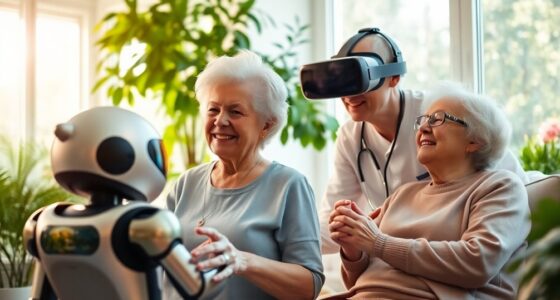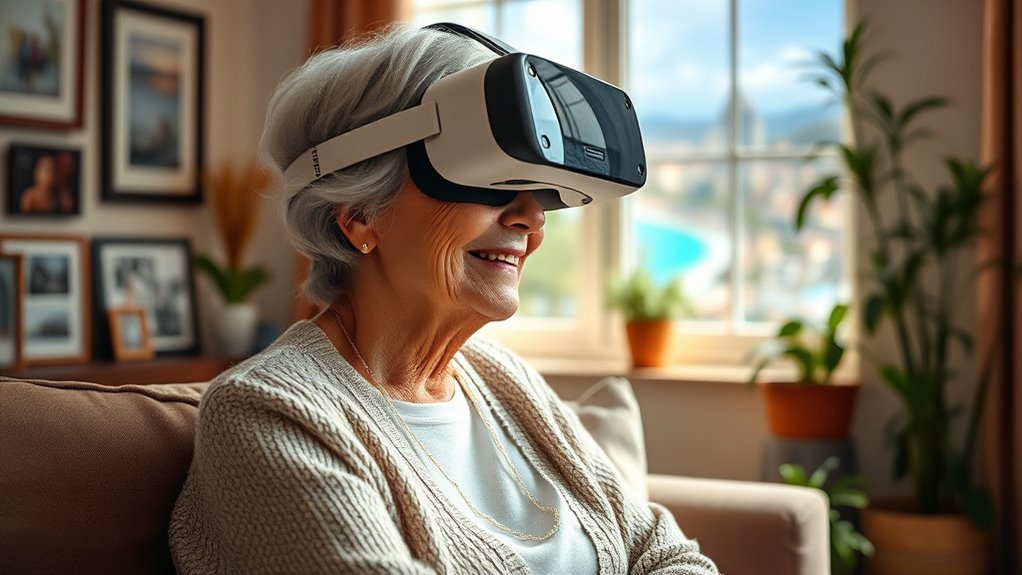

Virtual reality in elderly care lets you explore new destinations or revisit familiar places from the comfort of home, creating immersive and emotionally enriching experiences. It can evoke memories through personalized virtual scenes, strengthening connections with loved ones. Active participation through hand controllers or movement tracking keeps you engaged and mentally stimulated. As technology advances, VR becomes more accessible and tailored to individual preferences, offering deeper insights into enhancing well-being—discover more ways VR can transform your care approach.
Key Takeaways
- VR enables immersive virtual travel experiences, allowing elderly users to explore desired or nostalgic destinations remotely.
- Reminiscence activities through VR help evoke personal memories, strengthening emotional well-being and social connections.
- Interactive VR therapy uses motion sensors and controllers to promote active participation and cognitive engagement.
- Customized virtual experiences support mental stimulation, potentially slowing cognitive decline and enhancing overall mental health.
- Advances in digital technology improve accessibility and personalization, fostering social interaction and enriching elderly care.

Virtual reality (VR) is transforming elderly care by offering innovative ways to improve quality of life. One significant benefit is how VR enables immersive travel experiences and reminiscence activities that can deeply enrich your daily routine. Through virtual travel, you can explore places you’ve always wanted to visit or revisit familiar locations from your past, all from the comfort of a care facility or your home. This form of immersive engagement stimulates your senses and creates a sense of adventure, even when physical travel isn’t possible. These experiences can evoke powerful emotions and memories, making your days more engaging and meaningful.
Interactive therapy is at the heart of many VR applications designed for the elderly. It allows you to actively participate in virtual environments, rather than passively observe. For example, you might virtually walk through a sunlit park or explore a bustling city street, using hand controllers or motion sensors that track your movements. This active participation helps keep your mind alert and fosters a sense of control and independence. The engaging nature of interactive therapy encourages you to focus on specific tasks or activities, which can help improve your attention span and cognitive functioning. It’s a way to stay mentally stimulated, which is vital for maintaining cognitive health as you age.
Cognitive engagement is a key component of these virtual experiences because it challenges your brain in enjoyable, accessible ways. When you engage with VR content—whether it’s navigating a virtual museum, reminiscing through familiar scenes, or solving simple puzzles—you’re exercising critical cognitive skills. This mental activity can slow cognitive decline and boost your overall mental well-being. Additionally, VR can be tailored to your personal history, making reminiscence therapy more impactful. Remembering a favorite vacation spot or childhood memory in a vivid, interactive way can strengthen your emotional connections and provide comfort. It also provides an opportunity for social interaction if shared with family members or caregivers, fostering connection and reducing feelings of loneliness. Moreover, as VR technology advances, it is increasingly being integrated with digital innovations that enhance personalization and accessibility for elderly users.
Frequently Asked Questions
How Cost-Effective Is Implementing VR in Elderly Care Facilities?
Implementing VR in elderly care can be cost-effective when you conduct a thorough cost analysis, weighing upfront expenses against long-term benefits like improved well-being. You should explore funding opportunities such as grants or partnerships to offset costs. While initial investments may seem high, the potential for enhanced quality of life, reduced healthcare needs, and increased resident engagement can make VR a valuable addition to your facility’s care approach.
Are There Any Health Risks Associated With VR Use for Seniors?
You should be aware that VR use for seniors can pose health risks, especially related to physical safety and sensory overload. Seniors might trip or fall if they move unexpectedly, so guarantee a safe environment. Additionally, some individuals could experience dizziness, nausea, or sensory overload that leads to discomfort or confusion. To minimize risks, monitor their reactions closely and tailor VR experiences to their comfort levels.
How Do Family Members Typically Respond to VR Reminiscence Programs?
You’ll notice family members often respond positively to VR reminiscence programs, showing curiosity and enthusiasm. They typically experience strong emotional responses, such as joy, nostalgia, or even tears, as they see their loved ones reconnect with cherished memories. Many express gratitude for the opportunity to bond and share meaningful moments. Their reactions highlight how VR can foster connection and emotional well-being, making these programs a valuable addition to elderly care.
What Training Is Required for Caregivers to Operate VR Systems?
You need specialized caregiver training to operate VR systems confidently. This training covers VR operation basics, safety protocols, and troubleshooting techniques. It’s vital because a small mistake can disrupt the experience or cause discomfort. By mastering these skills, you guarantee a seamless, immersive journey for residents. Don’t underestimate the importance—your expertise turns technology into a powerful tool for enriching elderly lives. Are you ready to become a VR pro?
Can VR Experiences Be Customized for Individual Elderly Preferences?
Yes, VR experiences can be customized to match individual elderly preferences. You can use personalization options to tailor content based on their interests, hobbies, or nostalgic memories. User preference customization allows you to create immersive experiences that resonate personally, enhancing engagement and emotional connection. By adjusting settings and selecting specific scenes or activities, you guarantee each elderly person enjoys a meaningful, comfortable, and enriching virtual reality session tailored just for them.
Conclusion
Imagine a world where memories come alive and distant places are just a headset away. Virtual reality transforms elderly care by offering journeys that heal, inspire, and connect. Don’t let the future pass you by—embrace this technology to unleash a treasure trove of experiences and rekindle forgotten moments. With VR, you hold the key to turning everyday care into an extraordinary adventure—proving that even in aging, the spirit of exploration never fades.