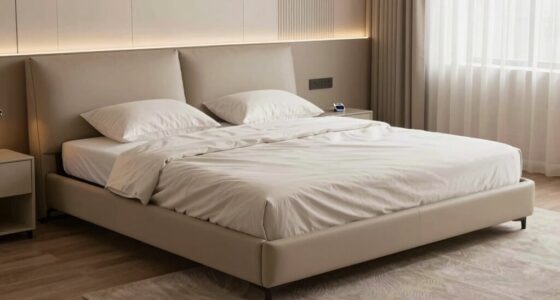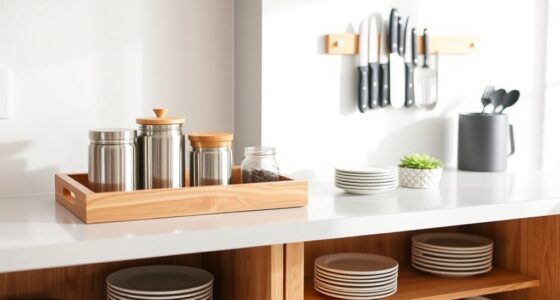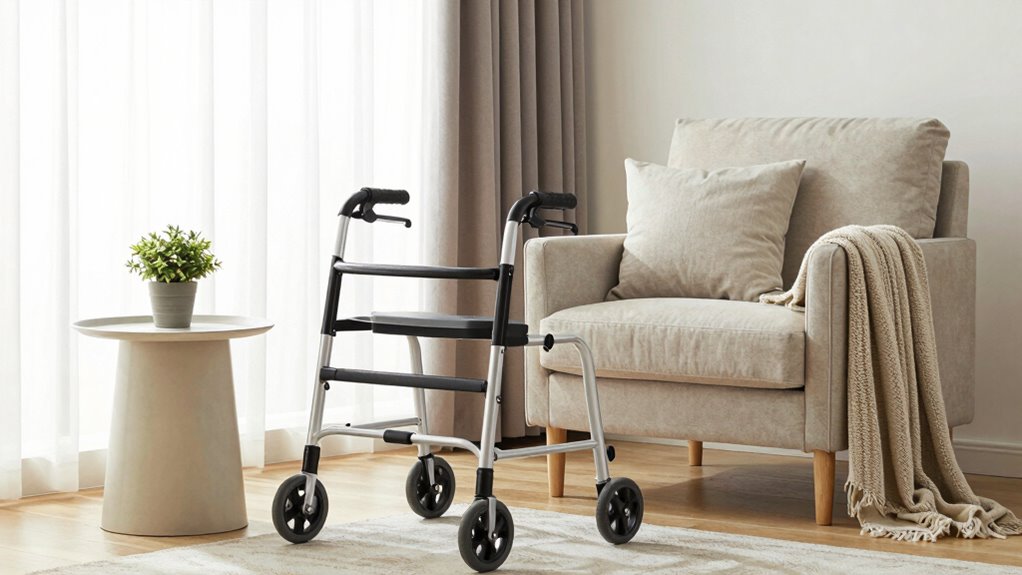
To arrange furniture around a walker or rollator, create clear, at least 36-inch wide pathways by pushing larger pieces against walls and removing clutter. Position essential items within easy reach, and use furniture with arms for extra support. Make certain of good lighting and eliminate tripping hazards like loose rugs. Add safety features like grab bars, and keep your space open for safe movement. Follow these tips to make your space safer and more accessible — there’s more to discover within.
Key Takeaways
- Position furniture against walls to create wide, unobstructed pathways of at least 36 inches for easy walker movement.
- Keep frequently used items within arm’s reach to minimize bending or stretching during transfers.
- Ensure pathways are well-lit and free of clutter, rugs, or obstacles to prevent tripping hazards.
- Place grab bars and supportive furniture near seating and bathroom areas for added stability.
- Arrange furniture to maintain clear lines of sight and smooth navigation around the space.
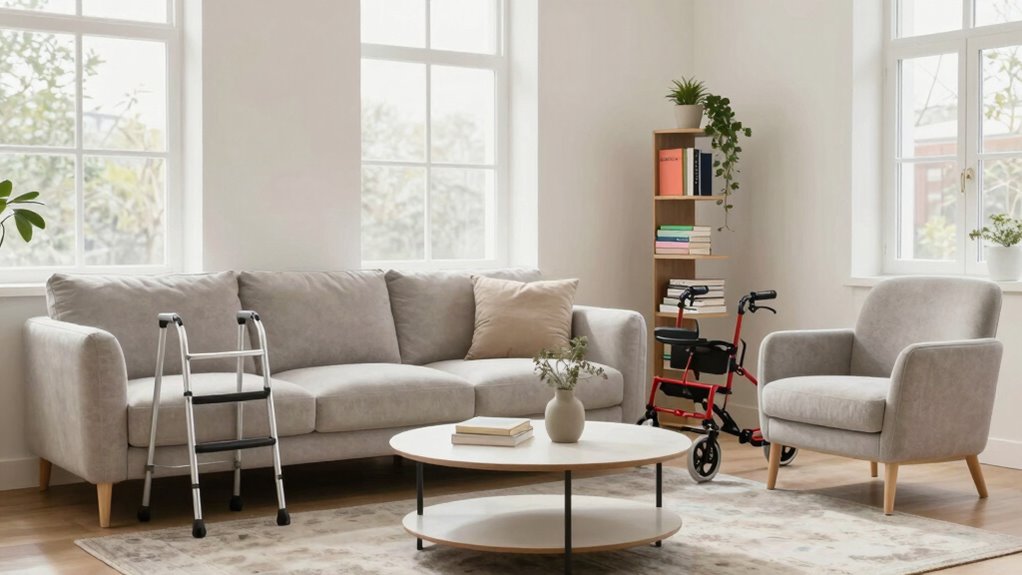
Arranging furniture around a walker or rollator can considerably improve safety and mobility in your home. When you’re designing or reorganizing your space, it’s essential to focus on space optimization. You want to create clear pathways that allow for smooth movement without obstacles, ensuring that the walker or rollator can glide effortlessly from room to room. This means removing unnecessary furniture, bulky items, or clutter that might block your way. Opt for furniture pieces with slim profiles or those that can be easily moved aside, which helps maximize the available space. A well-thought-out layout not only makes navigation easier but also reduces the risk of tripping or falling, addressing critical safety considerations.
To enhance safety, always keep pathways at least 36 inches wide. This provides ample room for turning and maneuvering without feeling cramped. Consider the placement of essential items like chairs, tables, and rugs. Rugs with loose edges or small mats can be be hazardous, so secure or eliminate them. Instead, choose non-slip flooring or rugs with backing that stay put. When arranging your furniture, position larger pieces against walls to free up the central space, making it easier to navigate around. Keep frequently used items within easy reach, minimizing the need to stretch or bend excessively, which can compromise safety and independence.
Lighting is another essential safety consideration. Ensure pathways are well-lit to avoid obstacles that might be hidden in shadows. Use nightlights in hallways and near the bathroom or bedroom entrances. Also, think about the placement of furniture so that you can quickly access emergency exits if needed. Keep clear lines of sight and avoid stacking objects or clutter that might cause confusion or delays in urgent situations. Additionally, understanding space optimization strategies can significantly improve overall safety and functionality in your living environment.
Comfort and safety go hand in hand. Make sure that furniture placement allows you to sit and stand safely without obstruction. For example, keep chairs with arms near the dining area or living space, providing support when transitioning from sitting to standing. Incorporate grab bars or handrails in key areas like the bathroom or along hallways where additional support might be necessary. Every aspect of your furniture arrangement should prioritize ease of movement and stability, helping you maintain independence and reduce fall risks. Remember, thoughtful planning of your space can also help in home safety and prevent accidents.

Drive Medical Rollator Walker with Seat – Stable Mobility Support – Height Adjustable – Durable Steel Frame Construction – Smooth 7.5" Wheels – Foldable – 350 Lb Limit – Blue
Stable Walking Support: The Drive Rollator Walker delivers reliable mobility assistance and improved balance, featuring a steel frame…
As an affiliate, we earn on qualifying purchases.
As an affiliate, we earn on qualifying purchases.
Frequently Asked Questions
How Can I Maximize Space With Multiple Walkers or Rollators?
To maximize space with multiple walkers or rollators, create a personalized layout that keeps each device accessible without cluttering. Use corner or wall-mounted storage for efficiency, and arrange furniture to maintain aesthetic balance, ensuring walkways stay clear. Opt for multi-functional furniture or compact pieces to save space. Regularly reassess your setup to adapt to changing needs, keeping the area organized, functional, and visually pleasing for safe, easy mobility.
What Safety Features Should I Consider When Arranging Furniture?
To guarantee safety, you should consider clear pathways free of obstacles, especially around decorative accents that could cause tripping. Use lighting enhancements like night lights or brighter bulbs to improve visibility, reducing fall risks. Arrange furniture in a way that provides easy access to essential items without clutter. Keep sharp edges away from walkways, and choose sturdy, non-slip rugs to prevent slips and falls around your walker or rollator.
How Do I Prevent Furniture From Blocking Walker Pathways?
To keep walkways clear, you need to stay ahead of the game and consider decorating tips that promote safety. Use color coordination to visually distinguish pathways from furniture, making them easier to navigate. Keep furniture pushed against walls or in corners, and avoid clutter in main traffic areas. Regularly review your layout to guarantee the walker has a clear, unobstructed path, preventing accidents and making movement smoother.
Are There Specific Furniture Materials Better Suited for Mobility Aid Areas?
You should choose furniture with durability and material compatibility in mind. Hardwoods like oak or maple are sturdy and easy to clean, making them great options. Avoid delicate materials like glass or thin metal that might break or chip. Opt for furniture with smooth surfaces and rounded edges to prevent injuries. These choices guarantee safety, longevity, and ease of movement around your mobility aids, creating a safer, more functional space.
How Can I Make the Space More Accessible for Different Mobility Devices?
You can make your space more accessible for different mobility devices by arranging furniture to create clear, wide pathways. Incorporate decorative accents that contrast in color with your flooring and furniture, enhancing visibility. Use color coordination to highlight safe routes and important features. Keep furniture lightweight and easy to move, ensuring mobility aids like walkers and rollators fit comfortably without obstruction, making your space safer and more inviting.
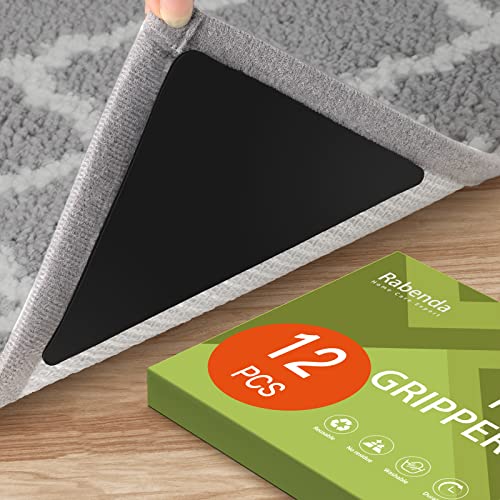
Rabenda 12 Pcs Rug Tape, Non Slip Rug Pads Grippers for Hardwood Floors and Tiles, Reusable Carpet Tape for Area Rugs, Double-Sided Adhesive Rug Stickers Keep Corners Flat (Black)
Advantaged Triangle Design: The Triangle Design grippers for area rugs and hardwood floors will maximum increase the contact…
As an affiliate, we earn on qualifying purchases.
As an affiliate, we earn on qualifying purchases.
Conclusion
Think of your home as a welcoming garden, where each piece of furniture is a sturdy plant or a charming pathway. Just as you’d carefully plan your garden to guarantee easy strolling and vibrant blooms, arranging your furniture thoughtfully around a walker or rollator creates a safe, harmonious space. With a little planning, your home becomes a lush oasis—inviting, accessible, and full of life—making every step a confident journey through your personal sanctuary.
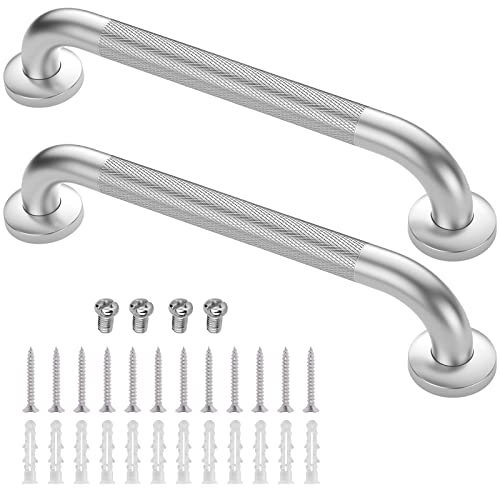
Grab Bars for Shower, 2 Pack 16 Inch Anti-Slip Safety Shower Handle for Senior, Stainless Steel Shower Grab Bars, Handicap Elderly Bathtub and Toilet Bathroom Assist
SUPERB MATERIAL: The shower grab bars for seniors is made of stainless steel which is waterproof, rustproof and…
As an affiliate, we earn on qualifying purchases.
As an affiliate, we earn on qualifying purchases.
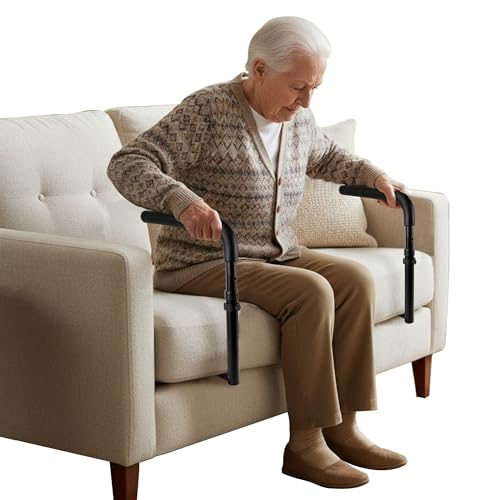
NIMOOD L1 Stand Assist Rail for Couch, Chair Stand Assist Aid for Elderly, Elderly Assistance Products, Disabled, Senior Mobility Aids Adjustable Safety Grab Bar for Sit, Stand, Couch Cane
Stand Up Confidently with Trusted Support- FSA/HSA eligible. Nimood Stand Assist provides safe, stable assistance for rising from…
As an affiliate, we earn on qualifying purchases.
As an affiliate, we earn on qualifying purchases.