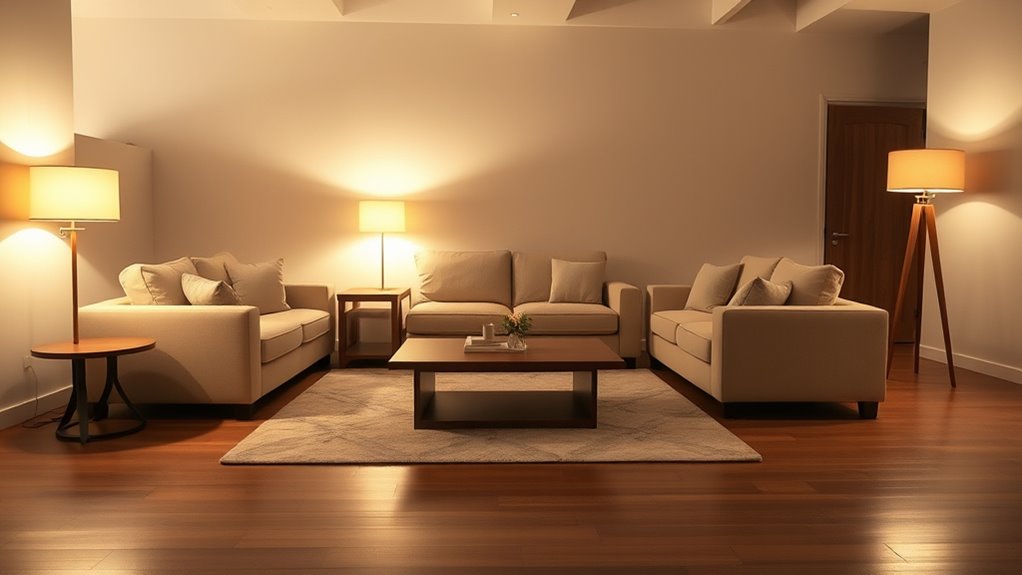

To create a safe and stylish furniture layout, position lamps where they provide ample light without causing glare or shadows. Place floor lamps beside sofas and armchairs for task lighting, and use table lamps on side tables to add warmth. Make certain lamps are within easy reach and avoid blocking walkways or stairs. Thoughtful placement highlights your furniture and enhances safety. Keep exploring to discover more tips on optimizing your space for both comfort and security.
Key Takeaways
- Position lamps to evenly illuminate key areas while avoiding glare and shadows caused by furniture placement.
- Place lamps within easy reach near seating and beds for convenient, safe access.
- Use floor and table lamps to highlight pathways, stairs, and dark corners for improved safety.
- Arrange lamps to complement furniture layout, enhancing both functionality and aesthetic appeal.
- Layer lighting with ceiling, table, and floor lamps to create depth, safety, and visual interest in the room.
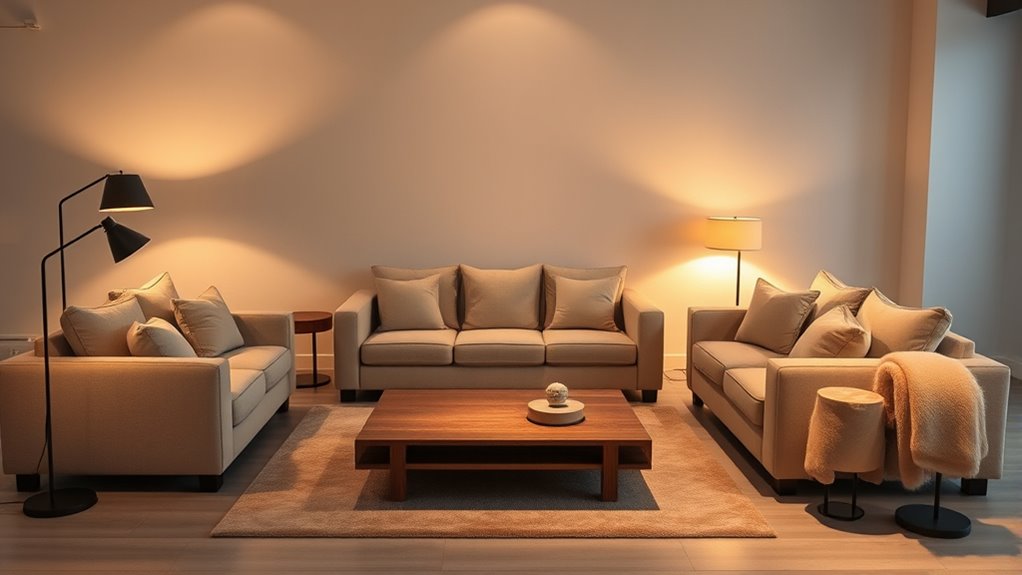
Creating an effective furniture layout is crucial for maximizing space and enhancing your home’s functionality. When you’re designing a room, one of the most important aspects to contemplate is lamp placement. Properly positioning lamps not only brightens your space but also improves safety and creates a welcoming atmosphere. The key is to think strategically about how lamps interact with your furniture arrangement, ensuring light fills the room where you need it most.
Start by evaluating how you use each room. In a living area, for example, you might want to place a floor lamp beside your sofa or armchair to provide task lighting for reading or relaxing. This placement ensures you don’t have to rely solely on overhead lighting, which can be harsh or unflattering. When choosing where to position table lamps, consider placing them on side tables next to seating. This adds layers of light, making the space feel cozy and functional.
Your furniture arrangement will influence lamp placement profoundly. Keep in mind that lamps should be within easy reach and positioned to avoid glare or shadows that hinder visibility. For instance, placing a lamp behind a piece of furniture might cast an undesirable shadow, so instead, situate it where it can illuminate the entire area evenly. In bedrooms, bedside lamps should be placed on nightstands within arm’s reach, providing convenient lighting for bedtime routines. In dining rooms, consider placing a lamp on a sideboard or a nearby corner to eliminate dark spots and add ambiance.
Lighting also plays a crucial role in safety. Proper lamp placement helps prevent accidents by illuminating walkways and steps. For example, placing a small table lamp near the entrance or along a hallway can guide you safely through your home at night. If you have a staircase, consider installing lamps or sconces along the wall to ensure each step is visible. This not only enhances safety but also highlights your furniture arrangement, making the space feel more cohesive.
Incorporating different types of lighting—ambient, task, and accent—requires thoughtful lamp placement. Use ceiling lights for general illumination, while table and floor lamps serve as task or accent lighting. This layered approach creates depth and interest in your room, making your furniture arrangement more inviting. Remember, the goal of lamp placement is to complement your furniture arrangement, not compete with it. When you position lamps thoughtfully, you enhance both the aesthetics and safety of your home, creating a bright idea that transforms your space into a comfortable, well-lit sanctuary.
Additionally, understanding the furniture layout and how it influences lighting options can help optimize your home’s safety and visual appeal.
Frequently Asked Questions
How Do I Choose the Right Wattage for My Lamps?
When choosing the right wattage for your lamps, you need to take into account light bulb compatibility and dimmer switch options. Select bulbs that match your lamp’s maximum wattage to prevent overheating. If you have a dimmer switch, make sure your bulbs are dimmer-compatible, as not all are. This ensures safe, adjustable lighting while avoiding electrical issues. Always check the lamp’s label and the bulb packaging for the recommended wattage and compatibility details.
What Are the Best Lamp Styles for Different Room Types?
Think of your room as a stage; choosing the right lamp styles is like selecting actors for each role. For cozy bedrooms, go for table lamps or sconces for ambient lighting. In the living room, floor lamps work well for flexible lamp placement. In kitchens, task lighting like under-cabinet lights is best. Each style enhances the space’s mood and safety, making your home both inviting and well-lit.
How Can I Incorporate Energy-Efficient Lighting?
To incorporate energy-efficient lighting, switch to LED bulbs in your existing lamps—they use less energy and last longer. Consider smart lighting options that let you control brightness and schedules remotely, saving even more energy. You can also install dimmer switches to adjust light levels based on your needs. These strategies help you cut costs, reduce your carbon footprint, and create a comfortable, well-lit space efficiently.
What Safety Features Should I Look for in Lamps?
Like a modern Icarus, you want to avoid flying too close to danger. When choosing lamps, prioritize lamp safety by checking for sturdy bases and heat-resistant shades. confirm bulb safety by using appropriate wattage and avoiding exposed wiring. Look for lamps with automatic shut-off features and surge protectors. These safety features help prevent fire hazards and electrical accidents, keeping your space both bright and secure.
How Do I Prevent Glare From Bedside Lamps?
To prevent glare from bedside lamps, focus on lamp placement and glare reduction techniques. Position your lamps so they direct light away from your line of sight, ideally using downward or shielded lighting. Choose lamps with frosted or textured shades to diffuse light evenly. Adjust the height and angle to minimize direct glare, creating a comfortable environment. Proper lamp placement and glare reduction make your space safer and more relaxing.
Conclusion
Remember, proper lamp placement not only brightens your space but also enhances safety. Did you know that well-lit rooms can reduce accidents by up to 50%? By strategically placing lamps near walkways and dark corners, you create a safer environment while making your home more inviting. So take a moment to reassess your layout—small changes can make a big difference in comfort and security. Light up your space wisely for a brighter, safer home.