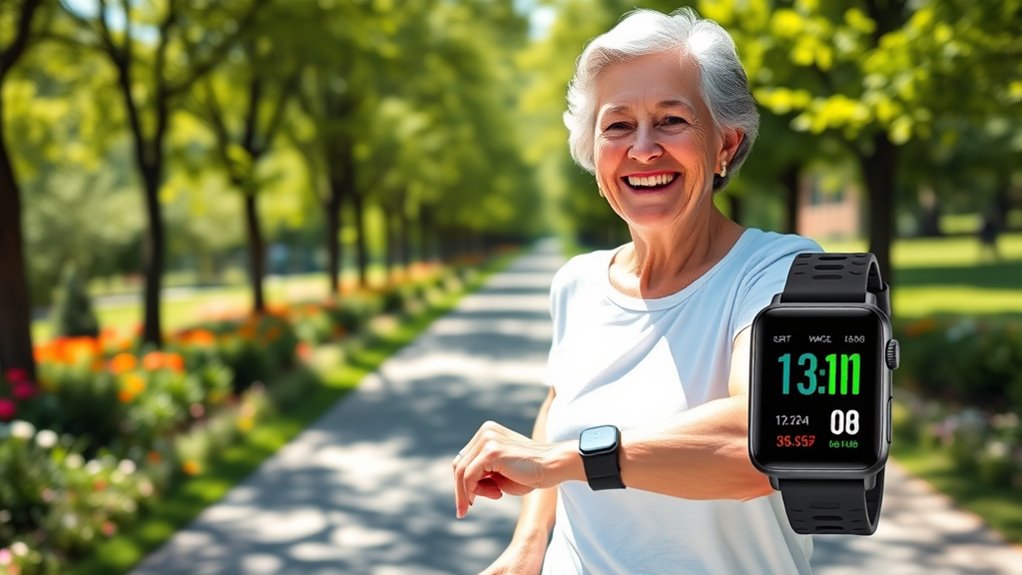
High-tech wearables motivate seniors to stay active by offering personalized feedback and tracking progress in real-time. They provide gentle reminders to move, set achievable goals, and make fitness routines fun through social features. These devices analyze your activity patterns, suggest tailored tips, and celebrate milestones, encouraging consistent movement. If you want to learn how these smart gadgets can become your personal wellness partner, there’s more to discover below.
Key Takeaways
- Real-time feedback and activity tracking motivate seniors by showing progress and setting achievable goals.
- Personalized insights and tailored fitness tips encourage consistent movement and healthier habits.
- Social features enable connection with friends or family, making activity more engaging and rewarding.
- Visual progress displays and reminders boost motivation to stay active regularly.
- Data security and privacy measures ensure trust, encouraging seniors to use wearables confidently.

As technology advances, high-tech health wearables are becoming essential tools for seniors seeking to maintain independence and monitor their well-being. These devices are designed to motivate you to stay active by offering real-time feedback on your fitness and health status. With features like step counters, heart rate monitors, and activity logs, wearables make it easy to track your daily movement, helping you set achievable goals and stay motivated. When you see your progress over time, it encourages you to move more and stay committed to your wellness routine. Plus, many wearables include reminders to stand up, stretch, or take a walk, making it easier to incorporate activity into your day without feeling overwhelmed.
High-tech health wearables motivate seniors with real-time feedback and activity reminders to stay active and independent.
One of the biggest advantages of these devices is their ability to provide personalized insights based on your activity data. By analyzing your movement patterns, wearables can suggest tailored tips to improve your fitness levels or warn you when you’re becoming less active. This personalized approach helps you stay engaged and motivated, especially when you’re tracking tangible progress. Additionally, some devices include social features, allowing you to connect with friends or family members for friendly competition or encouragement. This social aspect can boost your motivation, turning fitness into a fun and rewarding experience. Incorporating wearables into your routine can also help you develop healthier habits over time, making activity a natural part of your day.
However, as you embrace these benefits, data security becomes an essential consideration. Your wearable collects sensitive health information, so it’s important to choose devices that prioritize privacy. Reputable brands implement strong encryption and secure data storage to protect your information from unauthorized access. Before purchasing, review the privacy policies and understand how your data is used and shared. You want to feel confident that your personal health details are safe and not vulnerable to breaches. Many wearables also allow you to control what data you share and with whom, giving you peace of mind while still enjoying the benefits of tracking your health.
Incorporating fitness tracking into your daily routine can be greatly increased your motivation to stay active. When you see your progress and receive encouragement through your wearable, you’re more likely to stick with your activity goals. Just remember to prioritize data security by choosing trusted devices and managing your privacy settings carefully. With the right wearable, you’ll find it easier to maintain an active lifestyle, monitor your health, and enjoy the independence you value. These tools are not just gadgets—they’re personalized companions that help you stay healthy, safe, and motivated every step of the way.
Frequently Asked Questions
How Do Wearables Protect User Data Privacy?
You might wonder how wearables protect your data privacy. They use data encryption to secure your information during transmission and storage, making it difficult for unauthorized access. Additionally, reputable devices follow strict privacy policies, clearly outlining how your data is collected, used, and protected. By choosing trusted brands and regularly updating your device, you help guarantee your personal health data remains private and secure.
Are Wearables Suitable for All Senior Health Conditions?
You might wonder if wearables suit all senior health conditions. While they can benefit many, technology limitations can pose challenges for some users, especially those with complex health issues. Additionally, cost considerations may restrict access for certain seniors. It is crucial to assess individual needs and consult healthcare providers to determine if wearables are appropriate, ensuring they enhance well-being without causing frustration or inconvenience.
What Is the Average Lifespan of a Health Wearable Device?
You might think your wearable will last forever, but the average lifespan is around 2-3 years. Ironically, while device durability and battery life are key, many wearables need frequent updates or replacements. You’ll likely find that after a couple of years, the device’s battery struggles to hold a charge, or it becomes outdated tech-wise. So, expect a short-lived companionship in your health journey.
How Do Wearables Integrate With Existing Healthcare Systems?
You might wonder how wearables connect with healthcare systems. They achieve this through data integration, allowing health info to flow seamlessly. By following interoperability standards, wearables guarantee compatibility with electronic health records and other systems. This integration helps healthcare providers monitor your health remotely, make informed decisions, and personalize care. As a result, your wearable becomes an essential part of your overall healthcare, improving outcomes and keeping you healthier longer.
Can Wearables Be Customized for Individual Health Goals?
You can customize wearables for your individual health goals thanks to personalization features and goal-setting capabilities. These tools allow you to set specific targets, like steps or activity levels, and the device adapts to your progress. By tailoring the experience, wearables help keep you motivated and focused on what matters most to your health, making staying active more achievable and engaging for your unique needs.
Conclusion
Embracing wearables gently guides you toward healthier habits, like a trusted friend encouraging you along the way. With every step, these devices quietly inspire movement and mindfulness, making wellness feel less like a chore and more like a natural part of your day. As you listen to their subtle prompts, you’ll find that staying active becomes a graceful dance, fostering vigor and confidence. In this quiet harmony, your journey to better health becomes an effortless, rewarding rhythm.