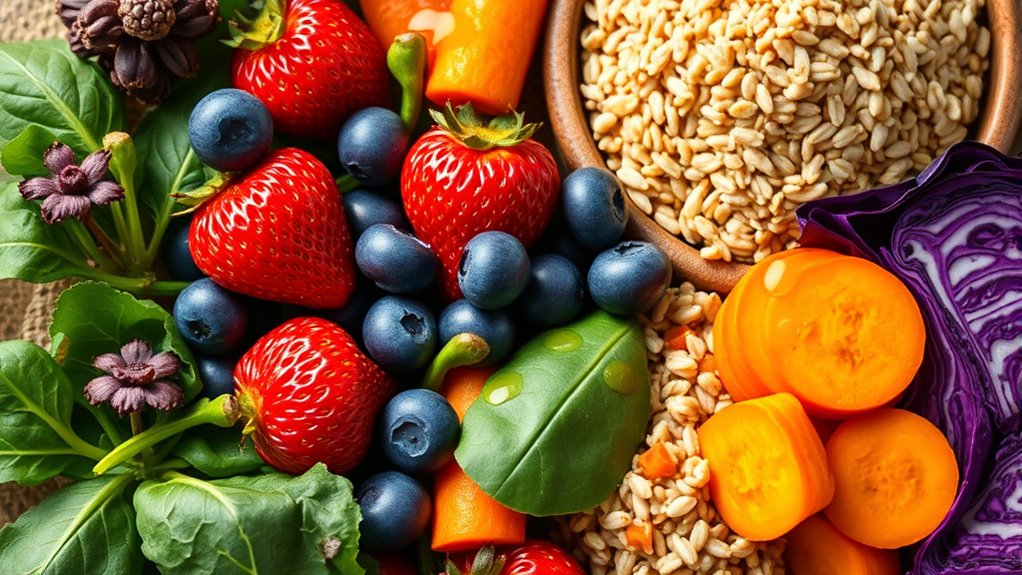

To improve your heart health, focus on eating plenty of fruits, vegetables, whole grains, and healthy fats like olive oil, nuts, and avocados. These foods are rich in fiber, antioxidants, and good fats that lower bad cholesterol, reduce inflammation, and support your blood vessels. Replacing refined grains with whole grains and choosing plant-based fats can make a big difference. Keep exploring to discover simple ways to incorporate these heart-smart choices into your daily routine.
Key Takeaways
- Incorporate a variety of colorful fruits and vegetables to supply essential vitamins, minerals, and antioxidants for cardiovascular health.
- Prioritize whole grains like oats, brown rice, and quinoa to provide fiber that helps lower cholesterol and stabilize blood sugar.
- Use healthy fats from sources such as olive oil, nuts, and avocados to reduce bad cholesterol and support vascular function.
- Replace refined grains and saturated fats with plant-based proteins like beans, lentils, and tofu to promote heart health and reduce inflammation.
- Adopt dietary patterns like the Mediterranean diet that emphasize plant-based foods and healthy fats for long-term heart disease prevention.
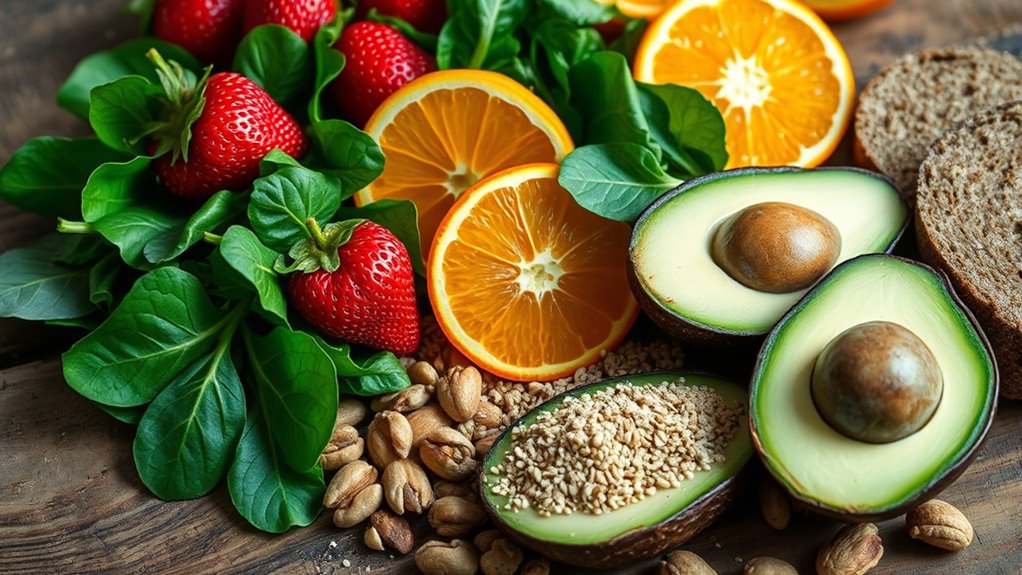
Have you ever wondered how your daily food choices can safeguard your heart? Making mindful decisions about what you eat can considerably reduce your risk of cardiovascular disease. One of the most effective approaches is embracing a heart-healthy diet, which emphasizes fruits, vegetables, whole grains, and healthy fats. The Mediterranean diet is a prime example of this, highlighting plant-based proteins, healthy fats like olive oil, nuts, and seeds, alongside plenty of fresh produce. Switching to this style of eating not only supports heart health but also introduces a variety of nutrients that keep your body functioning at its best.
Incorporating more plant-based proteins into your meals is a smart move. Instead of relying heavily on red meats, you can choose beans, lentils, chickpeas, tofu, and tempeh. These options are rich in fiber, antioxidants, and essential nutrients, all of which promote cardiovascular health. Plant-based proteins are naturally low in saturated fat and cholesterol, helping to lower bad cholesterol levels and reduce inflammation. When you include these in your diet, you’re giving your heart a break from the strain caused by processed or fatty meats.
Fruits and vegetables are crucial components of heart-healthy eating because they are packed with vitamins, minerals, fiber, and phytochemicals that support overall cardiovascular function. Aim to fill half your plate with colorful produce, from leafy greens and berries to citrus fruits and cruciferous vegetables. The fiber in these foods helps lower cholesterol, while antioxidants combat oxidative stress, a contributor to artery damage. Incorporating a variety of produce ensures you get a broad spectrum of nutrients that work together to keep your heart strong.
Whole grains are another cornerstone of a heart-healthy diet. Foods like oats, brown rice, quinoa, and whole wheat bread provide complex carbohydrates and fiber, which stabilize blood sugar and lower cholesterol levels. Unlike refined grains, whole grains retain their bran and germ, offering more nutrients and health benefits. Regularly swapping out white bread or pasta for whole grain options can make a noticeable difference in your heart health over time.
Finally, don’t forget the importance of healthy fats. Monounsaturated and polyunsaturated fats, found in olive oil, avocados, nuts, and seeds, help reduce bad cholesterol and support overall vascular health. These fats are a key part of the Mediterranean diet’s success and are essential in maintaining a balanced, heart-friendly diet. By choosing these fats over trans fats and excessive saturated fats, you’re actively working to keep your arteries clear and your heart resilient for years to come. Engaging in heart-healthy eating practices like these can lead to long-term benefits for your cardiovascular wellbeing.

Atlas 1 LT Cold Press Extra Virgin Olive Oil with Polyphenol Rich from Morocco | Newly Harvested Unprocessed from One Single Family Farm | Moroccan Organic EVOO Trusted by Award-Winning Chefs
【 The Highest Quality Cold-Pressed Moroccan Olive Oil】 The Atlas Mountains of Morocco help grow the most perfect…
As an affiliate, we earn on qualifying purchases.
As an affiliate, we earn on qualifying purchases.
Frequently Asked Questions
How Can I Incorporate Heart-Healthy Foods Into a Busy Lifestyle?
You can incorporate heart-healthy foods into your busy lifestyle by meal prepping with fruits, vegetables, and whole grains ahead of time, so healthy options are ready when you’re short on time. Keep quick snacks like nuts, fresh fruit, or veggie sticks handy to curb cravings. This way, you make smart choices effortlessly, even on hectic days, ensuring your heart stays healthy without sacrificing convenience.
Are There Specific Portion Sizes Recommended for Heart-Healthy Eating?
You should focus on portion control by paying attention to serving sizes to support heart health. For example, aim for about one cup of vegetables, a medium-sized fruit, or a 1-ounce serving of nuts. Using measuring cups or visual cues helps keep your portions in check. Sticking to recommended serving sizes guarantees you get the benefits of healthy foods without overeating, making it easier to maintain a balanced diet.
Can Eating Fruits and Vegetables Improve Existing Heart Conditions?
Eating more fruits and vegetables can markedly improve your heart condition. The fruit benefits include antioxidants and fiber that reduce inflammation and lower cholesterol. Increasing your vegetable intake provides essential nutrients and helps manage blood pressure. Together, they support heart health and may prevent worsening of existing issues. Incorporate a variety of colorful fruits and vegetables into your diet daily for the best results and overall cardiovascular support.
What Are the Best Healthy Fats for Heart Health?
Did you know that eating healthy fats can reduce your risk of heart disease by up to 30%? You should prioritize omega-3 fatty acids found in fatty fish like salmon and mackerel, as well as monounsaturated fats in olive oil, avocados, and nuts. These fats help lower bad cholesterol and inflammation, supporting your heart’s health. Incorporate these options into your diet daily for lasting benefits.
How Do I Balance Taste and Health in My Meals?
To balance taste and health in your meals, try flavor pairing by combining herbs, spices, and healthy fats to enhance natural flavors. Customize your meals with colorful vegetables and whole grains, making them both appealing and nutritious. Use healthy fats like olive oil or avocados to add richness without sacrificing health. Experiment with different ingredients to find combinations that satisfy your palate while supporting your heart health.

Yupik Organic Whole Oat Groats,2.2 lb (35.2 oz), Non-GMO, Vegan, Kosher, Raw, Whole Grain Oats, Salt-Free, Nutty Flavor, Good Source of Fiber, Ideal for Baking & Cooking
Organic whole grains
As an affiliate, we earn on qualifying purchases.
As an affiliate, we earn on qualifying purchases.
Conclusion
By choosing heart-healthy foods like fruits, vegetables, whole grains, and healthy fats, you’re giving your heart the best chance to beat strong and steady. Think of your diet as the mighty fortress protecting your most essential organ—nothing less than a superhero shield! Every nutritious bite fuels your body’s premier performance. So, keep these habits up and watch your heart become an unstoppable force, outshining even the brightest stars in the sky!
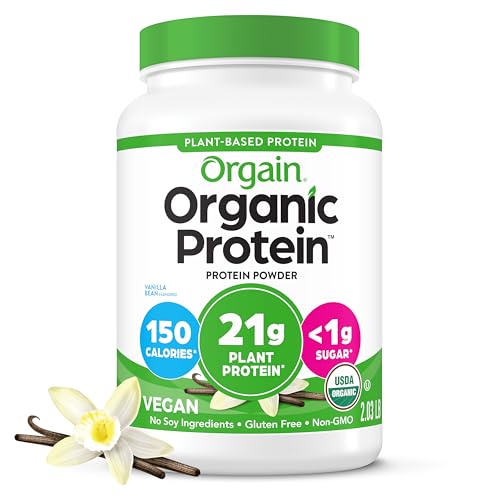
Orgain Organic Vegan Protein Powder, Vanilla Bean – 21g Plant Protein, 6g Prebiotic Fiber, No Lactose Ingredients, No Added Sugar, Non-GMO, For Shakes & Smoothies, 2.03 lb (Packaging May Vary)
CLEANER INGREDIENTS: 21g of Organic plant based protein and 1g sugar. Our protein blend contains Organic peas, brown…
As an affiliate, we earn on qualifying purchases.
As an affiliate, we earn on qualifying purchases.

COUNTRY FARMS Super Reds, Energizing Polyphenol Superfood, 48 Super Fruits and Berries, Powerful Antioxidants and Polyphenols, Supports Energy, 20 Servings, Mixed Berry Flavor
STRAIGHT FROM THE GARDEN. Don’t skimp on your fruit and veggies consumption! Just one serving of Country Farms…
As an affiliate, we earn on qualifying purchases.
As an affiliate, we earn on qualifying purchases.